being is the gift of time and attention.
When we give somebody time and attention.
We give them a part of our life. What could be more powerful than that?
We've all been in situations where you're talking to another human and they're distracted.
They're either distracted, you can tell they're just not there.
Their mind isn't with you or they’re distracted by people,
the environment OR the worst possible
distraction of all, and you know it, it's the phone
when we're going to have a conversation with somebody
It's important to remove all of those distractions and be fully present.
Mindset is important to clear your mind of any distractions,
not just the physical distractions around you, but what's going on in your head?
You have to give that other person space.
This is what listening is all about.
It's not just about paying attention with your ears.
It's about getting your head in the right place to begin with,
getting your heart in the right place, making sure that you're open to listening to hearing your open,
to hearing the message and that message that's coming from the other person,
might not be nice. Their tone might not necessarily be what they intended it to be.
Or certainly, what you want it to be great,
listeners know, to hold the space open for somebody to express themselves in many different ways.
It's going to come through in the spoken word in the content it will come through in tone.
It will come through in body language,
a good listener has the ability to listen and absorb all facets of communication.
Great listeners are okay with silence.
Sometimes people are reluctant to share their entire thought to give you the whole story
and they may pause.
That pause can be incredibly powerful if you just hold the space.
Just hold it, hold it. And it's uncomfortable,
right? But when you do that,
the person will go deeper,
perhaps provide a deeper explanation,
provide additional content,
contacts, anything that will help the communication process,
and Having the courage to hold that pause in the incredibly powerful active
listening is all about asking clarifying questions.
Going deeper and not allowing people to come out with.
Some blanket statement that is often charged with emotion something.
Like we're never going to meet our targets.
We don't have enough people. Whoa,
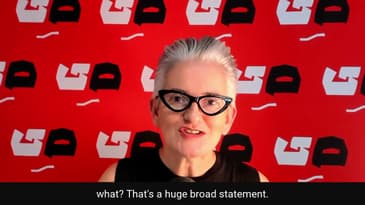
what? That's a huge broad statement.
It usually comes with a lot of emotion.
A good listener, will be able to probe again in a well-intended.
authentic way. Well, let's, let's talk about that.
What targets specifically are you concerned about.
Is there one target? That's more difficult than another.
Then let's talk about the resource situation around that Target
and they gradually peel back the onion
until you get to the real issue and you're able to address it.
That's what great listeners do, what they do it without any type of accusatory tone.
And certainly no judgment. You have to be open which is why it's
so important to have your mind and your heart in the right place.
And mistake that we often make.
And I know I do is we jump to the conclusion.
All we want to interject our opinion before the person has finished.
I'm so guilty of this. I have to work on this all the time.
Give the person space to fully explore their thought.
Even though you might have something that you just want to jump in,
don't resist the urge.
And if you're a higher level,
if you're the leader of a team and you're having a team discussion,
don't be the first person to put your opinion forward
because what happens when you do that is other people.
Just think that if they have an opinion
or something that they want to say that is directly opposed to your position.
They won't offer that opinion. You'll shut down communication
because people always want to the most part want to please the leader.
So as a leader, don't be the first to put your opinion forward with the issue out there.
Get the opinion of other people and listen then.
Then it's important to summarize and clarify what you've heard.
So, if I understand you correctly,
our sales Target for customer.
ABC is 50% higher than previous years.
And that's a concern did I understand?
I understand that correctly and then you'll get people that will come back and go know.
Well, that wasn't exactly what I said. Ah,
okay. So now we're getting into a deeper level of Understanding so,
summarize clarify and feedback.
What you've heard. This next point is taking listening to another level.
Let's talk about focusing on outcomes when we listen and engage in a conversation with people often.
We're trying to defend our position or were trying to show that we're right.
Right, and they're wrong. It's not about who's right and who's wrong?
Let me say that again. It's not about being,
right. And when I say that to people,
they say what? What? Of course it's about being,
right? No. It isn't. It's about getting to the right outcome.