Reinvention in the automotive industry is no longer optional. It is survival. In this episode, Jan Griffiths sits down with Lori Lancaster, Vice Chair of Emotiv Mobility, to break down what reinvention really looks like when you are living it, not talking about it from a distance. The old playbook is cracking, and incremental improvement will not get us where we need to go. Yet many leaders are still holding on, waiting for direction instead of stepping up to create it.
Lori did not wait. She made the decision to step back from the EV hype, resist the pressure to go all in, and focus instead on the real constraint holding the industry back. Infrastructure. That shift required courage. It meant challenging conventional thinking and refusing to follow the herd. Instead of chasing what everyone else was doing, she looked at where the real opportunity was and made a strategic move to meet it.
That decision led to a bold reinvention of the business. By taking core automotive manufacturing capabilities such as process discipline, scale, and precision, Lori and her team expanded into energy and transformer production while exploring emerging mobility spaces like eVTOL. This was not diversification for the sake of it. It was a deliberate move to stabilize the business, reduce reliance on automotive cycles, and position the company for what comes next.
But reinvention is not just about strategy. It is about leadership. Lori grounds her approach in servant leadership, accountability, and clarity of purpose. She makes it clear that transformation only works when people understand the why, when they are engaged in the journey, and when leaders create an environment of trust. Without that foundation, even the best strategy will fail.
The message is simple and direct. If you are waiting for certainty, you are already behind. If you are waiting for direction, you have missed the point. Reinvention belongs to leaders who are willing to see what is coming, make the hard calls, and move forward without a safety net.
Themes Discussed in this Episode
- Reinvention as a survival strategy
- Why incremental improvement is no longer enough
- Breaking free from OEM dependency and legacy thinking
- The real barrier to EV adoption: infrastructure, not vehicles
- Diversification beyond automotive to stabilize volatility
- Translating automotive manufacturing discipline into new industries
- Leadership courage in high-risk, uncertain decisions
- Servant leadership vs command-and-control in transformation
- Accountability through clarity of purpose and shared vision
- Culture as the foundation for successful reinvention
🎥 Watch the full episode on YouTube:
https://www.youtube.com/@jangriffithsautomotiveleaders
This episode is sponsored by Lockton, click here to learn more
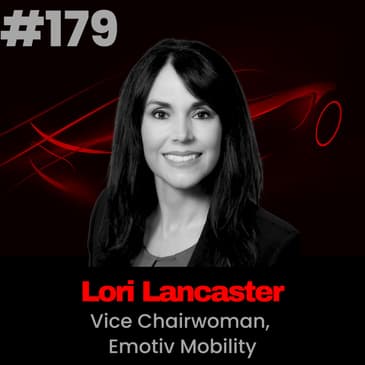
Featured Guest: Lori Lancaster
Lori is a seasoned automotive and advanced manufacturing executive known for leading organizations through complex industry change. Over the course of her career, she has overseen large-scale operations supporting major OEMs, helping guide companies through supply chain disruption, operational transformation, and the shift toward electrified mobility.
She began her career as a critical care nurse at Massachusetts General Hospital, an experience that shaped her leadership style and approach to decision-making in fast-moving, high-pressure environments.
About Your Host – Jan Griffiths
Jan Griffiths is the champion for culture change and the host of the Automotive Leaders Podcast. A former automotive executive with a rebellious spirit, Jan is known for challenging outdated norms and inspiring leaders to ditch command and control. She brings honesty, energy, and courage to every conversation, proving that authentic, human-centered leadership is the future of the automotive industry.
Mentioned in this episode
Episode Highlights
[01:26] Reinvention is survival, not strategy: Jan opens with a hard truth. The legacy automotive model is breaking, and incremental improvement is no longer enough to compete.
[02:36] Defining leadership: servant, not command-and-control: Lori shares her leadership philosophy. Lead by example. Serve the team. Hold people accountable without losing trust.
[03:47] Challenging old-school leadership norms: Jan calls out the industry’s past. Command-and-control once ruled. Lori explains how she chose a different path and why it works.
[04:18] Engagement and buy-in drive accountability: Lori breaks down the real meaning of accountability. It starts with listening, aligning on vision, and helping people understand the why.
[06:00] The industry’s biggest trap: incremental thinking: Jan challenges the status quo. Automotive is great at small improvements, but that mindset is now holding companies back.
[07:18] From healthcare to automotive: A powerful personal reinvention. Lori shares how starting in healthcare shaped her ability to lead in high-pressure environments.
[09:11] Building Emotiv Mobility: The strategy comes to life. Leveraging automotive discipline and processes to enter energy and infrastructure markets.
[09:59] Post-COVID reality check: COVID, chips, and EV pressure collide. Lori describes the moment leaders had to decide: follow the hype or think differently.
[10:30] The bold call: don’t go all in on EVs: Lori makes a high-risk decision. Limited capital means choosing carefully, not chasing trends.
[11:03] Identifying the real problem: infrastructure: Range anxiety and lack of infrastructure become the real barrier. Lori shifts focus to solving that instead of chasing vehicle programs.
[12:11] Breaking free from OEM dependency: Jan highlights a critical shift. Lori didn’t wait for OEM direction. She created her own path forward.
[16:54] Culture as the foundation for reinvention: Lori reinforces that transformation is not just about strategy. Culture, trust, and team alignment make or break execution.
[22:22] The 21 Traits of Authentic Leadership: When asked which traits resonate most, Lori points to listening, transparency, empowerment, and heart-first leadership. These are not concepts. They are daily behaviors that build trust and drive results.
[26:52] The courage to lead differently: Reinvention demands uncomfortable decisions. Lori reflects on the risk, the doubt, and the importance of staying true to your convictions.
Top Quotes
[01:26] Jan: “Reinvention isn't a buzzword anymore, it's survival.”
[02:36] Lori: “I like to think of myself as a servant leader, right? As somebody who, you know, sets an example for the team. If I'm not willing to do something, I wouldn't think my team, I shouldn't be able to expect my team to be willing to do something.”
[04:18] Lori: “I think to do that you have to really engage and listen to the people, you have to take their ideas and meld them with the vision you see for the company and figure out a way that will work to get to where you want to go.”
[05:15] Lori: “You have to help people understand the ‘why’.”
If this episode resonated, share it with a fellow automotive leader and subscribe to The Automotive Leaders Podcast, where we’re shaping the future of authentic leadership in the automotive industry.
This podcast episode is also available on YouTube. Check out our YouTube channel at Jangriffithsautomotiveleaders
Send us your feedback or questions — email Jan at Jan@Gravitasdetroit.com.
[Transcript]
[00:00:00] Jan Griffiths: Welcome to the Automotive Leaders Podcast, where we help you prepare for the future by sharing stories, insights, and skills from leading voices in the automotive world with a mission to transform this industry together. I'm your host, Jan Griffiths, that passionate, rebellious farmer's daughter from Wales with over 35 years of experience in our beloved auto industry, and a commitment to empowering fellow leaders to be their best authentic selves. Stay true to yourself, be you, and lead with Gravitas, the hallmark of authentic leadership. Let's dive in.
This episode is brought to you by Lockton. Rising benefit costs aren't inevitable for you or your employees when you break through the status quo. Independence matters, it means Lockton can bring you creative, tailored solutions that truly serve your business and your people. At Lockton, clients, associates, and communities come first, not margins and not mediocrity. Meet the moment with Lockton.
Reinvention isn't a buzzword anymore, it's survival. The old legacy model is cracking, and that playbook we used to use in the auto industry, you might as well throw that out the window. But reinvention is hard, it's difficult, it's about reinventing culture, people, businesses, products, all of it.
My next guest gets it to the very core of her being. She has reinvented herself personally, and yes, she has reinvented an automotive supplier. I am thrilled to welcome to the show today, Lori Lancaster, Vice Chair of Emotiv Mobility. Lori, welcome to the show.
[00:02:15] Lori Lancaster: Thanks. Thanks for having me. It's great to be here.
[00:02:17] Jan Griffiths: Now, Lori, people may know you from Dakkota. You've been in the industry a long time, but here you are today, we're putting the spotlight on you. No pressure.
[00:02:27] Lori Lancaster: No pressure.
[00:02:28] Jan Griffiths: To talk about reinvention.
[00:02:30] Lori Lancaster: Yeah.
[00:02:31] Jan Griffiths: But my first question to you, Lori, is this, who are you as a leader?
[00:02:36] Lori Lancaster: Well, that's a great question, right? I ask myself every day. I ask my team. I get some surprising answers sometimes, as we know. But I like to think of myself as a servant leader, right? As somebody who, you know, sets an example for the team. If I'm not willing to do something, I wouldn't think my team, I shouldn't be able to expect my team to be willing to do something. So, that's where it starts for me, it's that servant leadership mentality. And I like to really celebrate the team, but also, at the same time, work with them to hold each other accountable. And so, when I think of the traits that I try to display as a leader, those are some of the traits that I fall back on.
[00:03:20] Jan Griffiths: You know, Lori, in this industry, you've been in the industry a while, the idea of servant leadership would've been scoffed at many years ago. We would've laughed at it. We would've said, what do you mean servant leadership? Leaders of command and control, they tell people what to do, they're tough, they're aggressive, particularly in this industry. How did you give yourself permission to say, you know what? That's not who I am. I am a servant leader. How did that happen?
[00:03:47] Lori Lancaster: Well, I think that comes from maybe my family and the way I was raised. I don't know if you know, but I worked for my sister, Andra Rush, in her company. So, when she started her company, she had that same mindset as well. And so, I was stepping into maybe a company that already had that in its DNA. And so, it was maybe a little easier to carry that on. I think you can be a servant leader and still be a leader who holds your team accountable.
[00:04:18] Jan Griffiths: Yes.
[00:04:18] Lori Lancaster: I think to do that you have to really engage and listen to the people, you have to take their ideas and meld them with the vision you see for the company and figure out a way that will work to get to where you wanna go, and that way you get buy-in from your team and then when you hold them accountable to the steps that it takes to get to your goal, they can understand that, right? If they know where you're going and why you need to do what you need to do to get there.
[00:04:49] Jan Griffiths: Yeah. And I think accountability is often misunderstood, because accountability often gets confused with blame, and that's not the case. When you are truly a good servant leader and you can paint a picture of a vision and a mission and you can get people on board, it's much easier to hold people accountable in a positive way. It doesn't have to be an overly aggressive way, does it?
[00:05:11] Lori Lancaster: No, no. You have to help people understand the why.
[00:05:15] Jan Griffiths: Yes.
[00:05:15] Lori Lancaster: Why is it that we need to be a lean company, Lori?
[00:05:18] Jan Griffiths: Yes.
[00:05:19] Lori Lancaster: Why is it that we need to tighten our belts and do more? You're asking more from me and it's like, well, because we wanna be a sustainable company. We have these goals and we have these requirements from our customers, and if we can't meet them, then we won't be here and we all wanna be here and we wanna do great things. So I think helping them understand the why and then engaging them in developing the plan to get there is key, I think, to being able to hold them accountable.
[00:05:49] Jan Griffiths: Yeah.
[00:05:49] Lori Lancaster: And to help both sides realize their goals.
[00:05:53] Jan Griffiths: So you've got this great foundation. You've got a great history with the Rush group of companies, Dakkota, DMS, all of it. Really good DNA, good foundation, good culture. But now here we are in this crazy automotive industry. The word's disruption and reinvention and culture change and all these things are being thrown around, and digital transformation. And I see some companies that get it, but I see a lot of companies that are just giving it lip service, and they're still in the mindset of incremental improvement. An incremental improvement isn't gonna cut it anymore, but we're good at it in the auto industry. But that's not where we're at right now and that's not what's gonna take us into the future.
Tell us about Emotiv mobility and tell us about the process of reinvention. And I really wanna go deep on this and talk about what you do as a company, because there it is, right? When you understand what Emotiv mobility does, you get it. So tell us more about it, please.
[00:06:56] Lori Lancaster: Sure. And I think to get there, we have to step back a little bit. So, when I came to work for my sister's company, in Dakkota specifically, that was 12, oh geez, 12 years ago, 14 years ago now. And I came from the healthcare industry into automotive, so didn't know much about.
[00:07:18] Jan Griffiths: Yeah, there's reinvention right there.
[00:07:20] Lori Lancaster: Yeah. Yeah, for sure. And so, one of the first lessons that the CFO I was working with at the time wanted to teach me is like you have to understand automotive. It's very cyclical, there's ups and there's downs and, you know, you're riding a wave all the time, but usually about a seven year span you'll have seven good years and maybe a little dip and it's like, wow, it seems so volatile. And when I look at our core competencies and what we do, why aren't we diversified outside of automotive to help level out those ups and downs that you see coming from healthcare which with baby boomers and all of that, it's nothing but growth trajectory.
[00:07:59] Jan Griffiths: Yeah.
[00:08:00] Lori Lancaster: So, they're like, oh, that's a great idea, but we talked about the culture at Dakkota and those things, and we had leaders there that had been there a very long time. So it's all they knew, right? And so, as those leaders matriculated out, and I was able to develop a team that had experiences in automotive, but also had experiences in adjacent industries, I think the vision became a little clearer of how to get there, and with that we were able to take new ideas outside of automotive, but with our core competencies and warehousing and manufacturing and integrating and look to industries like energy and developing like transformers, like for like your households and that you see on the poles. And really look to leverage what we've learned in the automotive space with processes, discipline and development, and transfer that into other industries, and that's what Emotiv is doing. So they're taking those lessons and looking outside of the automotive space.
[00:09:11] Jan Griffiths: But that takes a heck of a lot of guts, I gotta tell you. To take a traditional automotive company and say, oh, we're gonna go into energy and talk about transformers. And then, let's, you know, I guess the eVTOL, is that how you pronounce it, eVTOL?
[00:09:27] Lori Lancaster: Electric Vertical Take-Off and Landing. Yes, the flying car.
[00:09:31] Jan Griffiths: So, the flying car. So, okay, so that's sort of related to mobility.
[00:09:34] Lori Lancaster: Right.
[00:09:35] Jan Griffiths: But how do you say, yeah, this is where we need to be. How does that process work?
This episode is powered by Seraph. When manufacturing leaders need to launch, scale, relocate production, or navigate supply chain disruption, they call Seraph. Hands-on operators. Measurable results. Learn more @ Seraph.com
[00:09:59] Lori Lancaster: So, for me, it came off of COVID, right? So everything comes off of COVID these days, right? So we had COVID, which we thought, oh, once we get through that, thank goodness, we can get back to normal. But then you had the chips and you had this big push coming off of those down years in automotive in the trough. And then, you know, OEMs are saying, okay, now we need to invest in EV and we need to go all in.
And that was the point where, you know, at that point I was president of the company and I said, no, we are going to walk a very cautious line here because we don't have the historical background to go all in on this, and that's what we're being asked to do. You have only so much capital you can reinvest, and I'm not comfortable doing it there.
Now, it worked out in hindsight, but that was a very scary thing to do. But what I did realize was, if we think EVs, they have a place.
[00:11:02] Jan Griffiths: Yes.
[00:11:03] Lori Lancaster: And one of the big barriers I saw with myself and with people that I talked to was the range anxiety and the infrastructure that wasn't built out to support the EVs.
So I said, I do think there's a place for EVs and I don't wanna get left behind by not jumping all in at the first blush, but I think if you take it a step back and help with the infrastructure piece of it, you can advance the EV part of it, the vehicle part of it by developing out that infrastructure.
And so, that's kinda where the transformers and talking with energy companies to say, what is it? What are the barriers you're seeing to really get this infrastructure where it needs to be? And it's like, well, we have lead times on transformers. We have to replace at least 50% of them across the US. And our lead times, from our suppliers, are 12 to 18 months. So, if we could get a supplier like you that knows how to build to scale, how to hold tight tolerances, you have the process discipline to help us solve that problem, that would really make everything go a lot faster.
[00:12:11] Jan Griffiths: Wow. That's really interesting that you didn't do what a lot of us do in the auto industry in the tier one and tier two space, and that is wait for direction from the OEM.
[00:12:21] Lori Lancaster: Yeah.
[00:12:22] Jan Griffiths: You didn't do that. You saw the future, you looked at it, you look what was happening in the industry and the technology, and you put together a strategy and a vision that was yours, very uniquely yours. But I can't help but think, Lori, that meeting, the meeting that you had with your leadership team where you present that, you give us a little peek inside that. I mean, I gotta believe.
[00:12:45] Lori Lancaster: I thought the sales guy was gonna just cry.
[00:12:47] Jan Griffiths: Yeah, I would think so. Thank you for being honest about that.
[00:12:51] Lori Lancaster: It's a pickup drop. Like wow, yeah, I know. So, I don't know, it could have been a foolish thing. And you know how automotive works, right? If you don't bid on something now, you might not get the chance the next time.
[00:13:04] Jan Griffiths: Yeah. You lose the cycle.
[00:13:05] Lori Lancaster: But I just, I couldn't put all of our eggs in that basket. I just couldn't do it. And so, I wouldn't do it. And it was the right decision for our company at the time. It's the right decision now, and it led us down a different pathway.
[00:13:21] Jan Griffiths: Well, I love it, and I'm gonna read you back something that I've read on your website. I love it when I do this to people.
[00:13:28] Lori Lancaster: Oh man, it hasn't been updated.
[00:13:30] Jan Griffiths: But this is what I love because the reinvention doesn't stop there, and this is how you have it framed on your website: Currently, automotive and defense. Building with commercial vehicle, energy and eVTOL. Heading to aerospace and industrial. So, you are not stopping, are you?
[00:13:51] Lori Lancaster: No, no. We have some great, intellectual property that will be very applicable to commercial vehicles. It's a hybrid power transfer case and it's a very unique idea that we had to capture the energy that a commercial vehicle, I think, don't quote me, it's like class four to seven or something in that range, not semi-truck.
So they try to explain the technical to me and I get it almost right, but never a hundred percent. But what it does is if you think of service vehicles and we can stick with utility vehicles right now that have maybe a bucket truck that's doing service to a line, those vehicles will sit in and idle and just run so they can power their bucket trucks and that kind of thing.
So we developed a transfer case that would harness that power and store it in a battery. So anytime the vehicle is running on its gas engine, we can store up this power so that when it gets to a job site, you can turn the vehicle off and you can operate your bucket truck or your cherry picker or whatever you wanna call it.
[00:14:56] Jan Griffiths: Yeah.
[00:14:57] Lori Lancaster: And not have to have that energy being wasted, that it's not thrown away then. And so, we have this transfer case that I've put a patent on that allows a fleet of commercial vehicles that are ICE vehicles to then add in this transfer case in a power unit to store the energy and they can have almost a hybrid work vehicle for just very small fraction of what it would take to place their fleet with a hundred percent EV. So there's a lot of interest around that in that application.
So that's, I think, a great place for us in commercial vehicle, but also everything we do for passenger car, we can do for a commercial vehicle as well. So that play, and then we have partnered with an eVTOL company. It's a company that is over in Europe right now and they're doing their testing right now with the Air Force and the FAA to get their airworthiness. They're gonna be a licensed sport aircraft, LSA, and so that private pilots can fly these aircraft. And so, they're looking to get that certification for their vehicle, but they need a manufacturing partner here in the US that knows how to build when they're ready to go. And so, that's where we come in. So we've invested in this company and we had them in our booth at CES.
[00:16:18] Jan Griffiths: Yeah. So that's what caused all the buzz at CES.
[00:16:21] Lori Lancaster: Oh yeah.
[00:16:21] Jan Griffiths: That I kept seeing love on LinkedIn.
[00:16:23] Lori Lancaster: Yeah. It was like, it's cute. I mean, it's not huge, and when you look at it, you're like, oh, it is kind of like a car, 'cause you sit in it and it's very much like a car. And so, people can visualize themselves in a machine like this and really, we had some real interest for people who like pre-ordered already and it's crazy. They're like, I can't wait because I have a property that's X miles away and I'll be able to get there in 15 minutes. And I'm like, wow, the vision's really taken off this. We are in the Jetsons.
[00:16:54] Jan Griffiths: Yeah, we are. We are. You know what strikes me listening to you talk is that with all the work that I've done with different automotive companies and some more in the tech space. When you talk about tech culture, they're very much focused on identifying the customer pain point, and then they just kill it. They think this is a customer pain point and they just kill it. And listening to you talking about the hybrid transfer case, that's exactly what you did. You took more of that innovation type mindset and you said, no, no, this is a problem. We need to fix it. Again, you're not gonna sit back and wait for the OEM to come fix it, and then the traditional process of sourcing it.
[00:17:37] Lori Lancaster: Right.
[00:17:38] Jan Griffiths: You said, no, no, we're gonna, we're gonna do it. We're gonna fix it. And I think that that type of thinking is so important to generating an innovation culture and it drives reinvention.
[00:17:49] Lori Lancaster: Right.
[00:17:50] Jan Griffiths: But how do you find that thinking in a leader's DNA? How do you know that once you bring leaders into the team that they've got that type of thinking? It's gotta be tough.
This episode is sponsored by UHY. Did you know suppliers now spend 157 hours on an average RFQ and still face the same roadblocks as 20 years ago? UHY and the Center for Automotive Research, break it all down in their new white paper. Get the insights and see what's really changed in 2025. Download your copy. There's a link in the show notes.
[00:18:41] Lori Lancaster: Well, it is tough and we are fortunate we've brought Aaron Rivers as our CEO. So he has a lot of industry knowledge, like I said, in automotive, but also adjacent industries. So he has a breadth of experience, and so he's very open to hearing the ideas from our engineers and can put the pieces together and together we are able to say, well, let's figure out how to do that. That is a great idea. And giving, I guess, I don't know if it's the freedom or the license to be able to try and if it doesn't work out, that's okay, and if it does, great. We'll see it through and we'll promote it and we'll go from there. So, I think, maybe it's just allowing people to take their ideas and see them through and giving them the okay if it doesn't work out.
[00:19:34] Jan Griffiths: So you must not have a fear-based culture because many organizations have a fear-based culture, and on one hand they talk about innovation, and on the other hand, it's like, oh yeah, but that better work. Or that's a great idea, but then give me a full set of financials to show me how you're gonna make money on that. And then it just, it dies. And you see that so often in legacy automotive companies. So you must have a culture that doesn't have the fear, that truly encourages people to bring their ideas forward. And then, if you support those ideas early on in the process, you can allocate some money. Because if you wait till later on in the process, it's too late and it's gonna cost you a lot of money in capital. So, you must have that kind of culture that really nurtures those ideas.
[00:20:27] Lori Lancaster: Well, we try to have that culture. And you talked about bringing new leaders in and understanding their DNA, and we talked about the history in the Rush portfolio of companies, in Dakkota, particularly with people coming and staying for a long time. And that's good because they understand that it's okay to make a mistake, it's okay, but ask for help when you need it. Raise your hand. And then, we've struggled recently with new leaders coming in who are afraid maybe to say, hey, I need help with this. And they wait a little too long to ask for that help because I think they come from different environments because I'm always like, why didn't he just raise the concern earlier, no one's gonna penalize you for that.
[00:21:13] Jan Griffiths: Yeah, 'cause they were afraid.
[00:21:14] Lori Lancaster: It makes it so hard when you wait too long.
[00:21:16] Jan Griffiths: Yeah.
[00:21:17] Lori Lancaster: So, I think that it is constantly trying to instill that in the team members that we have in, that we bring on board, to say, no, it's okay. Just don't try to hide it. We're here to help. That's what our job is, to manage the exceptions and deal with the challenges that come up in the day to day.
[00:21:38] Jan Griffiths: Yeah, that's so true.
[00:21:39] Lori Lancaster: Yeah.
[00:21:40] Jan Griffiths: Now you've looked at the 21 traits of Authentic Leadership. I know there's a lot in there. There's a lot, but that came from all of my experience in the industry, plus interviewing so many people on the podcast.
[00:21:51] Lori Lancaster: Well, it's so good. So, yummer. I know where you're going so continue.
[00:21:57] Jan Griffiths: But people say to me sometimes, really, 21? Does it have to be 21? Well, actually, yes, because they're all important in their own way.
[00:22:06] Lori Lancaster: Yeah.
[00:22:07] Jan Griffiths: But we're all different human beings and we're different leaders. And as you know, there are some leaders that are more creative and visionary, and there are others who are more analytical and more into maintaining the status quo. I mean, we're all different. So, having said that, what traits really resonated with you from that list?
[00:22:26] Lori Lancaster: Well, we talked about a few already, right? So resiliency, I mean, that's like key. And for me, I think all through my life and you try to teach that to your children if you have children. I think being resilient is super important. No matter if you're in automotive or healthcare or anything that you do, just life, you have to be resilient just to lead a good life. And so that one is a key for me. We talked about servant leadership and the importance of that and celebrating the wins that your team has, but at the same time, being able to hold them accountable for the goals. So I think those are the two out of the 21 that really I can relate with.
[00:23:11] Jan Griffiths: Yeah. The celebrating wins, when you look at that, it sounds so like, oh, celebrate. Yeah, okay, whatever. It doesn't seem like that's very important when you just read it on a chart or a document. But as I go back to the early days of my career, I was told directly don't tell people they're doing a good job, because you always wanna raise that bar higher. It didn't feel right when I was told that's how you needed to lead in this industry, and I don't know that I did a good job of following that because, to me, I always do better if somebody says, if there's some recognition. You don't need to pat me on the head every five minutes, but a little bit of recognition goes a long way. And particularly, if it's a team. If a team that solved a problem or came up with an idea, and it doesn't have to be a big, massive party.
[00:23:59] Lori Lancaster: Right.
[00:23:59] Jan Griffiths: But that type of recognition, keeping recognition to keep people motivated and moving, I think is critical. And I'm thrilled that's one of yours.
[00:24:09] Lori Lancaster: It is critical, and I don't know if it's generational where you just wanna, it's great you did that, but why didn't you do. I thought that was pretty good, but yeah, so at our company, we have this positive like competition. In automotive, we're all full of type A so, but it's positive competition between our manufacturing sites and we give out awards, just little trophies and they're not very expensive trophies. And then, we have like the plant of the year trophy and to get that trophy, like the plant that wins that trophy, it was like they won the sweepstakes or something. It is a point of pride and it's those little things and it really drives all year long. It's like, I'll hear the plant managers when I come to visit the sites, well, we're gonna get to bring that trophy home this year. And it's so great, I was there for our plant of the year was here at our facility at Dakkota at Van Dyke I-94 and, I guess, let's see, three, four years ago, they were not the plant of the year.
[00:25:19] Jan Griffiths: Yeah.
[00:25:20] Lori Lancaster: It was like the total antithesis of that. And so, to see how that team has been able to grow and face challenges and meet them and bring a safety score in that is like, no recordables, no injuries, and bring in numbers for quality and delivery and team engagement to win Plant of the Year. It was great. And we brought all the operators on the lines together and everything and brought the trophy out and had a photographer. And this is their second year winning it, so they did it like you would see at a sports stadium where they raise the jersey up so they had two side by side. So it's just so much pride there. And when you ask the team, 'cause I was able to be there for that and it's like, how many of you guys were here back in 2021 when we were struggling? And about 30% of the team had been there in those days and it's like, we got here.And that's a credit to the team there. And so, I think those things are very meaningful from the top of the house down to the operator putting everything together and making it happen. So you really do have to celebrate those wins.
[00:26:30] Jan Griffiths: Yeah, I agree. And it's so easy to cut that when you are looking at cutting budgets. It's so easy to cut that out. I've seen companies do that time and time again, and that's the one thing that you should never cut out of the budget is some form of recognition program. No, I absolutely love that.
[00:26:46] Lori Lancaster: Yeah.
[00:26:47] Jan Griffiths: As we bring this to a close, Lori, what advice would you have for leaders out there in the tier one, tier two space. They had to listen into this. They're gonna head into the executive staff meetings, into a conference room, maybe reinvention is on the agenda. I would hope that it is. Where should they start? What do you even stop thinking about it?
[00:27:09] Lori Lancaster: Well, I mean, if the whole crowd's going this way, I'm like, well, maybe we wanna go this way. And I know you can't always do that, but think of, is there a different way we should be thinking about this?
[00:27:25] Jan Griffiths: Yes.
[00:27:25] Lori Lancaster: Is there a different way to do this? And I guess that's, maybe it's called out of the box thinking. You've heard that for eons that's been drilled in, and maybe it's that, but it's just like, how do we do it? Maybe there's a way to do it differently than what we've been doing. Maybe what we've been doing has gotten us to this point, but if we wanna get to this point, what do we need to do differently to get there? And so, I think maybe a mindset like that and listening to the ideas and making sure you're getting the ideas from everyone who sits around that table, and having diversity around the table is very key, especially in our organization, right? You want the people who have diversity of thought, you want generational diversity. It means a lot of different things, not just cultural diversity, right? And I think that's a key for our company to really have those ideas and to listen and know that you've gotta know your team. You've gotta know which team members that you'll have to call on to get their ideas, 'cause they won't just give them freely.
[00:28:33] Jan Griffiths: Yeah.
[00:28:33] Lori Lancaster: And make sure you take the time to say and ask them.
[00:28:37] Jan Griffiths: Yeah. And create the safe space.
[00:28:39] Lori Lancaster: Exactly.
[00:28:40] Jan Griffiths: For those ideas to come up and flourish. And then the leadership to take it forward. I think that what you're doing with Emotiv Mobility is amazing. I can't wait to see where you're at six months from now, 12 months from now.
[00:28:55] Lori Lancaster: For sure.
[00:28:56] Jan Griffiths: Please come back on the show and share with us where you're at with your journey.
[00:29:00] Lori Lancaster: Yeah.
[00:29:01] Jan Griffiths: Thank you. It's been great having you.
[00:29:02] Lori Lancaster: Thanks. Appreciate it.
[00:29:03] Jan Griffiths: Thank you for listening to the Automotive Leaders Podcast. Click the listen link in the show notes to subscribe for free on your platform of choice, and don't forget to download the 21 Traits of Authentic Leadership PDF by clicking on the link below. And remember, stay true to yourself, be you, and lead with Gravitas, the hallmark of authentic leadership.