This episode is sponsored by Lockton, click here to learn more
Watch the full video on YouTube - click here
Jay Butler doesn't just understand troubled operations. He's worked through them at every level. From the production lines of Nissan and Mercedes-Benz and now as a consultant for distressed plants, he has seen what causes operations to fall apart. And the biggest problems don't come from the floor. They come from leadership.
Jay starts by sharing how poor leadership decisions create ripple effects that reach all the way to the floor. Holiday shifts that never end. Supervisors are stretched too thin. People burned out from six- and seven-day workweeks, year after year.
Operational pressure doesn't just hit the floor; it follows people home. When that pressure builds up for long enough, performance drops, and culture breaks. Jay doesn't blame the people doing the work; he points the finger at the decisions being made at the top.
But Jay doesn't frame this as a call for soft leadership. In fact, he's clear: being a good leader means setting expectations, being consistent, and holding people accountable. What doesn't work is enforcing rules that no one follows or only applying them when convenient.
You can't expect consistent performance if you don't hold people accountable—or worse, if leadership doesn't model the behavior themselves.
Jay recalls workers raising grandkids, struggling to keep up, and barely making it through the week. Leaders might not think that's their responsibility, but Jay argues otherwise. If your policies at work make someone's home life harder, you're responsible for that too.
They also revisit accountability, but in a different light. Jan mentions a recent interview with Brad Ring at Webasto, who swapped the word "accountability" for "promise." It's a simple change, but it changes everything. "I promise to get this done" hits differently than "you'll be held accountable."
They also talk about tariffs. Jay explains how one political post or policy change can throw an entire manufacturing plan off course. He's seen companies scrap full strategies mid-meeting because of a headline. That level of volatility demands preparation. You can't move production in a week, especially in automotive, but you can plan.
This episode is a reminder that the weight of leadership isn't just about decisions. It's about owning your impact.
As Jay puts it, you influence more than just metrics—you influence whether someone gets to go home proud or completely drained. That's where operational transformation begins. Not with new systems. Not with floor-level changes. But with better leadership.
Themes discussed in this episode:
- How poor leadership creates burnout and operational breakdowns in manufacturing
- Why holding employees accountable without clear standards creates chaos and mistrust
- Why operational breakdowns often stem from leadership gaps, not workforce performance
- How Gen Z workers are reshaping expectations for culture in manufacturing plants
- How inconsistent enforcement of rules weakens trust and team accountability
- Why companies must address culture and accountability before fixing production issues
- What leaders must do to prepare for tariff changes and global trade uncertainty
Featured guest: Jay Butler
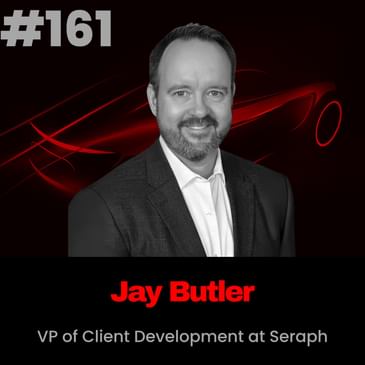
What he does: Jay is the VP of Client Development at Seraph, where he leads management and leadership training, quality improvement, strategic planning, and product development. He is also a John Maxwell Team Certified Coach and Speaker, employing his leadership expertise to support management and client operations on the floor.
On Leadership: “You can be a strong leader but still show empathy for people. And I think the article that I posted on LinkedIn, where I talked about the fact that we were not only responsible for the performance of the organization, but also for the health and welfare of the people we lead. I think it's so important for leaders to understand that you really are responsible for both. And if you're not prepared as a leader to carry that burden and that weight, then maybe you probably shouldn't be a leader in that organization.”
Mentioned in this episode:
- The Weight of Leadership: Beyond Strategy and Performance
- Transforming Webasto: Why Legacy Automotive Companies Must Rethink Leadership & Culture to Stay Competitive with Brad Ring
- Automotive Suppliers and the Revenue Acquisition Process – Then and Now: 2025 Update
Episode Highlights:
[02:05] Bad Leadership Travels Home: A struggling plant doesn’t just show in KPIs—it shows on the faces of exhausted workers carrying stress from the floor into their homes.
[03:47] KPIs Don’t Hug Back: You can chase metrics all day, but when leadership cuts corners and burns people out, it’s the frontline workers and their families who pay the price.
[05:31] Tough, Not Toxic: You don’t have to choose between high standards and human decency—real leadership means setting clear expectations, holding people accountable, and still showing empathy without being a pushover.
[08:35] Leadership’s Real Impact: The authority to control someone’s livelihood is heavy—and leaders who ignore that impact risk breaking more than just production flow.
[11:36] Culture Has Consequences: From Gen Z walkouts to early retirements, toxic work cultures are driving talent out; and leaders who resist change may find themselves out, too.
[15:08] Make the Mission Matter: Clear goals don’t just drive results, they build emotional connection, rally teams, and turn the daily grind into shared purpose.
[20:38] Accountability or a Promise? Reframing accountability as a promise makes it personal—and a simple Post-it system turns that promise into action teams can see, feel, and follow through.
[26:33] We Can’t Ship Effort: “I’ll try my best” doesn’t work in high-performance teams. Jan shares a lesson that stuck with her: you can’t deliver effort, only real commitments.
[33:42] Forget Being Right: Tariff chaos, political curveballs, and global disruptions—Jay Butler says the real leadership edge isn’t in being right every time, it’s in staying flexible.
[37:37] Tariff War Room: When uncertainty hits, you need more than spreadsheets; you need a team, a strategy, and strong leadership ready to make long-term moves before it’s too late.
Top Quotes:
[10:23] Jay: “I’ve run into older team members on the floor who are raising a grandchild, and they talk about having to balance it between grandfather and grandmother—about who's going to be home when, and all this other stuff. And I'm like, if they just had some more time off, that stress would go away. And maybe some leaders say, "Well, that's not really my responsibility." But I would challenge that, because it is your responsibility. I mean, granted, you can't be involved in everything going on in somebody's life, but you certainly don't want to create an environment at work that's going to negatively impact that home life.”
[13:05] Jay: “Factory work is not easy under the best of circumstances, but it shouldn't be a place where people feel like every day is an uphill battle, where they've worked so much overtime that they're just tired, right? They just want to get through the day. It should be a place where a team comes together with a goal or objective and can celebrate those victories. And when things aren't going quite the way we want them, the team can pull together and get it done and make it happen. And leadership, the way leaders handle those kinds of situations can have a huge impact on people's morale.”
[17:31] Jay: “Sometimes clients question us about the simplicity of what we do. But we talk about one thing we always say: win the hour, win the day. And we're talking about the KPIs, whether output or scrap, uptime, or whatever it might be. Win that hour, we'll win the day. If we win the day, we'll win the week. And if we win the week, we'll win the month. And if you win the month, you'll win the year. And so, we really focus on that hour, and we do very simple things when we go in. It's not rocket science. People ask us what makes the difference. It's definitely not the processes; it's not the lean manufacturing. Everybody talks about lean. It's our people, it's our team. It's the willingness to hold each other accountable.
[32:49] Jay: “You’re supposed to set the example. Now I'm not talking about being perfect, right? But definitely setting the example and the expectation. Being able to be held accountable by subordinates, from people who follow you as a leader, and not be like, "Oh, I'm the plant manager. I'll do whatever I want." I think all those things play into this burden, this responsibility that the leader has to hold himself or herself accountable, the organization accountable, and provide an environment where people are respected, and that their not only their physical safety is taken care of, but also their mental safety, that whole work-life balance, so that they can go home at the end of the day and be happy about the place that they just spent eight or 10 hours at.”
[36:26] Jay: “I’ve talked with some OEM leaders and OEMs about what their plans are in terms of how to manage the tariff impact. There, one of the messages I heard from one was, "We just want our suppliers to communicate with us." We'll figure out how to manage the tariff burden—and how to hopefully share it in some cases. I know some have been like, "The supplier just has to eat it all." That's not really a reasonable expectation. You just have to be ready and flexible and know that your plans are probably going to change.”
[Transcript]
[00:00:00] Jan Griffiths: Welcome to the Automotive Leaders Podcast, where we help you prepare for the future by sharing stories, insights, and skills from leading voices in the automotive world with a mission to transform this industry together. I'm your host, Jan Griffiths, that passionate, rebellious farmer's daughter from Wales with over 35 years of experience in our beloved auto industry and a commitment to empowering fellow leaders to be their best authentic selves.
Stay true to yourself, be you, and lead with gravitas, the hallmark of authentic leadership. Let's dive in.
This episode is brought to you by Lockton. Rising benefit costs aren't inevitable for you or your employees when you break through the status quo. Independence matters, it means Lockton can bring you creative, tailored solutions that truly serve your business and your people. At Lockton, clients, associates, and communities come first, not margins and not mediocrity. Meet the moment with Lockton.
Today, I want to take a look at leadership from a different perspective. I wanna take a look at leadership through the lens of somebody who is not only an experienced leader in automotive in his own right, but who works every day with distressed companies. Let's take a look at leadership from that perspective, and I couldn't think of a better guest to have on the show to talk about this topic than Jay Butler, he is a Vice President at Seraph. Jay, welcome to the show.
[00:02:03] Jay Butler: Thank you very much. Glad to be here.
[00:02:05] Jan Griffiths: I know that you care passionately about leadership. Why?
[00:02:11] Jay Butler: You know, probably the biggest reason is because I see the impact that it has on people. When you go into a supplier that's in trouble, one of the first things I always recognize or notice and that hits me the hardest is how the worker suffers. Whether it's maintenance people or the people on the production line, or even custodial staff, anybody in the plant.
And it really over the years has come more apparent to me, just the impact that it has not only on the work environment, but what they're gonna carry home to their families, how much time they get to spend with their families.
And so, a lot of times when I go into a facility that's in trouble, I mean the first thing you notice is people are just generally unhappy. Having to work too much. The environment's not great. And there's no way, I like people who talk about this work-life balance thing, but I don't think you can flip a switch when you get in your car at the end of the day and go to the house and it doesn't impact family.
[00:03:11] Jan Griffiths: Yeah. Yeah. I would agree with you. And you've seen it, Jay, from many different angles because you've worked at an OEM level. You've worked for Nissan, you've worked for Mercedes-Benz, and you've also worked in the Tier One space. You worked at Brose, you've worked in operations, you've worked in quality, and now you work day to day with OEMs and tier ones alike who are in a distressed situation, so you've really seen it. What might surprise some people is that you are somebody and you represent a company who is all about results.
[00:03:45] Jay Butler: Right. Yes.
[00:03:46] Jan Griffiths: And we focus on results in this auto industry every single day. It's all about the bottom line, but it's about much more than that, isn't it?
[00:03:54] Jay Butler: Yeah. When we go in and work with clients, we're very much about metrics and KPIs, but we also see leadership as it's always a big component of what we do. Usually, companies get into trouble and the metrics are bad because leadership has struggled to do maybe the right thing at the right time. Sometimes, there's a lot of external factors that forces leaders to do certain things the way they maybe shouldn't.
But inevitably, those bad decisions and the all the added overtime and added costs it impacts the worker. I can use examples where we had a client we were working with, and I remember talking to a new— the youngest supervisor they had. He had been there, like, five years, and they had never had a meaningful holiday around Thanksgiving or Christmas.
So they would take Thursday off for Thanksgiving, and usually, they would have third shift start up on Friday night after Thanksgiving. And he had never seen a four-day weekend around Thanksgiving in five years. Christmas, they would get a couple days, then have to run. And you just, people just need time with their families.
And when you're running six and seven days a week, and very little time off for holidays, for years on end, it starts to impact relationships, and it starts to impact team members. When they come into the plant, they're tired. Absenteeism always becomes a problem. You run seven days, and people will take Monday off. They're gonna take some time off, and it— it ends up just... it's a snowball effect with those companies.
[00:05:28] Jan Griffiths: Jay, how do you address that balance? As leaders, we often think that our job is to drive results, it is to get results for the business, but it is also to care about people. And one of my favorite quotes is from Doug Conant, and he often talks about the fact that you need to be tough on standards and tenderhearted with people. And sometimes I think that if you show that you care about people—particularly in our automotive industry—that that's seen as weak or soft.
[00:06:01] Jay Butler: Yeah.
[00:06:01] Jan Griffiths: How do you overcome that perception?
[00:06:04] Jay Butler: I had a very good discussion, actually, with a plant manager from a client we worked with, and it is actually not a company that what I would say is really in distress.
I mean, they were not doing well. We had worked at several of their plants, but I remember talking and coaching this plant manager that to be an effective leader doesn't mean you're being a pushover. But it does mean that you make sure that standards and expectations are clear, and then you hold people accountable to them.
In the same way, though, you are not unduly harsh on people. It's really a bad thing for suppliers to hold people accountable to standards that aren't made clear. And I think people, in my experience, have been generally they, "Okay, we can do that. We'll meet those standards." But then it's also critically important, when people are not following the standard, to hold people accountable. That's another big problem we often see.
Probably one of the greatest examples I did with a plant manager— that same one. I asked him on the plant floor one time, because he had team members complaining about this or that, and I said, "What rules matter here?" And he looked at me kind of puzzled, and he's like, "I don't understand what you mean." I said, "Well, let's go for a walk."
And we walked out to the employee entrance, and there's all these signs around the door about nothing beyond this point or that point and all these different things. And I said, "So which one of those rules matter?" And he looked at 'em and he said, "Okay, now I know what you mean."
So, when your front office people walk out on the floor, when your leaders walk out on the floor, and it says you're supposed to have safety glasses on or a safety vest—do you always do that, right? If you don't, and you don't hold people accountable for that, that's a problem too. So, that's the other thing.
So it's not about being soft, but it's also not about being— we say "old school," and I've heard you guys talking about that on yeah, on, on the interviews before. You can be a strong leader but still show empathy for people, so... And I think the article that I posted on LinkedIn where I talked about this fact that we were not only responsible for the performance of the organization, but the health and welfare of the people we lead. I think it's so important for leaders to understand, yeah, you're, you really are responsible for both. And if you're not prepared as a leader to to carry that burden and that weight, then maybe you probably shouldn't be a leader in that organization.
[00:08:34] Jan Griffiths: Yeah. Your article was titled The Weight of Leadership. Yeah. And that really struck a chord with me. All through my career, the way I look at leadership is that I'm impacting somebody's life. I mean, let's lay these facts out on the table here: If you have people working directly for you, you can influence their paycheck. You can influence how much they get in that paycheck. You can influence whether or not that paycheck continues. You have that power and authority, and it is an awesome power that needs to be cherished and nurtured, and you have to understand that. That you can impact somebody's life.
And when you walk around with a more aggressive type approach and people live in fear, they're not just living in fear of you, they're living in fear of losing their home, of having a massive impact on their family. And I think lots of leaders out there they don't understand the magnitude— and as you would put it, the weights of leadership.
[00:09:37] Jay Butler: Yeah. It probably hit me even more now in the consulting world, because if places are doing great, they don't call Seraph. They call Seraph when they've got a problem and they need help.
And like I said, when I first go into facilities, I do of course see the problems, right? Poor lack of Five S, lack of maintenance, not good systems and processes in place. But I also see the faces of the production team members in that facility, the logistics folks, the quality team members. I look at 'em and they, I see that they're working 10 hours a day, maybe 12 hours a day. They're working Saturdays and Sundays. They're not getting a lot of time off. They don't get to spend as much time with family.
I've run into to older team members on the floor who are raising a grandchild, and they talk about having to balance it between grandfather and grandmother—about who's gonna be home when, and all this other stuff. And I'm like, if they just had some more time off, that stress would go away.
And maybe some leaders say, "Well, you know, that's not really my responsibility." But I would challenge that, because it is your responsibility. I mean, granted, you can't be involved in everything going on in somebody's life, but you certainly don't want to create an environment at work that's gonna negatively impact that home life.
And we see it more and more all the time with the whole, this whole fight for work-life balance. And I think sometimes it comes down to: how are we managing our business so we respect that, that work-life balance for people, but also that they go home at the end of the day feeling good about what they've been doing?
It's a big difference to go home at the end of the day if you feel like you've been beat up, disrespected, not treated well by your supervisor—because maybe they haven't been trained or understand how to lead—versus going home at the end of the day feeling good about what you did and feeling good about how you added to the value of the organization.
[00:11:35] Jan Griffiths: Yeah, and I'm seeing both ends of the spectrum here—talking about basically work culture is what we're talking about. And I see it in the younger generation with Gen Zs. They won't tolerate it. They absolutely will not tolerate it. If you are not treating them with respect, and you are barking out orders to them every five minutes, it's just not gonna fly. They won't tolerate it. They'll jump to the next job and they won't even flinch. Right.
And then, on the other end of the spectrum, the workforce that's getting ready to retire or close to retirement. I have had several conversations just in the last month or so with people who've just said, "You know what? Enough of this. I'm just, I'm out. I'm just gonna bail on this."
So if we think that there's no bottom line impact to work culture? I would say—guess again. Because there are so many variables that are impacted by work culture that have a direct impact to the bottom line. You mentioned absenteeism. That's one. Attraction and retention is another. But we need a talented workforce now in this country more than ever before. And if people are not feeling valued and respected, they are going to leave.
[00:12:48] Jay Butler: Yeah. And to be careful about how we talk about it, 'cause I, I know the whole beanbag and all this—we'll say super soft. Some people talk about it. And I'm not here advocating that work's supposed to be easy either. Factory work is not easy under the best of circumstances, but it shouldn't be a place where people feel like every day is an uphill battle, where they've worked so much overtime that they're just tired, right? They just want to get through the day.
It should be a place where a team comes together with a goal or objective and can celebrate those victories. And when things aren't going quite the way we want them, the team can pull together and get it done and make it happen. And leadership, the way leaders handle those kinds of situations can have a huge impact on people's morale.
We can think of dozens of opportunities over the last five or six years that I've been with Seraph, where we've seen this kind of thing. I remember on that one example I gave you, a couple of months into the project, we told 'em the goal was to get 'em a four-day holiday at Thanksgiving. Nobody believed it.
They're like, not gonna happen. Well, I've been here five, you know, the supervisor told me I've been here five years and never seen it. And we said, "Look guys, just trust us. Work with us. Do the things that we're gonna show you, and I promise you, we can make this happen."
Now, we had to go to some of the OEMs and say, "Look, there's gonna be some adjustments and resets made, and it might get bumpy for a week or two, but please be patient, and we'll get through it."
And we got 'em a four-day week at around Thanksgiving. They were amazed. And at Christmas, they got like a whole week off, which was, they thought was just like unbelievable. And it was fun to see that, and you could tell, you saw the morale change in the organization at the worker level, but it took a lot of adjustment from leadership.
And unfortunately, in that case, there was a couple leaders in the plant that wouldn't buy into this and ended up leaving. And we never go into operations with the intent of getting rid of people. That's not what we do. But in some cases, people self-select, they're not willing to step up to that leadership mantle, and they self-select to go find something else to do.
[00:15:07] Jan Griffiths: Yeah. You talk about putting that objective, that focus, rallying the team around a goal, and the goal is very easy to relate to. It's a four-day holiday for Thanksgiving. It's very clear, it's very personal. It touches everybody. And I think, if leaders in the auto industry, if we could do a better job of rallying people around a mission, and I'm not talking about something that you've got written on a conference room wall that says you're gonna be the world class manufacturer of a widget and provide shareholder value to everybody in the world.
I mean, that is kind of the standard, but forget that. I think we have moved beyond that as an industry. But you need something. It's about spending time. It's about seeing that your role as a leader is to do that. Is to spend time rallying people around a mission and a goal, and making sure that it is clear.
To your point about accountability, you can't keep hold people accountable for something if you don't have clarity. Clarity is the first step to accountability. So the goal has to be clear. It has to; people have to feel it, they have to understand it. There has to be some sort of emotional connection to it.
And then, when we do that, you can get people on board. You can get people on the bus—and look out. Then you really, you can gain momentum, and you can achieve just about anything you want. But again, I feel sometimes that leaders think that they don't wanna waste time doing that. "This is the objective. This is what we gotta do. Just let's go out there and just do it."
[00:16:40] Jay Butler: Yeah. I'm sure you've probably heard of a guy named Pat Lencioni.
[00:16:44] Jan Griffiths: Yes, of course.
[00:16:45] Jay Butler: The book The Advantage, right?
[00:16:46] Jan Griffiths: Yes.
[00:16:46] Jay Butler: And one of the topics in there is he talks about getting the team to own whatever the objectives are. One of the challenges for leaders today is a leader at a certain level in an organization, whether it's a CEO or a president or whatever that might be, has this vision or these objectives where he or she wants to take the organization. And they may be good objectives and they're just pronounced though from on high and they put 'em on, like you said, posters or they show up on TV screens.
But you never translate that down to what's gonna happen on the production floor, where the money's actually made.
[00:17:27] Jan Griffiths: Yes.
[00:17:27] Jay Butler: When we go in to organizations, sometimes clients question us about the simplicity of what we do. But we talk about, one of the things we always say is: win the hour, win the day.
And we're talking about the KPIs, whether it's output or scrap, uptime, whatever it might be. Win that hour, we'll win the day. If we win the day, we'll win the week. And if we win the week, we'll win the month. And if you win the month, you'll win the year. And so, we really focus on that hour, and we do very simple things when we go in. It's not rocket science.
People ask us what makes the difference. It's definitely not the processes, it's not the lean manufacturing. Everybody talks about lean. It's our people, it's our team. It's the willingness to hold each other accountable. We make the expectations and the metrics super clear. We talk about them every day, every week with the client, every day with the client, with the executive leadership of the client, at least on a weekly basis.
And when things aren't hitting those numbers, we ask why. We challenge each other. But we do it in a way that it's not, we're not afraid to make a mistake. We're not afraid to say, "You know what? I don't know what's going on. I need to go understand this better." Because, at the end of the day, we wanna feel good about what we're doing. We wanna feel like we're part of a team. We don't wanna be, I mean, we'll do 12, 14 hour days. It's not uncommon, especially when we first go in. But it's fun actually, because we see progress and we celebrate the progress.
Otherwise, this job I, we've talked about it with several of the other managing directors and leadership within Seraph. But this job, if it wasn't for the people and the discipline, the accountability, the leadership, this would be a terrible job to have. Because all you do is go from one mess to another.
[00:19:25] Jan Griffiths: Yes.
[00:19:26] Jay Butler: But because of those leadership factors and feeling the weight and responsibility of what we do, 'cause we do feel a responsibility to our clients.
[00:19:35] Jan Griffiths: Yeah.
[00:19:36] Jay Butler: To help them get out of this, we often tell clients, "Look, we don't wanna be here any longer than we need to be here," and "We want to get you a return on that investment. We want you to see the impact, and to celebrate the success and feel good about what's going on and be encouraged by those results. And so we can leave, and say, thank you very much and go forward and be successful." So, but back to the whole weight thing, it really is, man, I tell you, it's when I look in people's eyes and I see a team member who's been running six, seven days a week for months or even years. Who doesn't get to spend as much time with their kids as they want. That weighs heavy on me as a leader. And I really, really want to see that fixed. If you need to make more product, get more equipment and hire more people, don't work people six and seven hours, six and seven days a week. People have to have a life.
[00:20:35] Jan Griffiths: Yeah. No, you're you're absolutely right.
[00:20:38] Jay Butler: Yeah.
[00:20:38] Jan Griffiths: Thinking about accountability again.
[00:20:40] Jay Butler: Mm-hmm.
[00:20:41] Jan Griffiths: 'Cause I didn't used to like that word, because usually it was somebody sticking their finger in my face saying they're gonna hold me accountable for something—which meant, "If you don't do it, I'm gonna blame you."
And accountability and blame—no, no, no. There's such a thing as positive accountability, where you get people to buy in and commit. And there's clarity, and there's a follow-up mechanism, and accountability can be a beautiful thing.
[00:21:07] Jay Butler: Absolutely.
[00:21:07] Jan Griffiths: This episode is sponsored by UHY. UHY, and the Center for Automotive Research are digging into how suppliers quote and win with OEMs. The results drop at CAR MBS, September the 15th through the 17th at Michigan Central. Stay tuned.
I learned something just the other day about accountability, and it was from Brad Ring, CEO at Webasto, during our interview. And he was telling me that they have changed the language at Webasto, and he now uses the word promise. And I absolutely love that because it's more personal. It's a personal commitment.
I promise, Jay, I am gonna do this for you by this date. I promise. That's a whole different spin. You can feel it—and that's just by changing one word. So I think the language that we use in our company's day to day, that are a big part of our culture. It's so important.
[00:22:08] Jay Butler: Mm-hmm. You said something right at the beginning of that statement when you talk about making, holding people accountable is their buy-in to what they're actually being held accountable to. We don't do that very well many times.
[00:22:23] Jan Griffiths: Right.
[00:22:23] Jay Butler: So we have this, I never saw this process until I came to Seraph called a rematch board. This is one of those things that people look at and go, "Really, that's what you're gonna do?"
The rematch board is, it's nothing more than a laminated calendar. We use Post-it notes, and when we have a meeting in the morning and we talk about action items, a lot, most places will create an Excel file, put all their action items on Excel file or some other tool, which is nothing wrong with that, but sometimes they kind of get buried in the background, and then you gotta have a meeting to go over it.
Well, we do this thing called the rematch board. And I've seen a lot of companies—actually a lot of clients— I've seen team members that we've worked with and clients, put up a rematch board after we get there in their cubicle. But it's a very simple calendar and we do a post-it note.
Now that Post-it note has five pieces of information on it. It has whatever the action is, it has the initials of who assigned the action and the date it was assigned, and it has the initials of the person who's responsible for the action and the date they've committed to getting it done.
Part of that process is I can't assign an action to somebody and give it a date without their commitment to meet it. And when we go through that process, and I can't assign an action to somebody if they're not present, but we ask the person, "When can you have that done?" And it's up to them to commit to a date, and then we stick it on the board for whatever day that is. We usually use colored ones, depending on which group it is, work package and that kind of thing.
And every morning, one of the things we do in our engagement is we go through the rematch board. It's visual. You can see it. We don't move dates. That's one of the other rules. If I gave you an action and you committed to have it done by July 18th, on July 18th, that post-it is in that on that box. And on the morning of the 18th when we meet, you're gonna give an update.
If you don't give an update or you're not finished or whatever, we don't, "I need another week." We don't move it out to the 25th. It goes in the red section at the bottom of the board, the rematch area, and every day we go through what's due and then we talk about rematch.
And so, there's this psychological aspect. You don't want any of your post-it notes in the red section, and all the dates you've committed to, right? So, it's this promise, and I like that it's, I promise.
[00:24:56] Jan Griffiths: A promise.
[00:24:57] Jay Butler: 'Cause it is more of an emotional commitment.
[00:24:59] Jan Griffiths: It is.
[00:24:59] Jay Butler: I promise to get this done. But that process we use since I came to Seraph and I've seen some of our clients, engineers we work with that the client will be there for a few weeks and next thing you know, they've got a rematch board in their cubicle and they love it.
So it's super simple, but it does address that commitment from that person. And again, we have specific rules on how to do that. So I'm not gonna assign something to Jan to have done by Friday if Jan's not sitting right there and understands what the request is and she says, "I can have it done by Friday." Then we put the date stick the post-it note on the board.
[00:25:33] Jan Griffiths: And I'm envisioning that there's a group of people looking at this board.
[00:25:38] Jay Butler: Oh yes.
[00:25:38] Jan Griffiths: Together, the team collectively.
[00:25:40] Jay Butler: Mm-hmm.
[00:25:40] Jan Griffiths: So you are using peer pressure in a positive way? I hate to say, many years ago during COVID, I started the accountability lab and it's still running to this day. And it's a group of people, we meet at 7:07 and we make commitments. That we're things that we're going to accomplish that day.
And the whole idea behind that is that it uses peer pressure in a positive sense. And there is science behind that says that it is highly unlikely that anybody will come back a fourth time with a missed date. You might come back once. You might come back twice, maybe even a third time, but nobody's yelling or screaming at you. It's just peer pressure. You just feel like an idiot because you've missed the date in front of all your colleagues, right? So, it is very powerful. But you bring back something, Jay, you're gonna take me back a long, long time. Way back now, right?
I worked for a guy in AlliedSignal, and he was in manufacturing for many, many years in South Bend, in the break plant. And I worked for him in program management, and I was a young, young program manager. His name was Paul Tushinski, and I learned so much from him. And he was teaching me about program management, about getting commitments from people. And often, and you've seen this I'm sure, where people will say, "Well, I'll try my best. I'll try my best."
And he would look 'em straight in the eye and he would say, "Okay, that's good. We can't ship effort. What is the date?" Not in a nasty way. Very, very matter of fact. We can't ship effort. What is the date that you're committing to?
And that has stayed with me, and I've used it many, many times in my career because it's so true. Because when people say, "I'll try my best," What does that mean? It means, it's not gonna happen.
[00:27:31] Jay Butler: Yeah. It just means, "If anything happens and comes up, I got an out," "Oh, you know, I just couldn't get to it," You know, whatever it might be, yeah. "I try my best" is a half-hearted commitment or pretty much a guarantee that it won't happen on that day.
[00:27:45] Jan Griffiths: It means I don't know how to tell you no. So, I'm just gonna say, "I'm gonna try my best," but it means it's not gonna happen. So I think, again, it comes back to the language that we use. There is good, positive accountability language and then there's poor language. That's poor accountability language.
The other one that I am really guilty of is I often say close of business. Well, when you're in a global organization, you can't say that because global business' on what time zone are you talking about? And it just, it's a vague term.
Or middle of the month, right? That's another one, middle of the month. Well, what does that mean? What date is that? Because that's easy to shift. Middle of the month, and then you convince yourself that actually the end of the month is okay, 'cause it's sort of in the middle, but maybe sort of, you know, it just gets, eh, people give, we give ourselves excuses all the time.
We talk our ourselves outta things. So, again, it goes right back to clarity. Be clear. If you're gonna commit to something, be very clear on what it is, and when, exactly, when you are gonna deliver it. And then, when people start to get used to that, you start to change the culture. Then the culture moves more into the realm of being a high performance culture.
[00:28:59] Jay Butler: I would say, one of the big differences that I saw, even in my own life after coming to Seraph, was this the commitment to those dates. Whether it was Mercedes, Mark for automotive, pros, or whatever, yeah, those things happening. Yeah, by the middle of the month. I'll have it done by the close of business. I'll have it done, hopefully, I have it done by Friday, whatever those things were.
But we really take a little bit different approach here of when we commit to a date, and that's why we will ask the person, "Hey, when can you have this done?" Occasionally it happens where if they say, "Well, I can have it done by next Wednesday. Then we may have a discussion if I need it by Monday morning. But you tell people that upfront, not that you throw something out there and see if they guess the right answer.
[00:29:41] Jan Griffiths: Yeah.
[00:29:42] Jay Butler: But then, we really do hold each other accountable. But it's not in a way that people feel like they're attacked.
[00:29:47] Jan Griffiths: Right?
[00:29:48] Jay Butler: But everybody knows the expectation. If you give me a date. You know your schedule more than I do. You know what you've got on your plate better than I do. And I'm not gonna micromanage you. So, if you tell me Friday, and Friday's the date. We always do the review in the morning, so if you say Friday, that means Friday morning. So uh you'll have it done.
But then we do hold each other accountable, and there's been times, I would say, we're not perfect by any stretch. Stuff gets in the rematch area, you know, late, and sits down there for a little long. And after two or three days down there, our senior consultants or engagement managers will have a discussion, "Hey, what's going on? You committed for this on the 15th of the month. Now, we're at the 18th. It's still not done. Other people are counting on you." Right?
And those discussions don't happen very often because, we make it pretty clear we don't have the luxury of having dates slip because our clients are paying a lot of money for us to come in and fix stuff and get it done fast and get out of there.
[00:30:55] Jan Griffiths: Yes.
[00:30:56] Jay Butler: So that naturally drives a little bit different culture maybe than a big organization would have, but I don't even think that's really a good excuse. But clarity and alignment and agreement on the goal to promise, I do like that. I think that's a really good way to talk about it. And then holding people accountable in a positive way.
"Do you need help?" Asking those questions, giving each other the permission to hold each other accountable is a big thing.
[00:31:22] Jan Griffiths: Yes.
[00:31:23] Jay Butler: Both up and down the organization. No, I'll put that out there too. We've done work with clients and I've seen this happen before where the whole "Do what I say, not what I do" thing. This one sticks out in my head always, where walkways for pedestrians versus fork trucks or tuggers. A certain plant manager parked, he was given a tour. And a certain plant manager parked a electric cart in the pedestrian walkway.
Again, this goes back to one of those things that team members are watching, and they're paying attention. And you've got this long list of rules and expectations from leadership to the team members on the floor that you expect them to follow. And when you don't follow those, I promise you team members are looking and they see it.
[00:32:12] Jan Griffiths: Yes.
[00:32:12] Jay Butler: Absolutely. And I remember speaking to a manager in the company and I'm like, "That, whose cart is that? We need to get that moved." I think it was actually blocking maybe a a fire hydrant or some fire extinguisher or something of that nature. He says, "Oh, that's So and So's cart. That's the plant manager." I'm like, "Yep, so what?"
[00:32:31] Jan Griffiths: Yeah.
[00:32:32] Jay Butler: He's like, "Well, it's his plant." I'm like, "Really? You don't think team members are not watching that and seeing that, well, it's okay if they do it. So, I'm just gonna have it sitting there for a few minutes, you know, or whatever. Again, this also plays to that weight of leadership. You're supposed to set the example.
Now I'm not talking about being perfect, right? But definitely setting the example, the expectation. Being able to be held accountable from subordinates, from people who follow you as a leader and not be like, "Oh, who, I'm the plant manager. I'll do whatever I want." I think all those things play into this burden, this responsibility that the leader has to hold himself or herself accountable, the organization accountable, and provide an environment where people are respected, and that their not only their physical safety is taken care of, but also their mental safety, that whole work-life balance, so that they can go home at the end of the day and be happy about the place that they just spent eight or 10 hours at.
[00:33:38] Jan Griffiths: Yeah, I would absolutely agree wholeheartedly. Jay, in today's environment, there's so much going on. We talk all day long about volatility and uncertainty and tariffs. We can't leave this podcast without talking about tariffs, I'm sorry. But we're just gonna have to for a minute. But there's a lot that leaders have to deal with.
So yes, they've gotta get the results, they've gotta get the KPIs, they've gotta take care of their people. They've gotta model a behavior, they've gotta drive accountability, and so on and so forth.
And then, every day they wake up to something that's knocked their little train off the tracks right? Whether it's 50% on copper, whatever it is.
What advice would you have for leaders today, specifically faced with the uncertainty created by tariffs?
[00:34:28] Jay Butler: You're right about the volatility. I would like to say I had a perfect answer for you on this one, but the situation changes all the time. For the leader, I think in today's environment, you can't react to the day to day.
American politics is interesting, right? It's on a four year cycle, maybe eight years if the guy, if so-and-so gets reelected. That won't happen this time, of course. We have actually been in phone calls with clients, talking about the current tariff situation, when a Truth Social post or a tweet comes across that changes it. And it's like, "Okay, we're gonna throw that whole deck, or that whole presentation, out—and what do we do now?"
I mean, you have to pay attention to what's going on. I think there's a certain fear that we've gotta be right—we've gotta get this right. But remember, for the leaders in companies are not on a four-year cycle. It's a more of a long term play, and you're not always gonna be right. There's gonna be some decisions that are not right right now, but will be right in nine months or 18 months from now.
I think having as much information and listening to as many voices within your organization or opinions within your organization about the way things can go or might go.
You talk about, "Okay, here's what we know today on the tariffs, but if it changes six or 12 months down the road, here's what we need to be prepared to do."
It's never a bad thing to have flexibility in your global manufacturing footprint to move stuff around. I saw an announcement just—what, two days ago?—that Volvo's gonna bring some manufacturing from Europe into their plant in the Carolinas to avoid tariffs. That flexibility is great, but it's just be aware of what's going on. Know what your options are. Understand how much these tariffs might impact your business.
I've talked with some OEM leaders and OEMs about what their plans are in terms of how to manage the tariff impact, there one of the messages I heard from one was, "We just, we want our suppliers to communicate with us." We'll figure out how to manage the tariff burden—and how to hopefully share it in some cases. I know that there's been some that are like, "The supplier just has to eat it all." That's not really a reasonable.
[00:36:52] Jan Griffiths: It's not gonna work.
[00:36:52] Jay Butler: That's not really a reasonable expectation. You just have to be ready and flexible and know that your plans are probably going to—change. And that's okay too. I think we worry too much about being right.
[00:37:04] Jan Griffiths: Yeah, we do.
[00:37:05] Jay Butler: Versus being flexible.
[00:37:06] Jan Griffiths: Yeah.
[00:37:07] Jay Butler: And remember, it's a long term play. And I know the stock market's a nightmare and monthly and quarterly results are important, but I talked to my financial advisor once a quarter. I told him, if I don't like the way the stock market's looking for the day, I just go up and change the little scale that shows how much I wanna look at. I'll back it out to a year or two years, or five years—then I feel fine.
[00:37:33] Jan Griffiths: Yes. Yeah, that's great actually. That's great advice. Now Seraph has been putting out webinars on tariffs. I think I've been on just about every one of them. It's really, it's a great summary of what's happening, and I know that you've been talking a lot about making sure that you have a team together—working on this. Not somebody, you know, in a corner office part-time who's just crunching data.
You need a team looking at your organization, looking at strategy, looking at your supply chains, looking at where your suppliers are, looking at sourcing options, getting all this data. We all know that putting your hands on this data is not as easy as everybody thinks it is.
And to do that—now, I mean, well, we should be working on it months and months ago. But I know that particularly Ambrose has been talking about that.
[00:38:21] Jay Butler: Yes.
[00:38:21] Jan Griffiths: Making sure that you've got your war room together, you've got a team together, and you are leading it. You're leading this team through this period of uncertainty that we're in right now. Because that does—that takes strong leadership to make that happen.
[00:38:37] Jay Butler: Yeah, because it's kind of this side or periphery of things. Yes. That are going on. The challenge, of course, for any manufacturer is they've got a plant to run day to day. They've got shipments coming in, going out—I mean, and the business has to run.
But you need to have some smart people who understand the business, who are looking at the tariff impact, again, just to give leaders information on how to make decisions. And again, it's about making a decision that's: where do we need to be in three months or six months?
Probably one of the biggest frustrations I've heard from manufacturers, whether it's automotive or anybody impacted by the tariffs—is that we can't move manufacturing in a week.
[00:39:21] Jan Griffiths: Yeah.
[00:39:22] Jay Butler: And you know, in automotive, you don't move a piece of equipment across the production floor from one side of the building to the other without an approval—and revalidating, sometimes, the parts. And so it's that's why the view has to be more of a long term and building for flexibility in the future.
But again, yeah, you really do need to have a group of people who understand the business and understand how tariffs impact the business—that are working on this constantly and reporting out to management on a regular basis. Who are watching the news.
I mean, believe it or not, between Justin, myself, Ambrose, and some of our team in Europe, we're posting stuff all the time internally about, "Okay, we just got this report from, you know, from somebody in the EU," or, "We just got this information," or, "Look, this truth social post that just came out from Trump," or whatever it might be. To be prepared.
And I know it's frustrating, and it seems like, "Man, this is such a pain to have to deal with," and we all talk about uncertainty—and I've almost resigned myself to the point on the uncertainty thing that it's just, the only thing that is certain now at this point is that we are gonna work in an uncertain environment.
[00:40:37] Jan Griffiths: There it is.
[00:40:38] Jay Butler: And so just, hey, deal with it.
[00:40:42] Jan Griffiths: Yeah. You are leading through uncertainty.
[00:40:44] Jay Butler: Yeah, absolutely. And I don't think that that's gonna change anytime soon with this administration or whatever comes next.
[00:40:52] Jan Griffiths: And I would say—to bring this full circle back to your article—and that is as you lead through this time of uncertainty, pay very close attention to the weight of leadership. I'm stealing your tagline, but that's what it is. The weight of leadership.
[00:41:09] Jay Butler: Yeah.
[00:41:09] Jan Griffiths: Well, Jay, it has been an absolute pleasure having you on the show. Thank you.
[00:41:13] Jay Butler: Absolutely. I'm glad I finally got to sit down with you. It's been a pleasure. Thank you.
[00:41:18] Jan Griffiths: Thank you for listening to the Automotive Leaders Podcast. Click the listen link in the show notes to subscribe for free on your platform of choice, and don't forget to download the 21 Traits of Authentic Leadership PDF by clicking on the link below and remember. Stay true to yourself, be you, and lead with gravitas, the hallmark of authentic leadership.