What does it really mean to lead at the highest level in the automotive industry today?
In this episode, Jan Griffiths sits down with Phil Biggs, the man quietly trusted by more than 100 CEOs across automotive and beyond. Known as the “CEO whisperer,” Phil has spent nearly a decade creating a confidential space where leaders can speak openly about the pressure, uncertainty, and responsibility that comes with the top job.
And one thing is clear: leadership has changed.
The old command-and-control model is breaking under the weight of constant disruption. Tariffs. Supply chain shocks. AI. Workforce shifts. EV uncertainty. The pressure never stops. Phil shares what he’s learned from years of listening to CEOs behind closed doors and why emotional intelligence, trust, and authenticity are now non-negotiable leadership traits.
This conversation goes deep into the loneliness of leadership, the tension between kindness and toughness, and why the best CEOs know how to balance both humanity and accountability. Jan and Phil also unpack the dangerous automotive habit of glorifying leaders who stay buried in the weeds instead of empowering their teams to lead.
At its core, this episode is about the future of leadership in automotive and the cultural shift required to survive what’s coming next.
Because today’s leaders don’t need more control.
They need courage, trust, and the ability to lead humans through uncertainty.
Themes Discussed in this Episode
- Why leadership at the top is often deeply lonely
- The role trust plays in high-level CEO conversations
- Why command-and-control leadership no longer works
- The balance between kindness and toughness in leadership
- Emotional intelligence as a critical CEO competency
- Why automotive leaders must stop glorifying micromanagement
- Empowering teams is more important than controlling them
- How disruption is reshaping leadership expectations across automotive
🎥 Watch the full episode on YouTube:
https://www.youtube.com/@jangriffithsautomotiveleaders
This episode is sponsored by Lockton, click here to learn more
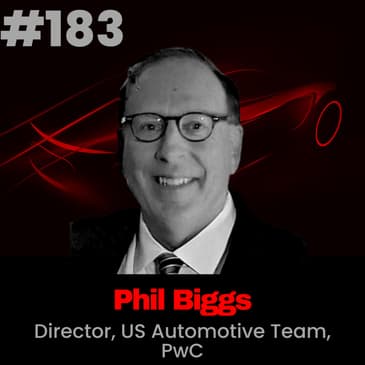
Featured Guest: Phil Biggs, Director, US Automotive Team, PwC
Phil is the Client Relationship Executive for PwC Private in Greater Michigan and a member of PwC’s U.S. Automotive team. With more than 25 years of automotive experience, Phil has worked across consulting, business development, and executive leadership roles in both multinational corporations and early-stage technology companies. His client portfolio has included leading organizations such as Amway, Penske, Rivian, Denso, Meijer, and Gordon Food Service.
About Your Host – Jan Griffiths
Jan Griffiths is the champion for culture change and the host of the Automotive Leaders Podcast. A former automotive executive with a rebellious spirit, Jan is known for challenging outdated norms and inspiring leaders to ditch command and control. She brings honesty, energy, and courage to every conversation, proving that authentic, human-centered leadership is the future of the automotive industry.
Mentioned in this Episode:
Episode Highlights
[01:57] The CEO Council begins: Phil shares how a small dinner of five leaders evolved into one of the most trusted CEO peer groups in automotive.
[04:21] No PowerPoints allowed: Why Phil banned slide decks and created a space for real conversation instead.
[05:30] The loneliness at the top: Jan and Phil unpack why CEOs desperately need trusted peer conversations.
[07:29] The DNA of a modern CEO: Phil explains why uncertainty and disruption are now permanent leadership conditions.
[09:48] Kindness and toughness: Phil reflects on Jan’s AutoCulture 2.0 chapter and the leadership balance exemplified by Alan Mulally and Doug Conant.
[11:01] High EQ matters: Why emotional intelligence has become a critical trait for CEOs navigating transformation.
[14:10] The danger of living in the weeds: Jan challenges automotive’s obsession with detail-heavy leadership and micromanagement.
[16:35] Empowerment over control: Why future-ready CEOs must trust their teams and stop owning every decision.
[17:44] Breaking the silo mentality: Jan and Phil compare legacy automotive structures to modern, fast-moving team dynamics.
[18:36] Mentorship and the missing middle: Phil explains why leadership development and coaching are now essential.
[20:55] Authentic leadership vs. command and control: A candid discussion about what leadership must become in today’s automotive industry.
[21:44] Building a CEO brand: Why authenticity matters more than self-promotion and how leaders earn credibility.
[27:40] Workforce challenges keep CEOs up at night: Why talent, culture, and leadership pipelines dominate executive conversations.
[28:18] How CEOs should think about AI: Phil outlines four priorities leaders should focus on right now, including data readiness and security.
[31:21] Phil’s final message to CEOs: “Be the best Maytag repairman you can be.”
[36:24] Life after PwC: Phil opens up about retirement, cancer survival, music, charity work, and what comes next.
[38:17] Defining Phil Biggs’ personal brand: Jan shares the feedback she heard repeatedly from industry leaders: “He’s an all-around good human.”
Top Quotes
[11:09] Phil Biggs: “ You've got to care enough to be kind. You've got to be tough and have that mentality.”
[11:12] Phil Biggs: “The CEO has to think about how I am reinventing the future while I’m managing the very tough issues of today.”
[16:36] Jan Griffiths: “You have to trust and empower your people.”
[21:17] Jan Griffiths: “Authentic leadership is leadership that really comes from the heart.”
If this episode resonated, share it with a fellow automotive leader and subscribe to The Automotive Leaders Podcast, where we’re shaping the future of authentic leadership in the automotive industry.
This podcast episode is also available on YouTube. Check out our YouTube channel at Jangriffithsautomotiveleaders
Send us your feedback or questions — email Jan at Jan@Gravitasdetroit.com.
[Transcript]
[00:00:00] Jan Griffiths: Welcome to the Automotive Leaders Podcast, where we help you prepare for the future by sharing stories, insights, and skills from leading voices in the automotive world with a mission to transform this industry together. I'm your host, Jan Griffiths. That passionate, rebellious farmer's daughter from Wales with over 35 years of experience in our beloved auto industry and a commitment to empowering fellow leaders to be their best authentic selves.
Stay true to yourself, be you and lead with gravitas, the hallmark of authentic leadership. Let's dive in.
This episode is brought to you by Lockton. Rising benefit costs aren't inevitable for you or your employees when you break through the status quo. Independence matters, it means Lockton can bring you creative, tailored solutions that truly serve your business and your people. At Lockton, clients, associates, and communities come first, not margins and not mediocrity. Meet the moment with Lockton.
Today, we have a very special episode of the Automotive Leaders Podcast. Today, you're going to meet the CEO whisperer. That's right. The man who is known for being the confidant, the convener, and the listener to over 100 CEOs in our beloved automotive industry. Today, we welcome to the show, Phil Biggs. Phil, welcome.
[00:01:55] Phil Biggs: Thank you, Jan. What a pleasure.
[00:01:57] Jan Griffiths: It's great to have you here. Now, Phil, you are a well-known leader with PwC. You're a well-known leader in the automotive industry, but you're particularly well known for what you've been doing with the CEO Council. You've been creating a very special place for leaders to come and talk and work through issues. Let's get right in, Phil. Tell us about that.
[00:02:23] Phil Biggs: Sure, and it's been... We're in our ninth year, Jan, with this, and I kind of got together with one of my partners about nine years ago and we said we ought to do something to represent that group, very important group, which if you think of public accounting, they don't always move to that level of the organization. They're working with controllers and tax directors, certainly CFOs, but not very often the CEOs.
I had some relationships that I brought with me, CEO relationships, when I came to PwC. So the origins were kind of, should we be there? And at least a couple of my partners said, "Yeah, let's do that." And so, I went about the business saying, "Well, how are we going to start?" We had a dinner, and there were about five, and I would tell you, Jan, there's a few in that group you would know. One in particular, I remember, at the very first dinner of five in the room, a few of us from PwC, was Lon Offenbacher.
[00:03:22] Jan Griffiths: Oh, really?
[00:03:23] Phil Biggs: Yes. And, but it really built from there. We ended up, in very short order, as you said, it was about 100 in the 120 in the group that at least I had reached out to let them know we were having this group. And again, we wanted it to be intimate, and we wanted it to be where they could have a haven. As I think, you know, they have a place away from the stage, away from their day-to-day activities where they can have a peer discussion.
[00:03:55] Jan Griffiths: Yeah.
[00:03:56] Phil Biggs: And a nice dinner, and then some PwC subject matter experts, and yours truly as the moderator, which means I got to come up with a good agenda, which we moved into that pretty quickly. The magic number seemed to be always focused around 30 or 40 of the broader group, and then get 15 to 18 to come to dinner. That's a big dinner.
[00:04:19] Jan Griffiths: That's a big group, yes.
[00:04:21] Phil Biggs: But once I told our guys and men and women partners, no PowerPoints. So, if you wanna speak to this group of 15 at dinner, you got to ride in bareback.
[00:04:34] Jan Griffiths: I love that. I love that.
[00:04:35] Phil Biggs: That was my rule, and they allowed me to go forward with that. So, I'd have partners from around the country who touch auto or the supply chain or the tech portion of auto, "Hey, I'm gonna come... I'd be happy to come to your dinner." And I'd say, "Sure, we're glad to have you." "I'll bring my PowerPoint." "No, you won't."
So, it got to be a standing request that start a conversation for four or five minutes sharing your expertise with this group of expert, CEOs, mostly private companies. I didn't mention that, Jan. We had some public companies that in fact, at the very first dinner, we had the then CEO of Wolverine Worldwide, shoe and apparel manufacturer, public company. So, I'd never say no to a worthy public company, but we tried to make it focused on the part of the business I'm in at PwC.
[00:05:30] Jan Griffiths: And you know what they say, they say it's lonely at the top, right?
[00:05:32] Phil Biggs: Yes.
[00:05:33] Jan Griffiths: And it's so true. I don't think people realize that. This group of leaders, who are they gonna talk to? They can... Well, the board maybe. The advisory board or the owner, but to really just sit down and talk about issues, common issues that they're all facing, you created a very, very special place. And of course, trust is of paramount importance.
[00:05:58] Phil Biggs: Yes. The T word, as I call it. And that doesn't start, when we started nine years ago, you've got to earn that. So, I think over the years, I personally have earned a lot of trust as sort of the, if you will, face of this group, as moderator and all of it, but my partners that join me have to have that same trust. You're exactly right. It's earned, and it depends also on the interaction. You've got to give them a chance to, and I don't like to call people out around the table, but sometimes what I do, to be honest with you, Jan, is I call a couple ahead, "Here's some of the issues we're gonna discuss. Can I call on you to get things started?"
[00:06:40] Jan Griffiths: Yes.
[00:06:41] Phil Biggs: So, I do that, I mean, in full disclosure here.
[00:06:43] Jan Griffiths: Yes, yes.
[00:06:44] Phil Biggs: But they, they're prepared, and they always worry, and I say, "Don't. Don't worry about it because we're gonna share that conversation among at least 14 or 15 of your peers." And Jan, you're right, it is, for the younger listeners that don't know about the Maytag repairman, he was friendly and kind, I'll use those words later, but quality first.
Nobody ever called him because he was waiting to go to a call as the Maytag repairman and didn't get called that often. So, that's another element of the CEO list of responsibilities. You gotta be a lot of things. We can get into that, too. But that is, you're exactly right, it's a peer group conversation. We would always have time for social interaction, but we got right into the issues of the day every dinner.
[00:07:29] Jan Griffiths: Yeah, I love that. Now, Phil, I could think of nobody better to talk to about, from your perspective and your experience, you created this group, you're in the room, you're talking to these CEOs day in and day out. For decades, you've been doing this. What is the DNA of a good CEO?
[00:07:53] Phil Biggs: Yeah. I think these days, Jan, they realize there's no easy days. There's never a plateau. So, they're always having to deal with uncertainty and disruption. That can be, for some, very overwhelming, if you're not ready for it.
And now, a footnote, as we like to say in accounting, not all of them in our group are auto. We've got about half and half, so they come from consumer products, some healthcare, some technology purely, but I'll speak just to the auto side of it, 'cause I know that a bit. It's very daunting and you know this, too.
To be sitting on top of a tier one or two automotive supplier or you could be the OEM CEO as well, it's very, the disruption that you face, everything's in constant movement. So, you just have to train yourself, or actually you are trained before you ever get the post of CEO to know that there's going to be no easy day.
[00:08:56] Jan Griffiths: Yeah. Yeah. But the, Phil, the environment as we all know has changed so dramatically in the recent last few years, and we used to talk about these black swan events and the chip crisis. Oh, it's a black swan event. It's a one in a li- once in a lifetime event. Well, those events are happening all the time.
[00:09:16] Phil Biggs: Yes.
[00:09:17] Jan Griffiths: So, whether you wanna call them a black swan event, I don't know. I don't think they are anymore. It's just the world that we live in. As Mark Carney said, he said this is a rupture to the global order, and it really is.
So, the idea that you have to be more agile as a leader, as a CEO now is more important than ever before. So, going back to the DNA as a good CEO in today's world, give me two or three things that are really important in terms of his or her leadership style.
[00:09:48] Phil Biggs: Well, I'll give you one that I read in your book in chapter nine, and I refer to it as Kindness and Toughness.
[00:09:55] Jan Griffiths: Ah.
[00:09:55] Phil Biggs: And when I say that, think of Alan Mulally.
[00:09:58] Jan Griffiths: Yeah.
[00:09:58] Phil Biggs: I had some personal interaction with Alan. I mean, I shook his hand and had a couple meetings with him, and I had a chance encounter with him in a public setting at the auto show. All of it is to say he was very kind with his time, kind to the people he was around, but he was tough. And there's a balance in there.
You talk about DNA, how do you strike that balance so that on any given day, you're a magnet to your people? I like to call it a magnet because people wanna be around you, as opposed to repelling them. That's one criterion. The toughness part comes because the board that you work for, the board of directors, and on a public side, that's really quite daunting, I suspect.
But on the private side, as you and I were talking about, it's the family that you're really ultimately reporting to, but there's outside directors on the board. So, there's an array of people that you have to be responsible to. So, the DNA is you gotta have high emotional quotient, high EQ.
[00:11:01] Jan Griffiths: Yep.
[00:11:01] Phil Biggs: You've got to care enough to be kind. You've got to be tough and have that mentality. You've got to, I always talk about it in duality, the CEO has to think about how am I reinventing the future while I'm managing the very tough issues of today. The things that I'm wrestling with on a day-to-day basis are challenges, huge ones. And you know this in the auto industry, as you just referred to, it's constant. But at the same time, and you mentioned AI, that's a piece of reinventing the future, so you've gotta have a broad stroke of what are the things I'm going to do to make this company better, grow it? And so, that's constant duality, I think.
[00:11:48] Jan Griffiths: This episode is powered by Seraph. When manufacturing leaders need to launch scale, relocate production, or navigate supply chain disruption, they call Seraph. Hands-on operators. Measurable results. Learn more @seraph.com.
Yeah. It's interesting that chapter nine resonated with you because that's all about Doug Conant. And Doug Conant was the CEO of Campbell Soup, the Campbell Soup Company, and he came in there to turn it around when it was basically an American iconic company that was ready to be done and dusted. It was over. And he turned it around, and his exact words are, "You've got to be tough on standards and tender-hearted with people."
[00:12:34] Phil Biggs: Yes.
[00:12:35] Jan Griffiths: And I've interviewed him on the podcast, and he said that it can't be either/or.
[00:12:39] Phil Biggs: No.
[00:12:40] Jan Griffiths: You know, if you're all about the people, and you don't drive the business, and you don't have the right standards, and you get the results for the business, that's no good. But if you're all about the numbers, and you don't have an understanding of the people side of the business, and you bring people into your position, like you said, you got to draw people in, then that's no good, too. You've got to have both, and that balance is so hard.
[00:13:03] Phil Biggs: Jan, it's very hard, and I'll go back to the analogy that we spoke of, the loneliness of the Maytag repairman. It's lonely at the top because you can't always pal around with your senior leadership team because you've got to direct them to do things and be tough.
Same way, you can't be pals with your board members all the time. You might have some close friendships, but there's an arm's length distance. So, who do you go to? And that's why sometimes they do look for advisors, and that's another reason I think that they enjoyed, and have for nine years now, our CEO Group. By the way, the only Big Four accounting firm that's done that. I feel that's pretty unique. It's an investment we made.
But it speaks to the fact they need a place to go, and they look forward to the dinners twice a year. And once in a while, we have other pull-out events, not that many different ways to get together, so. But you're right, that's part of the DNA is understanding that middle ground between what I can do with my leadership team and the people.
[00:14:04] Jan Griffiths: Yes.
[00:14:05] Phil Biggs: Employees, all of the people I encounter, my board. You've got to walk a fine line.
[00:14:10] Jan Griffiths: And I also think, from my personal experience, having led supply chain organizations for many years, there's something in the culture in auto that expects you to be down in the weeds, in the detail.
[00:14:25] Phil Biggs: Ah.
[00:14:26] Jan Griffiths: And that you're, it's kind of like a badge of honor that you know so much about so many things at a detailed level, and it's really embedded in our culture. And I used to fight that all the time because my thought was, wait a minute, I have directors and leaders that are responsible for leading a team of people to manage through this issue. If I get on that call and I get in the middle of that and down in the weeds, then it becomes my call and then they disengage. And you run the risk of being accused of not being in the detail enough, which I was at times, and I'm sure there were times when I didn't make the right call, I'd be the first to admit. But it's those kinds of things in our culture that we have got to get past, Phil. Otherwise, we're not gonna survive as an industry.
[00:15:16] Phil Biggs: Well, and you talk about the CEO of the future, as the complexity that drives automotive, and it is one of the single most complex industries that, and I've been in consumer products, I've been in purely tech, I've been a few places. Auto is tough. And it's constantly changing, but I think the CEO has to think about where I'm taking the company, as we talked about, and who am I gonna rely on to do that? And allow them to put their own stake in the ground, and yet be involved.
So, they do have to be a subject matter expert, not on everything. If they came to the job as the CFO first, well, we know you understand the balance sheet and the P&L, but you've really got to be a people person. It's back to what you said earlier, and not all CFOs are going to be good at that, not all engineers.
Alan Mulally, we talked about him or mentioned him, he came from engineering ranks, amazing people person, but he understood the business issues very, very well. So he disciplined himself to be a lot of things. You can't be everything because I think the challenge for tomorrow's CEO is capacity. You have to have capacity to do a lot of things, and there's only so much time.
[00:16:35] Jan Griffiths: Yes, and then you have to trust and empower your people.
[00:16:38] Phil Biggs: You do.
[00:16:39] Jan Griffiths: You have to empower your people. And I was talking to John McElroy on Autoline After Hours, in a recent episode, and we were talking about the silo culture in automotive. Not just automotive, I mean, in a lot of manufacturing companies. And that silo culture is very much like running a relay race. So, you've got design engineering hands it over, maybe manufacturing engineering, then to purchasing, and then so on and so forth, right? So everybody's handing the baton.
And the Chinese OEMs and the type of organization structure we need to get to is more of a playing basketball, everybody on the pitch at the same time. The ball coming at you lightning fast. You got to move. You got to make a decision and you got to move, and you're either passing it to this person or this person. Clearly, I'm not a basketball play. I'm not a fan, but I understand sports. But that's an analogy that I can understand. And we have got to move away from that. So, a CEO today might, well, probably came up through that silo system.
[00:17:44] Phil Biggs: Yes.
[00:17:44] Jan Griffiths: As most of us did. So, it's a complete rethink of what we've known our entire lives. That's an amazing challenge that I don't think CEOs up to this point have had to face.
This episode is sponsored by UHY.
Did you know suppliers now spend 157 hours on an average RFQ and still face the same roadblocks as 20 years ago? UHY and the Center for Automotive Research, break it all down in their new white paper. Get the insights and see what's really changed in 2025.
Download your copy. There's a link in the show notes.
[00:18:36] Phil Biggs: I think that's very true, Jan, and I think if you bring it back to the duality concept of what can I take from the siloed history of auto. There are things that are very good about that, so take what's the best of our siloed approach to the industry, and then have a more emerging thought of what the future's going to be going forward.
And what I guess specifically mean by that is one thing we're missing is mentorship, and that's something I know you're very involved in, but we see a lot of that middle rank, the middle ranks of management in a lot of industries, not just auto, in fact it's in public accounting. That's been hollowed out since the pandemic for lots of reasons, we can go into that, but because of that, we need to focus even more on mentorship and getting these young Gen Xers and Millennials who think they know how to run something end-to-end, a project, we've got to get them hands-on coaching and experience.
And so, I think the tone from the top, the CEO's got to embrace that. That's one thing. But then there's what we call, I'll steal from Jeff Barrick, one of my great friends who's the founder of a tech company in Detroit, you've got to always be thinking about innovation, and is it programmatic or is it emergent? Or both.
But auto, we tend to think programmatic because we want to fit into the key programs that the OEMs want to partner with us on. But then there's the emergent piece which says, "I want to get ahead." And we know there's companies that are fully doing that. I can think of, in my opinion, a BorgWarner, a Gentex. I could think of others. They are always thinking about emergent technology and emergent management versus purely programmatic. You got to do both. Again, it goes back to the duality concept. You got to think of a lot of things, and certainly two or three things at once.
So, I think that's something that's coming, is how do we work with our OEMs, handle the programs that we're being told that we're needed to participate on, but then get out there on the front edge where we can make profit that our shareholders and our families want to see as well.
[00:20:55] Jan Griffiths: Hmm. Phil, let's talk about leadership style. Do you know? All the time I'm talking about command and control versus authentic leadership.
[00:21:05] Phil Biggs: Mm-hmm.
[00:21:05] Jan Griffiths: Command and control, very much the old school, old style model that we had in this, in the auto industry. You know, I'm the boss, I will tell you what to do, and if you don't do it, I'm gonna take your head off, basically. I mean, that's in a nutshell, right?
[00:21:17] Phil Biggs: Right.
[00:21:17] Jan Griffiths: Authentic leadership is leadership that really comes from the heart, that it's okay to be who you are, but you've got to be very comfortable in your own skin.
[00:21:25] Phil Biggs: Yes.
[00:21:25] Jan Griffiths: You still drive accountability, but you do it in a positive way. As you know, I have 21 traits of authentic leadership, there's a lot to it. Tell me, from your perspective, the way that you interact with all these CEOs, authentic leadership versus command and control. Talk to me about that.
[00:21:44] Phil Biggs: Well, you can be authentically commanding and controlling because that's where your passion is or that's what you've learned, but I like authenticity that shows I've done enough to earn the spot that I'm in. I'll give you an example. Mary Barra was, as you know, the plant manager for the Hamtramck operation for General Motors. I don't think you get any more down and dirty than that.
[00:22:09] Jan Griffiths: Yeah.
[00:22:10] Phil Biggs: And she did a lot of things that took her through her journey at GM, and now she sits on the board as the chair. Of course, she did her stint as CEO and still is an amazing individual. And all of that, on top of that, the first woman to take that role, as we know.
But her roots were in authenticity, so she didn't have to kind of move the chess pieces around. She was authentic from the beginning. People know that. And so, play to the things that you're good at, learn the things you're not so good at. And I like to say, too, and you know this, Jan, build your CEO brand. You have to have that these days. It doesn't mean you, you can be on a podcast, that's part of it. You can be out public speaking. That's part of it. You can be in small groups, bigger groups with your employees. That's all part of it.
Bill Ford was sitting with the Take Your Kid to Work Day at Ford Motor the other day, and there's nobody, you talk about kind and tough. Boy, does he not typify that in my mind. He's the kindest guy, and yet he has to make tough decisions every day.
So, the authenticity for me is how do you brand yourself? And how you brand yourself, I think, is what you care about and what you're good at and what you convey and what you can learn, so there's that. And then, what you don't want to do in that process, in my opinion, and this is for CEOs, is don't be a self-promoter.
[00:23:42] Jan Griffiths: Yes.
[00:23:43] Phil Biggs: And there's a lot of those folks out there. Think about, you mentioned basketball, I love to, when I'm doing public speaking. I was a walk-on at Grand Valley, a D2 basketball program. That's no small thing, but I know what I was. I was the walk-on that was basically never in any games until we ran up a thirty-point lead, and then the coach would signal me in and I'm scrambling around to go get in the game.
But I can authentically talk about those experiences because I was a pretty darn good athlete. These years later, I'm not so much, but I have those experiences, and that gets back to a Mary Barra or a Jim Farley. They've done the work. Do the work. They did the work to get them to where they are today, and that alone will get them their brand. So, I don't think, what I would call, they're not a, they're not posers.
[00:24:33] Jan Griffiths: Yes.
[00:24:33] Phil Biggs: Right?
[00:24:34] Jan Griffiths: Yes.
[00:24:35] Phil Biggs: Right. They're not self-champions or self-promoting. There are those, and I think of, when you mentioned basketball, I think of college head coaches in basketball or football. They're constantly moving around finding a better gig. Well, that's fine, I guess, but you're never anywhere long enough to make a difference. Usually, you're just, and people see pretty quickly you're just out for yourself. So, if you're branding yourself, be authentic and make it what you care about. And I see the ones that are successful in our group are doing exactly that.
[00:25:09] Jan Griffiths: You just brought to mind something I haven't thought about in a long, long time and that is, all the decades that I've been in the Tier 1 space, you would get a CEO who would come in, and you knew immediately if it was the kind of person who was there for two years to make some tough decisions, get the bonus, and get out.
[00:25:31] Phil Biggs: Yes.
[00:25:32] Jan Griffiths: And it was so obvious. You could see it, the aura, everything. The body language. Not just the decisions, but you could just tell.
[00:25:40] Phil Biggs: Yeah.
[00:25:40] Jan Griffiths: And it really left a bad taste.
[00:25:43] Phil Biggs: Yeah.
[00:25:43] Jan Griffiths: And I think those kinds of CEOs think that they're fooling everybody, I'm here to say you're not fooling anybody.
[00:25:49] Phil Biggs: That's right.
[00:25:50] Jan Griffiths: Not one single person. So, just be who you are. I love what you said about developing your own CEO brand, your own personal brand, which should be aligned with your values as a person.
[00:26:04] Phil Biggs: Exactly right, Jan.
[00:26:04] Jan Griffiths: There was a point in time when the idea of the CEO of Ford hanging out with kids on Bring Your Kid to Work Day and having that plastered all over LinkedIn would be a big no-no, because that was not the mold that we expected a CEO to fit. That mold has changed.
[00:26:21] Phil Biggs: Yes, it has.
[00:26:21] Jan Griffiths: It is your mold as a CEO. It is whatever you determine that mold to be. And I do see some of the younger CEOs starting to do more of that.
[00:26:33] Phil Biggs: I do, too. I do, too. We don't have that many younger ones, purely 30-somethings, in our group over these years, but we have a few. And I try to get them in sometimes, I break my own rules and I have them come in as a guest speaker, but I tell them, "You've only got four or five minutes. Get your subject matter." I brought in one in a not-for-profit role, and she was outstanding. And all of the group, 15 CEOs, are all leaning forward because they don't hear from that side of the house all that often. Purely not for profit. What are the issues? What are the goals they're trying to reach? And I loved it. And then, you find then very quickly how much they care about public education or workforce issues.
I'll mention another thing, there's not a dinner meeting that goes by that we don't have an M&A discussion, a piece of that what are going, what's going on with all the variable? The variety of things that are affecting us as we're trying to grow the company. We're thinking about acquisitions or joint ventures, strategic alliances, but you know what it always comes down to, do I have the workforce?
[00:27:40] Jan Griffiths: Ah.
[00:27:41] Phil Biggs: And do I have the senior leadership to run it? And do I have the workforce to drive it day to day? And so, inevitably, workforce comes up at almost every, if we are free-forming at the end, it always comes up. And then, embedded in that is public education or any K-12 education. Do we have readiness in the younger folks? And that brings us back to mentorship, and that brings us to culture. See, all these things are,
[00:28:07] Jan Griffiths: it's all interconnected.
[00:28:08] Phil Biggs: inexorably connected.
[00:28:10] Jan Griffiths: Yes. Yes. And now, of course, we've added in AI.
[00:28:14] Phil Biggs: Yes.
[00:28:15] Jan Griffiths: How should CEOs be thinking about AI?
[00:28:18] Phil Biggs: My view, and PwC has been a truly a world leader on the forefront of AI before it became fashionable a few years ago. I am not a subject matter expert by any stretch, but when you're in the room with a lot of really smart folks that understand it deeply, I've learned a few things being in the room with them at meetings.
So, what I would say to CEOs, and what I do say to them, because sometimes they'll ask me my opinion, "What should I be doing?" Pick four things, and I would start with data readiness because the impression that most of them have, not all, but many of them is, "Oh, our data supports everything we do. Data and systems support every decision we're making, and it's in good shape." But is it? And is it integrated enough so that the artificial intelligence can draw from it and render good decisions?
[00:29:09] Jan Griffiths: Right.
[00:29:09] Phil Biggs: And they can't, if it's not integrated. And what happens is it's so disparate and so global that systems, you'd be surprised, Jan, even the tier ones that we love, and certainly even some of the OEMs, are just not that fully integrated. They don't even have a dashboard that the CEO can say, "I can look any place in the world and know what's going on." So, data readiness is one thing.
I think another thing is understanding what they call Large Language Models, right? And agents. And that's evolving every month, every quarter, every year. There's all these technological improvements. So, you've gotta prioritize. That's the P word. Prioritize what you wanna do with AI because it is like boiling the ocean, and you will get brought in, and you're swimming for your life.
So, pick a couple of things. I like to say if you wanna go large with it, then go over the product innovation side, back to that programmatic emergent break in the road. You wanna be both? That's where AI can help, but there's gonna be an investment, and that gets me to budgeting. So, you gotta know what you're putting down on the front end.
And we tell people, "Do a small one first." That's sort of the Ford Motor mantra. Do a small one to start, and maybe it's more enterprise-wide with ChatGPT, which is fine, but if you wanna get into large language models and applications that will reinvent your product and your market, that's gonna require a lot of investment.
[00:30:39] Jan Griffiths: Yeah.
[00:30:40] Phil Biggs: And then, inevitably, they'll ask for ROI, and they should ask for ROI, but give that a little bit of time. That's another one. Expect it, but give it time to nurture. And the last one I'll mention, I call it fencing, but it's security, because we have these young millennials and young Gen Xers, they've been brought up with digital handsets and laptops and phones, and that's all they know, and they're so excited to be part of an AI committee or an AI launch. But they've gotta be coached up on keeping the data inside your walls because you have to protect it. So, there's ways we help companies do that too.
[00:31:18] Jan Griffiths: Yeah, yeah. There's a lot of risk out there.
[00:31:20] Phil Biggs: There is. There is.
[00:31:21] Jan Griffiths: Okay. Phil, let's take a turn on the personal side. Now, you have recently announced your retirement, your planned retirement, and a wave of incredible responses and comments I saw on LinkedIn. Now that you sit in this place and you're looking at all the conversations you've had with CEOs, what message would you like to leave on the desk of the CEO of today as you move into this next chapter of your life?
[00:31:54] Phil Biggs: Well, I actually wrote this down and we've already talked about it, is be the best Maytag repairman or repair person that you can be. What does that mean? You've got to deliver quality. You're gonna be lonely at times. Try to be all things to all people, like the repairman or person, you've gotta smile a lot and care a lot. We talked about kindness and toughness. So, you gotta think about those attributes, and it's not a bad thing to brand yourself.
So that's a lot, but if you just look at what the Maytag repairman is doing, they're all too young that are listening to this to know Red Adair. We have an oil fire out somewhere in the Gulf or the Pacific, we gotta get somebody to put that oil fire out. So, you're gonna be that person CEO, but you've gotta have the ability to think in duality, do that, and that's the message, and be the best Maytag repairman that you can be.
[00:32:53] Jan Griffiths: I like that. Now, something that you didn't know is that not only have I worked for Maytag.
[00:33:01] Phil Biggs: Have you?
[00:33:01] Jan Griffiths: Yeah. See, you didn't even know, did you?
[00:33:03] Phil Biggs: I did not know that.
[00:33:04] Jan Griffiths: I know, right?
[00:33:04] Phil Biggs: This is good to know.
[00:33:05] Jan Griffiths: So, I'm listening to you talking about the Maytag repairman, but this gets even weirder. You ready? So, I worked for Maytag in Iowa.
[00:33:13] Phil Biggs: Oh, my goodness.
[00:33:14] Jan Griffiths: I was Director of Lean Sigma for the supply base, and my boss at the time, Terry Carlson, he was having the first Maytag supplier meeting, and he wanted me to organize it and structure it. And I went all out. And this is going back, oh my gosh, 1998 maybe, '99. And he asked me to organize it, and I wanted it to be, 'cause they'd just come out with a Neptune, and it was all about buying innovation and I wanted this conference to have that innovation feel. So, I had recorded all this techno music, and it was, it was all like very upbeat. And then, I decided to dress up as the Maytag repairman.
[00:33:54] Phil Biggs: Oh, no. Oh, no.
[00:33:55] Jan Griffiths: I can't believe you've been saying this.
[00:33:56] Phil Biggs: Oh, no.
[00:33:57] Jan Griffiths: So, I come out on stage, and I was younger then and I didn't quite understand marketing and branding and all this, so I come out on stage dressed as the Maytag repairwoman with the hat and the jacket and everything.
[00:34:10] Phil Biggs: Yeah, yeah.
[00:34:11] Jan Griffiths: And I said, "Ladies and gentlemen, I'm the new and improved version of the Maytag repairman, I'm the Maytag repairwoman." And the marketing people were going, oh, you know, no, no! Don't do that. Don't say that. So, I think it's really interesting that is the example that you used today. You never knew that I actually was the Maytag repairman.
[00:34:29] Phil Biggs: I did not know that, and that's a feather in your cap. And look, things have changed. I mean, let's face it, a lot of the appliances that we relied on when we were younger aren't quite the same as they were in terms of quality and in terms of pricing and product itself, but the standard was set. You talked about standards and they had that standard back in those days.
[00:34:52] .: Yes. Yes.
[00:34:52] Phil Biggs: They certainly did. They kinda owned it, and that's what's the kind of the funny part of the commercials that would come on. Well, there's the Maytag repairman. He looks lonely. Nobody calls on him 'cause the products work. So, that's what's being expected.
I would say, that gets to the CEO in this way. You've gotta be able to deliver the quality, deliver the mail, deliver the results. You gotta get along with a lot of people. You got a prickly board of directors or family members that don't always understand why you're there maybe on the private side. You've got employees. So again, all these constituents. In the public side, you're dealing with regulators. You're dealing with other outside investors, on and on. So, you've gotta wear a lot of hats, and we talked earlier about the emotional quotient, the high EQ. You've gotta be willing to do that, and then no easy day. There's never a plateau. You've gotta wanna do that.
[00:35:48] Jan Griffiths: Yeah.
[00:35:49] Phil Biggs: That's almost a Navy SEAL mantra in a way that there's never, in fact, there isn't for them an easy day, and a lot of CEOs. And that's why some don't always stay on, or if they don't stay on for that reason, they're doing too much self-promoting like we talked about.
[00:36:06] Jan Griffiths: Yes.
[00:36:06] Phil Biggs: They need to have that badge that says, I'm authentic. I ran the Hamtramck plant.
[00:36:11] Jan Griffiths: Yes.
[00:36:12] Phil Biggs: Right? So, if you have that, live up to that.
[00:36:15] Jan Griffiths: Yeah.
[00:36:15] Phil Biggs: And you'll be fine.
[00:36:16] Jan Griffiths: I love that. Phil, getting ready for retirement, what do you like to do outside of work?
[00:36:24] Phil Biggs: Well, I'm not a golfer anymore. I tried that back in my Ernst & Young, EY days. Can't do golfing. I mean, I'll drive the cart around.
[00:36:32] Jan Griffiths: Yeah, I'm not a golfer either.
[00:36:33] Phil Biggs: I can't do that.
[00:36:33] Jan Griffiths: I can't, no.
[00:36:34] Phil Biggs: But I am a bit of a biker, so I plan to get better at that.
[00:36:38] Jan Griffiths: What sort of biking?
[00:36:39] Phil Biggs: Well, just out on the trails, but not doing mountain biking. I don't have that stamina. And partly, I'm a two-time cancer survivor. So, every day I wake up, I'm like, I've gotta kinda be more fit, get better fitness, 'cause that takes a lot out of you. I won't even go into all of it, but it's a long, long journey back from that. So, I've gotta do some things that are active, 'cause sometimes I'm not doing enough of that. The fundraising I do for charities in West Michigan is something I'm gonna be focused on. I am a bit of a singer-songwriter.
[00:37:11] Jan Griffiths: You're more than a bit of a singer-songwriter. I've seen some of it. You're great.
[00:37:15] Phil Biggs: Well, thank you. And you know the secret to that, Jan, is you just get on stage with a lot of great pro musicians.
[00:37:20] Jan Griffiths: Yeah.
[00:37:21] Phil Biggs: But the trick there is you gotta be good enough to get on stage with the pro musicians.
[00:37:25] Jan Griffiths: Right.
[00:37:25] Phil Biggs: So, as a writer, I've shopped out some of my songs to these couple of groups that I've worked with, two or three, and so I get my little cameo to play the mandolin or the guitar and sing a few, but to me, that's a wonderful thing. So, tying all that into benefit concerts, we'll be doing more of those. I love doing that. Like I say, I've gotta do some things to stay fit. I think Sally and I'll do some traveling finally. Greek Isles.
[00:37:54] Jan Griffiths: Love that.
[00:37:55] Phil Biggs: Yeah, so I've gotta get busy making those plans. So, those are a few things. And I think I might get recruited to do some executive coaching. Some I might even raise my hand to keep the CEO round table going.
[00:38:08] Jan Griffiths: Oh, I think that's...
[00:38:09] Phil Biggs: We'll see about that.
[00:38:10] Jan Griffiths: I think that's an excellent idea.
[00:38:11] Phil Biggs: I'll take your advice. I'll take your guidance on that, and I'll keep you posted if I'm so lucky.
[00:38:16] Jan Griffiths: Please do.
[00:38:16] Phil Biggs: I will.
[00:38:17] Jan Griffiths: Now, personal brand, I'm gonna talk to you about your personal brand and tell you some things that people have told me about you.
[00:38:25] Phil Biggs: Oh, no.
[00:38:26] Jan Griffiths: Are you ready?
[00:38:26] Phil Biggs: Sure, I guess.
[00:38:27] Jan Griffiths: So, I talked to a few people, and you and I have known each other probably about six months or a year or so on social.
[00:38:34] Phil Biggs: I follow you, so I've known you. I've known you longer than a year.
[00:38:37] Jan Griffiths: Thank you.
[00:38:37] Phil Biggs: I'm watching what you're doing.
[00:38:39] Jan Griffiths: Thank you.
[00:38:39] Phil Biggs: Social media.
[00:38:40] Jan Griffiths: So, I talked to some people that know you better, and these are some of the comments that I got back, "He's an all-around good human." You don't hear that very often. "He gives constantly." Those are the hallmarks of your brand. It is authenticity at its finest.
And I would like to say thank you for doing the interview today with me, but also thank you, Phil, for everything you've done for the automotive industry, for Michigan. And I wish you all the very best in your next chapter, and I know that there's thousands of people out there that feel the same way, so thank you.
[00:39:21] Phil Biggs: Thank you, Jan. I appreciate it so much. Very kind.
[00:39:25] Jan Griffiths: Thank you for listening to the Automotive Leaders Podcast. Click the listen link in the show notes to subscribe for free on your platform of choice, and don't forget to download the 21 Traits of Authentic Leadership PDF by clicking on the link below and remember. Stay true to yourself, be you, and lead with gravitas, the hallmark of authentic leadership.