Download the 21 traits of authentic leadership e book
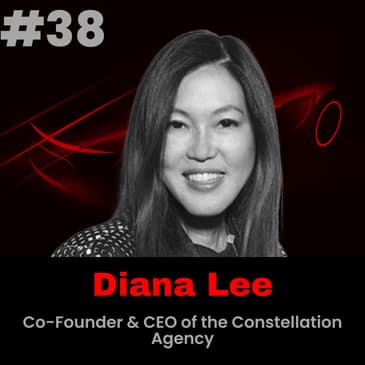
Meet Diana Lee, CEO of the Constellation Agency, a company that experienced 4000% growth in the past three years. Through this exponential growth, she strives for a high level of honesty, transparency, and vulnerability. In this episode, she shares her formula for hiring and retaining top new talent in a highly desirable fast-paced environment, and you’ll hear how she encourages her team to self-advocate for continued growth and fulfillment. She also tells the heartwarming story of how she encouraged the automotive sector to come together to benefit the community.
01:55 First impressions
04:18 Diana’s story
07:16 Moving up the ranks in automotive retail
08:20 Difference between “Consulting” and “Coaching”
15:11 Transparency in leadership, encouraging self-advocacy
21:42 Attracting and retaining the next generation of talent
29:20 Lessons from the pandemic
43:06 Challenging the billable hours model
49:07 The Do-Good Auto Coalition (love wins, always)
59:39 Advice to your 25yr old self
01:03:35 The legacy
[Transcript]
Jan: [00:00:51] In this episode, you'll hear from a leader experiencing 4000% growth in her company in three years. You'll hear a level of honesty, transparency, and vulnerability that's quite rare these days. You'll hear how she encourages people to advocate for themselves in the workplace, asking for title changes, raises, and vacations.
You'll hear how she hires and retains people in a fast-paced environment, how she challenges the billable hours model, and how she believes that transparency clears conflict. There's a lot to be learned in this episode of the Finding Gravitas podcast. Diana Lee is the co-founder and CEO of the Constellation Agency.
Diana, welcome to the show.
Diana: [00:01:50] Hi Jan. Thank you so much for having me.
Jan: [00:01:55] It's great to see you. Now we met in November of 2019 on stage at the Automotive News Leading Women event in Dearborn. And I have to tell you Diana, one of the reasons that I wanted you on this show to talk about authentic leadership, actually there's a couple of things, when I'm asked to be a speaker at an event, I always reach out to the other speakers and say, Hey, you know, it's nice to meet you, connect with you, see you on stage at the event. And you were one of the very few people that came right back and said, Hey, you know, great, looking forward to meeting you. Your message was so warm and collaborative, and that was the first interaction I had with you.
And then when I met you at the event, you were there, you had several of your team members from your company with you. And it was just a sense of feeling, you know, they weren't there sort of, they were with the big boss, the CEO. There was none of that.
It was very much a nice, collaborative, easy feel with the team and your warmth and your collaborative spirit came across to me. And I made the announcement in that event that I was going to launch the podcast and I always had it in the back of my head, mmm… I think she's somebody that really understands authentic leadership. And so here you are.
Diana: [00:03:25] Wow. That's so such a compliment coming from you, Jan. I remember also at the event, when you got on that stage, I was like, who is that? You were so dynamic, and it just made everybody feel so alive when you're on that stage and doing your thing. And I just remember, you know, you're somebody that I would love to get to know just because I realized what kind of performer you are on the stage.
Jan: [00:03:56] There’s nothing like dancing to a bit of ACDC in your fifties, in front of 700 people. Right. But here, you are, and we're going to talk about leadership. And I'm interested because I think you have a number of different perspectives to offer, but first and foremost, Diana, what is your story?
Diana: [00:04:18] I think my story is just a little girl coming here, immigrating here when I was five years old and hoping to have a successful life in America and being able to have that here now being 52 years old and having a team of people that really believe in me and believe in our company, believe in the dream, and believe in breaking glass ceilings, it's been such a privilege.
Jan: [00:04:46] So take it step by step. Tell us more about your story. So you were born where?
Diana: [00:05:00] I was born in Seoul, Korea, and I immigrated here when I was five. So that must've been... 1974. Yeah. So immigrated here in 1974. At the age of nine, I remember getting our us citizenship and becoming a citizen. We moved to the slums of Philadelphia from Seoul, Korea, not speaking the language, not speaking English, and Brady bunch was the way I learned how to speak English. I watched it every day and I was obsessed about the show. And so from there I learned English, went to school here and, uh, you know, it was tough environment, because, you know, we were very poor at the time. So we lived in a one bedroom apartment in Philadelphia at the time with a family of four.
Jan: [00:05:52] Yes. And then... you came to the US and you started your career in the automotive industry, right?
Diana: [00:06:00] I did. So at 18 years old, I was going to college and it was my freshman year going into my sophomore year, the summer of, and I saw in the newspaper ad for a greeter at the local car dealership in Worcester, Massachusetts. And I thought, well, you know what? Dealerships make a lot of money. I bet you, you know, I can get this job during the summer and save some money. And so I applied at the local car dealership and got the job as the greeter. And if anybody has been an auto, I'm sure that this doesn't surprise them, but after two weeks they said, you know, we have too many customers in the showroom. You're no longer a greeter anymore, you're a salesperson go and sell some cars. So that's how my career started in auto.
Jan: [00:06:57] And then, uh, you were at the dealership level, but then you've also got a lot of experience with the OEMs. And looking at your background today, I have to admit, I didn't realize that you have, you have a lot of experience in leadership as a coach. Tell us about that.
Diana: [00:07:16] Yeah. So, um, moved up the ranks in automotive retail for the next 13 years. So, sold cars, was an F&I manager, F&I director. And, finally, you know, I, and I'm sure a lot of women can relate to me and auto, but the hours are not very flexible in the automotive retail. And so once I got married and was looking to have a baby, I just no longer wanted to do 15 hour days.
So I switched over to the consulting side. And my first job was General Motors Standard for Excellence program where I was a consultant. And it was all about leadership back then, with GM and this was many, many years ago, probably about 15 years ago that I broke into the consulting side and continued my career in automotive coaching as well.
So after a few years of doing automotive consulting, the new buzz word became coaching. Right? No longer consulting. And at the time, I didn't even understand the difference. I was like, what is the difference between consulting and coaching? And what people had said to me is coaching is all about making sure people realize it's their idea.
And if you're able to do that, then they’ll implement the idea. And that was a really big awakening for me when I realized consulting is much more about telling people what to do and hoping they may do it or may not. But coaching is all about getting them to the idea and making them feel like they were the ones that came up with the idea and therefore you have a much better shot of that idea being implemented in the future.
Jan: [00:09:11] And you've worked for some major, major OEMs in that role, right? I see BMW.
Diana: [00:09:17] I did. Yes. So I did work for a lot of different manufacturers, so General Motors, Ford Motor Company, Mazda, I worked for Volkswagen, and I'm trying to think here a lot… Nissan. Uh, the only ones I didn't really touch during that time, cause even like Jaguar, Kia, I had Suzuki, like literally I did so many, that's not even all my resume. The only ones I didn't do consulting for were the Korean auto makers, which is kind of funny because I'm Korean.
Jan: [00:09:57] You must have learned a tremendous amount about leadership. The fact that you worked in those cultures that are vastly different, as we all know, you must have learned so much. There had to have been leadership behaviors that you liked, that you saw, that you adopted and brought into your own leadership style, and there had to be others that you sorta said, I know that's not, that's not the kind of leader I want to be. So tell us today, you know, who are you as a leader. What does authentic leadership mean to you? Tell us about your leadership style today, as you stand as CEO of the Constellation Agency, which is, um, what is the revenue now of Constellation?
Diana: [00:10:50] Um, it's upward of 20 million and our projected revenue this year will be closer to 50 million in 2021
Jan: [00:11:00] So an amazing company that's experienced tremendous growth in fact, and we're going to get to your leadership in a moment, but I keep seeing, just accolades after accolade, the number 10 fastest growing women led company on the Inc 5,000 list for 2020, Crain's seventh fastest growing company in New York, number 65 Inc 5,000 fastest growing company. I mean, the awards and the accolades are just endless. So here you are CEO of a tremendously successful company that's continued to grow, but who are you as a leader?
Diana: [00:11:45] So Jan, I mean, I am shocked by how fast Constellation has grown. Um, we've grown over 4000% in the last three years, and it has been truly a rewarding, sort of surprising, happy events that have happened, and growing that fast, I could not have done it without our core team that had the dedication and the strength and the courage and the resilience to actually get us to where we are. When you say, you know, who are you as a leader? you know, it's a question mark to me, and this is somebody coming from somebody who's literally had leadership coaching and, and also become a certified coach. I mean, hours of training to become a certified coach where you're supposed to blend into the wall and not really have any judgment towards what other people are saying.
It's been a difficult journey, but at the same time as years go by, I definitely have more question marks about my own leadership style. It's not one that I say, wow, I'm the best at that. There's a lot of room for improvement and it's a learning. Everything I've learned kind of goes out the window when you're under high, stressful, detrimental situations at times.
And I think people don't realize how stressful it can get when you have, you know, 80 people relying on you to make payroll every single week, but also make bonuses. And when times like COVID happen, you know, it's very difficult to say, you know, I'm such an impactful leader even after having been trained throughout the years.
Jan: [00:13:56] One of the traits of authentic leadership is the really the art of collaboration and that's collaboration, not only with your team and how you work with your team, but how you work with all your stakeholders. That's customers, suppliers, maybe investors, you know, whatever. It's the gamut, the whole gamut of stakeholders. And I see you as a very collaborative type of leader. Where did that come from in you?
Diana: [00:14:27] I think that one of the learnings that I've had during this journey is that you as CEO, there are no great CEOs that are out there. You're going to take criticism. And it's just how much criticism you're going to take and who is going to criticize you.
It's not a matter of, Oh, I'm such a great leader and you know, everybody thinks I'm a great leader. I don't think that actually exists. It's just at some point and, and sometimes in volume people criticize you and that strength has to come from the inside that you know, that you did the best thing for other people.
So one of the things that I believe in is transparency in leadership. And I'll give you an example. I'll tell you a story, Jan. Many years ago, like I would say in year two of Constellation, which isn't that long ago because we're in year four, I noticed something was really weird was happening in our own company.
So I gathered all the women that worked at our organization. There was only about 20 of them at the time. And I brought them into the conference room and I said, I want you to look outside. And they saw all the men out there, and these are all the female employees, and I said, okay. So I want to ask you guys a question here.
I said, how many of you have ever asked me for anything? And they looked at me, they looked at each other and they didn't answer. I said, well, let me ask another question on top of that. I said, how many of the men out there asked me for something, whether it be a raise or it was a title change, or it was time off or more vacation or more of something.
How many of them asked me for things. And this is year two at our company. At the time, I certainly didn't want more people coming to me to ask me for things. Cause I'm like barely trying to make sure that, make payroll and make everybody happy and provide for them financially, as well as give them time and everything that they need.
So I didn't need anybody else to come to me for asking me for something, but I knew that something weird was happening. And so they said, well, we don't know. And I said, okay so let me answer this. I said more than 50% of the men out there have asked me for something in the last two years. Whether it be a title change, a raise more vacation time, but they don't just ask. They advocate for themselves. They advocate for each other to the point that it's uncomfortable for me to say no. Right? And they make it really known if I say no to them, that it's, it's not something that they want. But, out of all of you in this room, there's only one person that's ever asked me for anything.
And I certainly don't want more questions and more things that I have to give you, but I know that there's a higher priority here for me than just making sure I provide for everybody financially. I think the higher priority is that you have to learn to advocate for yourself. And even if I can't say yes, I'll still be super proud of you that you asked for something.
So I want you to go out of your way, and I want you to start asking, because if you can't do this with a female CEO, you never going to be able to do in any companies with a male CEO. So let's start this lesson now and let's try
Jan: [00:18:25] Powerful. How did they respond to that?
Diana: [00:18:27] I think that they were really happy. I have to say, like to this day, year four, I have very aggressive females on our team now
Jan: [00:18:35] You asked for it! (laughing)
Diana: [00:18:40] The men joke about how scary it could be with the females sometimes at our company, but I’d never change any of that. I'm super proud of them. And I encouraged them to roar in many ways. I encourage them to speak up and not be afraid. And I've always encouraged them to be who they want to be. So another thing I think in auto, and this is not something that I'm proud of auto, but I do think that this is something that we should also discuss is, and there's more stories about this is that sometimes I think females are led into situations where they have to go out with male clients or male colleagues. And I've always told the females in our organization that I don't want them to go to dinners with anybody. And I said that it's a choice, but at the end of the day, they need to be coming to the organization because we do things really well, our technology is great and we give great customer service. Not because the women in our organization are women to go to dinners with. And so I make that super clear because I think that there are, you know, misperceptions out there in auto. And I want to make sure that people are aware that, you know, what we give back in our company is not women to go to dinners with male colleagues, it's because we have something that's great. And don't come in, if you don't actually see that.
Jan: [00:20:30] Yeah. That was certainly part of the culture in many companies that I've worked for, where there was an expectation for you to do that. No, I love food and anytime somebody wants to go to lunch, I'm definitely up for that. But, you know, I guess lunch and dinner, they're two different things, right? Dinner, you know, then you've got, maybe there's alcohol involved and then, you know, things can change and things can escalate rapidly. So I think it's great that you call that out immediately. I would think that the environment that you're establishing there or have established is first of all one of safety, of psychological safety, you can see that.
How do you attract, you know, we used to say, how do you attract millennials? Forget millennials. How do you attract gen Z? Because it's about gen Z now, millennials are almost all of them are in the workforce, but how do you attract gen Z? How do you keep yourself on the edge? I mean, you're in New York, you have an office in LA, you know, you you're, I would imagine the competition for talent there is fierce.
Diana: [00:21:42] It definitely is. I think one of the things that I've learned throughout the years is you have to pay competitive wages. The first thing is you must take money off the table. And so, you know, there's a lot of companies out there that they don't pay well. And auto, especially in auto because they feel like they can get talent without having to pay well. I believe that you have to pay well in order to retain and keep people. So the first thing is, , we don't start them as low as some of these other companies start them, especially because of the fact that I don't want them to start and start looking for a job right away. Um, the second thing I think is, to retain and also attract millennial talent is to move them up quickly. Give them opportunities quickly. And they are looking for all of that. And I think one of the benefits that we have is the fact that we've grown over 4000% in the last three years. And so, because of that, we just keep adding more and more roles.
So like right now, you know, my head of HR is really working very hard to fill as many roles as possible because we are again, ramping up pretty hard. And when you go from, you know, 4 million to 10 million to 20 million to 50 million, it's very difficult. It's not easy. And every process you have breaks and it has to be remade.
And the amount of people that you have to bring in in order to get to those intervals and stages is hard. So, it requires attracting the best talent, and those are the two top things that I would say that allows people to come, but also stay with Constellation as well.
Jan: [00:23:42] You know, I think you brought up an excellent, excellent point about moving people quickly, you know, giving them opportunities to challenge them and growth opportunities. Compare and contrast to traditional automotive, particularly, you know, you have a lot of familiarity with the OEMs, I'm more on the tier one side, but that traditional mantra of oh you gotta do your time. You know, you've got to have four years in here and then five years in there and you better get some operations experience and all of that. Okay, yeah, you know, it's true. You need to have experience, cross-functional experience, but the younger generations coming in the workforce today, particularly gen Z will not wait.
They will not tolerate that type of talk. So, and I think it goes right back to trust. We have to learn as leaders to trust young people coming in, who don't have the experience and it's okay. And they may fail and that's okay too, but we have to give them the environment and the support that they need and the leadership to be successful and learn from those mistakes.
That's the big switch that I see happening. It's not a switch, it's a…. Call it an evolution, a transformation, but there's a shift taking place where the idea of trusting a young person coming into the business with a project was unheard of because they didn't have the experience. And now if you don't trust them with a project and give them more experience, they're going to leave.
Diana: [00:25:27] That's exactly right. I think that one of the things that I've learned in this journey is that the younger generation, I feel like can get bored easily, and so we have employees that have moved three different departments and a matter of a couple years, because they want to keep learning. And I think that's fantastic.
One of the things that we do is our HR department posts every single week, all of the new job openings, not even job openings, but all the promotions, future promotions that we would do of people internally as well. So if people want to try to apply for those positions, they can. And so we definitely have movement from certain team members to other team members, because I certainly want to retain them versus lose them.
So if they are feeling sort of stagnant or they feel as if they're not connecting with their current supervisors or their team leadership, why not try a different team. And I've had employees that said to me, when I switched teams, it's like a whole different company, Diana and I started laughing. I was like, really? They're like, yeah, my last team was not as collaborative. They were, you know, they just had to launch media. So we were kind of in our own box launching our own sets of media dollars. Then I go to the operations team that handles products as well as handles managed services, and it’s all about collaboration in the operations teams, where we have to work together to make sure each team unit is able to meet deadlines and be successful in launching all the initiatives they need to do from team to team, to team it's completely different. It's going from being alone in my own environment to now being super collaborative.
And so it changes the whole dynamics of the company when you try out different areas of opportunity. The other, I think, unusual situation is I have a creative artist who's really smart who started with us when he was an intern and now, you know, three and a half years later, he's been in creative and then he joined the shoe team so he’s doing the shoes, and now he wants to go into products. And he's saying, because I want to try something completely new. I'm not really sure if I want to be an artist anymore. But I know where Constellation is going right now in terms of innovation and product designs. And I feel like this is my one opportunity If I was going to try it, this is my only opportunity that any company would give me, because my degree is in graphics designs. It's in production work, it’s not in products. And so I know at Constellation though, I would get a chance to be on the product team.
Jan: [00:28:46] I think companies that will succeed in the future will be companies that take that approach to leadership and to people to give them the opportunity to do what they want to do and not put labels and tags on them and job descriptions and stick them in a box.
Diana: [00:29:04] Yes. I agree because the passion has to come from the employee. It can't come from me. At the end I can maybe direct the ship, but each individual must feel passionate about their work. I think that that's very important.
Jan: [00:29:20] How do you galvanize your team around your vision? How do you keep them motivated? Particularly now in a pandemic?
Diana: [00:29:28] Yeah. So that's a great question, Jan. I think one of the realizations that I had, I think in 2020 was how disconnected I was from the team and I didn't realize, and what that meant was that I remember doing a product demo for a group of people in our, in our organization. And they said, wow, I didn't know Alexia did that.
And I'm sitting there and I'm like, how can this happen? How do you not know what Alexia can do? And then I realized we have a developmental sprint that comes out every Wednesday with new features of our platform and Alexia, nobody trains anybody on all the new features. There's literally an email that goes out to people saying, oh, here's a new feature that just came out from the development team.
But in terms of people training and really understanding the new features and what just happened, I think that has been sort of, on their own, especially during COVID, because we're not in an office. And then I realized I need to do a much better job, making sure people realize what our technology is and how much it's expanded month to month.
And we need to implement that so that people aren't like surprised when I show them something. And so these are some of the initiatives that I've been working with HR to make sure that we in the leadership team are always going over new features, new customers, new revenues.
I believe in transparency, right? So our, our team actually gets a revenue sheet that goes out every week in terms of what are our current revenues. What are our pending deals for sales? What are the new features that are coming out? Who can we meet with on our customer success team that we started in 2020 to go over the new features.
So we have seven employees that joined the new customer success team that does training from department to department and customer to customer to make sure they understand the new features. So, you know, there's a lot of initiatives that are really coming out just over communicating the things that I feel as if we haven't really done well in 2020.
And so we're trying to change and pivot and make it much more about collaboration, transparency and, just teaching and learning from each other.
Jan: [00:32:08] I think that's a common problem in leadership. As you go through the ranks, the higher up you go, you tend to assume that some of the basic communication has taken place and it hasn't.
And that was a huge awakening for me also. As I moved into, particularly into the C-suite once you get into the C-suite you just assumed, well, I thought you guys all knew that, or you just didn't you just talk about that? Well, of course, you know that don't, you know that? So I think there's a couple of things here.
First of all, the fact that you are open, and honest and very authentic in laying that out there and saying, and calling it out and saying, I recognize this, and now I'm going to do something about it is huge. But secondly, that there are many leaders out there listening to this podcast who are now questioning themselves, going Oh, wait a minute. I'm just, I'm doing that too. I'm assuming that everybody sorta knows what's going on. Maybe I should go back and take another look at the communication process and over communicate. You can never communicate too much really, can you?
Diana: [00:33:17] Absolutely not. And I think, you know, throughout the years I've really questioned sometimes my own self. And what that means is, it's a learning for me, right. As a leader, it's, it's always ever evolving and who I want to be is something that sometimes I have to examine when dilemmas come up, conflicts come up and I go back to this over and over again, Jan, is transparency clears conflicts. I really believe that. That's one of the things that I say all the time to my team leadership, I’m like, be honest because at the end, you did the best that you can if you're honest. And I think so many of us are so afraid of telling too much information that we don't tell enough. And then we lose engagement when we don't tell enough. And that's the piece that I would go back to is transparency always clears conflicts. And I'll tell you another story.
And this is a story that I talk about pretty freely is, just a couple of years ago, I was with a client and the client asked me during a meeting in front of group of people, whether I did business with their competitor. And I so badly wanted to get the business that I lied on the spot in front of many people I say, no, I don't, I don't work with them.
And I got home, and I started talking about it with my husband because I knew it was wrong. Like in my mind, I know it's wrong. And I started talking about it to my husband. Then I lost sleep. And by the time that I woke up the next day, I knew that I had to set the record straight. And so I called her up and I told her, I lied to you. And the reason why I lied to you is because I wanted so badly to do business with you, but I don't want to do business this way. And so I’d rather lose the deal, but know that I was truthful and honest with you. So even though this hurts me to say this, I lied, and these are the reasons that I lied. But I am not doing the same thing that I would do for you as I'm doing for this other competitor of yours. And if you make the decision that you don't go with me, I completely understand, but I need to be honest with myself, and so I wanted to tell you the truth. And that's a story that I tell freely because it's such a learning, right?
Because as leadership, we get into these moral dilemmas all the time, all the time. And it gets worse. The more money you make, the worst they gets, I think.
Jan: [00:36:32] Yes, that's so true. But, you know, we talk about authenticity and integrity. Right? Integrity of course is one of the basic traits of an authentic leader, but we are human.
We're not perfect. And we make mistakes and there are missteps. The important thing is to grab a hold of that, just like you did and say, you know what. This was wrong. This was wrong. I need to fix it. And when people in your organization see you doing things like that and being open about it, you're then giving them permission to behave the same way.
[00:37:11] And you're creating this safe space for them to operate, for them to own their mistakes and their missteps. But then to course correct. And that's all we want, right. From a high-performance team, particularly, is for people to, to keep trying, keep pushing, keep pushing that comfort zone, make a decision, do something you've never done before, you know, realize your full potential.
But then when something doesn't work, then own it, admit it and correct it. And then that way the team, the people keep growing, the team keeps growing. And the next thing you know, you've got what, 4000% growth of the company, right.
Diana: [00:37:56] Yes, it's, it's one of these things that when things happen along the way you learned in that journey, and I think that is more authentic leadership because you don't always make the right decisions, but owning those decisions at the end and saying the times that you make a mistake and announcing it, which is really hard to do. But I believe that authentic leadership has everything to do with also, vulnerability.
Jan: [00:38:27] Yeah. Yeah. I made a, I was about to make a huge mistake in putting a person into a position in my last role. And, these were director level positions, so they had a lot of influence and I was, I was about to make it. And I was talking to the team about it and somebody said to me, you know what, why don't you move this guy over there and move this other guy? And I thought. Oh, right. This decision I'm about to make is not good, but there was a moment there where I had a definite decision point and it was a split second and it was a, do I use my position of authority and say, no, the decisions made I've made it, this the way it's going to be and you guys will fall in line, or do I fall on the sword and say, you know what? Now that you've brought your input forward, you are right. I am wrong. And I chose that path and I said, I'm wrong, you're right. This is the right thing to do. I am going to undo the decision that I was about to make, and we're going to go your direction and we're going to do it.
And that gave them the safety that they needed and the permission, it gave them permission to do the same thing. It says, okay, it's okay to make a mistake, just own it and learn from it. And lets all learned from it so that we can all learn the same thing and move forward.
Diana: [00:39:57] I agree. I agree. I think it's really important to remain flexible in leadership. You know, when you have to be an authoritative leader, you are one, right? And when you need to be more of an empathetic leader, you are one, but it's really being flexible based on situational things that come up within the organization.
Jan: [00:40:23] It's having the right tools, right. Pulling out the right tools at the right time. And it's never the same. I read somewhere the other day, it's about being the leader you need to be in that moment.
Diana: [00:40:37] Yes, I agree. I agree with that.
Jan: [00:40:45] When I think of Constellation, the Constellation Agency, I remember the video that you put together for the Automotive News events, and it was really great. It showcased some of the leading women that were on stage that day. And it was a very powerful video. And I've seen some of your work since then that's come out and I tend to think of you as, put you in a bit of an automotive niche, but that's not, that's not necessarily true, is it? So what is your, what does your customer base look like and what are some of the challenges about working across industry silos?
Diana: [00:41:18] That's a great question, Jan, it's funny because when we first started, we started in automotive and we were going to dealership after dealership and it was really in the area of tier three. It's expanded quite a bit in the last four years. So, uh, during COVID we had more and more customers that come in that were more just e-commerce. And then the more, I think exciting part was agencies of record started coming to us and asking us for the licensing for Alexia to launch their social media as well as their creative ads.
So, we had such momentum with agencies of record coming and basically saying that they want to be powered by Alexia. So we started to go out there to this whole other unknown area in 2020 and had been rapidly expanding on that experience. One of the most exciting things that we discovered during the pilot was that the click-through rates as well as all the metrics was significantly higher using Alexia, when they were able to do AB tests across the nation. So these pilots that started in 2020, you know, many, four manufacturers actually, are going national this year in 2021.
Jan: [00:42:45] Now I want to be sure that our listeners are not confused. Alexia is not Alexa.
Diana: [00:42:50] No. Alexia is the platform that Constellation Agency uses in order to mass produce creative assets.
Jan: [00:43:00] And when you say creative assets to the uninitiated in the marketing field, what is that?
Diana: [00:43:06] So assets for your website, assets for your display banners, your Facebook pages, um, it mass produces all the creative assets within minutes time, so that technology is now driving the prices of creative assets down. It's not actually being made by creative artists. And one of my missions there have really to do with agencies, having such big billable hours. So coming from an agency environment, working with agencies in the past, I realized that I had seen such great talent out there, but they got laid off and they got laid off, not because of their skills or talent, but because a client decided to spend less money that quarter or that year.
And that's when I really thought, wow. And I said this to my partner who came from Ogilvy. We want to change this in the future. We feel like that is an old traditional model, this billable hours model. And what I mean by that is like, you know, think about the professions that are all billable hours. You got lawyers, you got artists.
And really, if you think about it, it's not to the advantage of the client. Why would you want it billable? At the end of the day, clients are saying, do it fast, do it quickly and do it right. Make it beautiful. But if you make it billable, it goes against that exact theory. Billable means take as long as you can in order to get there.
So it's expensive for the agency perspective. And so, running a lot of different types of agency accounts, I realized that people within the agency are scared. They have to be on a project to retain their jobs and they have to make their hours billable. It doesn't work towards the advantage of any client.
We want to break that. And so what does Alexia do? It mass produces creative assets on a subscription model. And because of that, we don't go through massive layoffs, you know, even during COVID. And so that's what we really want to change in that future.
Jan: [00:45:37] That's such a powerful statement and what a vision to have. To use technology to drive what your customers need. And you're really looking at it through the customer's eyes, right? Because you've been the customer, and you know what it is to be the salesperson on the floor trying to sell the vehicle.
Diana: [00:46:00] Yes, absolutely. And I think there's so many changes, and I think one of the changes that I'd love to bring in this podcast is the new changes with iOS 14 and how that is actually affecting future customers and consumers and marketing. And one of those changes has to do with targeting and retargeting. So, you know, Jan, in the future, starting February 2nd tomorrow, on the new iOS 14, there is going to be a little message that comes up that says, do you want to be tracked or not by your app?
And that's literally what it's going to ask. Do you want to be tracked without a whole explanation of anything. So I could see a lot of consumers making the wrong decision without realizing what that decision is going to impact in the future. But when you mark, no, what you're basically saying is that Facebook, Instagram, any of the social media channels, anything that's app based cannot track you, which then would mean, hey, if a man loves motorcycles, they're not going to get motorcycle ads anymore. They may actually get an ad for tampons, right? Because it's no longer personalized messaging. So these are all the things that work in my mind. And the reason it does is because Alexia, the platform is evolving to be able to overcome these challenges right now, we're working with Facebook to overcome all of these changes in a creative way.
But realizing that there's a lot of miscommunication and education, out there. There is definitely a case for using data in the right way that I think people never talk about. And so that's where Alexia really comes in and is able to actually change some of the ways that people are thinking about it, but making it streamlined for consumers so that they could actually still get the ads that they do want to see out there, if they want to see advertising.
Jan: [00:48:15] Well, clearly you're at the cutting edge of technology and marketing and it's great to see somebody who is so authentic and so comfortable in their own skin, leading the charge for that initiative. I feel safer knowing that, that you're out there doing this work, it makes me feel a lot more comfortable, I'll tell you that.
Let's talk a little bit about the pandemic. Now at the beginning of the pandemic, I saw you, I remember seeing a picture on LinkedIn of you with full PPE, the plastic mask, everything right in the city, in New York. And you started an organization called the Do-Good Coalition. So tell us a little bit about that and why'd you do it?
Diana: [00:49:07] Yes. Thank you, Jan. So it's called the Do-Good Auto Coalition, and the reason that we started it back in April was because there were so many people in need at the time. I remember during that time. Oh gosh, there was so many cancellations in marketing that was coming through in Constellation. I'm sure everywhere, but I felt in Constellation, I saw it. I saw those numbers come in and, uh, I was like staring at a screen going, what is going on? And is there anything I can do to change this right now? That we're not losing all of these subscribers at the time because people are really frightened. They're scared. Most of the dealerships across the country were closing their marketing because they're not even able to open right now. So, there were a lot of customers and also just potentially vendors, other vendors that manage our account and they were calling and they said, what can you do to retain this business?
Now think about this. Like, they're asking me what I can do to retain this business. And what they meant was like, can you cut all your fees? Can you, you know, go down to like nothing here. Right? Of course I could cut my fees, but I'm like, is that really going to retain business at the end? Right. Is that the right thing to do?
And so yes, of course I do slim down my fees and do that, but I don't feel like it's enough. I feel like what we needed to do at that time is instead of going through massive layoffs, which I could have done right at the time, I could have been like, okay, business shrinks, I've got to lay off people. Instead, I thought, how can I use these hours in a way that's meaningful out there? And that's how Do-Good Auto Coalition first started. It was just a campaign. It was never meant to be a 501C3 at the time. I just wanted to make sure that people were getting food and shelter and the things that they needed during the pandemic.
And so, um, I first called on a couple of dealerships and one was a female owned dealership, Bridget Beyer. I said, Bridget, I need your help. And she said, what's going on? And I said, there's massive amounts of food at these restaurants. And the food is going bad because of the fact that they can't move the supply.
And at the end, the restaurants aren't open. So will you help me pick up 2000 potatoes today and move them to a homeless shelter so that people could still eat? She said, of course she jumped in a car, she brought out vans. I met her and we started just transporting food. Then I get some more calls from nonprofits out there and they're like, can you get us access to cars, because the food supply chain is broken, Diana. What's happening is the restaurants are closed. The schools are closed. All these places that we get food for them from is closed. And at the end, all of the food is going bad. If we can't move them to food pantries, to homeless shelters, to have people pick it up.
And I'm like, okay, there's 17,500 US car franchises here in this country. And each of those dealership owners, I believe love the communities that they are in. Why wouldn't they help them move that food. So that's when our team went into action, we started calling dealerships and like saying you're in this area, you know, City of Newark Mayor Baraka is calling us right now. There's 300 volunteers that are getting together every Wednesday. And we need to get food supplies out to 1500 residents that can't leave their houses because they're elderly or because they got an immune-compromised disease.
We've got to get the food to them. Are you going to come in with our cars? And we had so many volunteers that showed up. We have NBC universal that said, we're going to air this on TV for you for free too, for you to get more volunteers. We had Maserati of America calling us and saying, we got four fleet cars, how can we help? How can we use them? We had Auto News reaching out and saying, we're going to make it one page flyer for this and make sure other dealers are aware that they can jump in right now to solve this problem. And I was like, wow. Been in auto 34 years, and this is the first time I feel like we're really working together here to save lives, to help out our communities out there, and I'm so proud. And so it's one of the proudest moments that I had out there. Starting Do-Good Auto Coalition with our team.
Jan: [00:54:12] I love the fact that it was, it was started with a cause. You know, it was a cause, it was a mission. It wasn't something that you did for marketing exposure. You could see, you could just tell, right? I mean, you did it because you believed in it. And as I look at your website, I see that you have a whole section on your website that says cause or causes, I think it is right on your website, which you don't see very often. I love to see that. And then, the other thing that I noticed was at the end of one of the videos that you did, an interview you did, you said, and I quote you, “love wins always.” Where did that come from?
Diana: [00:55:00] You know, I was watching some of the commercials out there in New York and it was all about New York being tough at the time. And I was like, wow, that's really true. I was thinking like, during that time there were so many interviews that were going on and they were asking, well, why are you doing this? Why are you doing this? Why are you doing this? And in my mind, it's not because I was trying to make a profit, I'll tell you that, I didn't make a penny on Do-Good. There was nothing about it that was all about, you know, making money. It was tremendous loss, in fact, you know, we ended up eating all the hours that our employees put in, which was over $250,000 just in that and never mind, you know, supplying food and supplies for the homeless shelters as well that we actually did for all over New York and Newark. And I thought there is a reason, it's because of love. Love, that's it. It's as simple as that. I wanted people to know, especially in areas that had great need, that we still love them and that we don't want them to suffer. And that's where it all came from that if you do things out of love, it wins. Right. And so it's the right thing to do. It's like that same topic that I talk about, transparency clears conflict, love wins always when you do it out of love.
Jan: [00:56:36] Yeah. And I think that that's at the core of who you are as a person, as a human. And it comes out in your leadership. And I believe particularly in auto, but in other industries as well, you know, leaders need to understand that that love is not just a word that we throw out there on Valentine's day and it's for our personal lives or, you know, it does have a place in the workplace. And if we were to show love for other people on our team, other stakeholders and put our minds in a different mindset, a different position, then, you know, the world would be a much better place quite frankly.
And I love the fact that, that you actually, you said that in your, in your interview.
Diana: [00:57:27] Yeah. I mean, I think Jan, one of the things that I've learned in the journey is I've seen a lot of companies where the leadership starts fighting. And, I've seen co-founders part ways angrily. I mean, we've seen so many of this stuff on the press, and I think that I'm pretty secure to say that I don't think we'll have the situation with my partner's really abandoning me and there's a reason why, Jan, I believe is because of the fact that no matter how stressful things get, it gets pretty stressful. And we fight. I mean, like it is a relationship we're going to fight, especially over things that we are passionate about that we feel like should go our way, we are going to fight it out. But I think that one thing that we do really well is that they know that no matter what I say, I'm going to do what I say. I'm not one of these people that if I said it, I'm not going to wrong them in the future because everything we do must be from the foundation of trust, everything.
Right? If I don't trust you, there is no way I'm going to devote the next four years to five years from you hoping that things are going to work out. It has to come from trust. And, um, I believe that our partners all know that our leadership partners know that I have their best interest at heart. But they know that no matter what, I'm going to do the best I can, that we win together, right. That they win. And that weighs on me very heavily if that is not the case, they know that about me, no matter how difficult I could be at times. And I think that remains that that's the part that keeps us all solid and together with each other.
Jan: [00:59:39] Trust is the foundation. And here you are a successful CEO multi-million dollar business, tremendous growth, great team, accolades left and right.
But here’s a question for you. What advice would you give to your 25 year old self in today's environment? What would you tell that 25 year old girl?
Diana: [01:00:04] Yeah, I think the one thing I would say to myself is, love yourself. And what that really means to me is if you really love yourself, then you'll take the risks that you need to with your career because you trust yourself and you want yourself to win.
But as a 25 year old, I think I didn't love myself enough. And in many ways I wanted others to love me so badly that I would do things the way that they wanted me to. And now being 52, I look back and I say, wow. If I loved myself back then I wouldn't have cared so much about not showing vulnerability. Uh, trust wasn't even a question at the time. It was just like, just like me. And the factors that we talked about love wins always. I wasn't even thinking that I just want you to like me at the end. Right. And so all of those things, I don't think I would've ever launched or ever taken those risks in order to launch, with our teams that are so devoted and hard working because they believe in a greater vision. I don't think I could have given that vision to them if I didn't love myself. So it starts right there with me is that it has to start from the inside, but the outside people cannot give you. It has to start from the inside and it starts with you loving yourself and then love wins always right out there.
Jan: [01:01:54] Well said. Yeah, that's it right. You have to, if only we had that wisdom back in the day, but that's life, you know, it takes a long time to learn those lessons. Hopefully, with this podcast, the mission is to share these lessons learned and different perspectives and insights so that people can give themselves permission to lead in a more authentic way.
And they can get to who they really are and not feel that need to be liked or that need to fit a corporate mold or model, to just be comfortable in their own skin. And how freeing and empowering that can be, and it does lead to success, but boy, is it hard to see sometimes?
Diana: [01:02:44] Absolutely. I think with women it's even harder jam. What I mean by that is I see too many women taken down because of just public criticism. And I think to myself, would we be doing this if it was a male in leadership? I don't think so, but so easily to we call, you know, a woman who is being authoritative, a bitch. And those are the things that need to stop. And I believe that we need to talk about those things too, because I think it genuinely comes from a really good place and they're doing the best that they can, we as women have to support those female leaders as well.
Jan: [01:03:35] Yes. Yeah. Well said, well, before we end today, we've talked about advice to your 25 year old self, but let's project into the future. Any thoughts around what your legacy will be?
Diana: [01:03:55] Oh, that's a great question. I don't know, Jan. I, it feels like to me it's still really unknown territory and, of course I want to have a legacy, but who knows it may never happen. Um, I just take things day in and day out right now. And I wish the best for everybody on our team to keep going, striving and, and thriving right now.
But I don't really think that far in advance about what things are going to be as my legacy in the future.
Jan: [01:04:25] Yeah. Okay. All right. Well, Diana, thank you very much for your time today. It has been an absolute pleasure.
Diana: [01:04:34] Thank you so much, Jan, thank you so much for having me.
Dietrich: [01:04:43] If you enjoyed listening to this podcast and you found something of value that will help you on your quest for your Gravitas, then please share with your friends and colleagues and subscribe. Visit us at gravitasdetroit.com to find out more.