Q1 was a wild ride. Tariffs. Geopolitical shocks. Supply chain chaos. And now Q2 is here, and the question no one's asking out loud is: are you walking into your quarterly review meetings with the same playbook you've always used?
Are you making decisions the same way? Operating the same way? Thinking the same way?
Because if you are, this episode is for you.
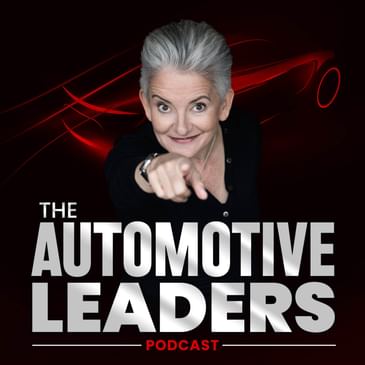
In this solo episode, Jan Griffiths lays out five things every automotive leader needs to confront as we head into Q2 2026. This is not a pep talk. This is a reality check.
The ground is shifting. Trade agreements are uncertain. Chinese competitors are moving faster than ever. And the old playbook, the one built on certainty, hierarchy, and control, is a liability.
Jan covers the five forces shaping Q2 2026 and what you need to do about them: from the geopolitical storm still raging, to the reinvention mandate, to why trust is a P&L lever, not a soft skill. She also shares a personal update on her new role as Executive Advisor with Seraph, a global manufacturing and operations consulting firm.
If you're heading into Q2 with the same mindset as Q1, this episode will challenge you to change that, now!
Themes Discussed in this Episode
- The geopolitical storm: tariffs, the Iran conflict, global oil crisis, chip shortages, and USMCA renegotiation
- Why resilience without reinvention is just endurance
- The reinvention mandate: speed, process destruction, and AI as an accelerator, not a crutch
- Trust and transparency as competitive weapons, not cultural nice-to-haves
- Why command-and-control leadership is a speed killer and authentic leaders are winning
- Over-customization and why stopping it could be the fastest path to speed and cost reduction
- The WRI scorecard: OEMs will be judged on supplier relationships in May
- Jan's new Executive Advisor role with Seraph
- Three actions you can take this week to start Q2 differently
🎥 Watch the full episode on YouTube:
https://www.youtube.com/@jangriffithsautomotiveleaders
About Your Host – Jan Griffiths
Jan Griffiths is the champion for culture change and the host of the Automotive Leaders Podcast. A former automotive executive with a rebellious spirit, Jan is known for challenging outdated norms and inspiring leaders to ditch command and control. She brings honesty, energy, and courage to every conversation, proving that authentic, human-centered leadership is the future of the automotive industry.
Mentioned in this episode
- Listen to the Auto Supply Chain Champions Podcast powered by QAD
- The Automotive Leaders Podcast with Lori Lancaster, Vice Chairwoman at Emotiv Mobility
- The North American Automotive Industry's Road to Resilience McKinsey report
- GM and Ford should reconsider parts consolidation by John McElroy
Episode Highlights
[00:01:26] Q2 Is Here. Now What?: The rules have changed permanently. Stop waiting for certainty. Clarity is not coming
[00:02:20] The Geopolitical Storm: Tariffs, the Supreme Court EPA decision fallout, an Iran conflict, a global oil crisis, a looming chip shortage, and USMCA renegotiation in July.
Jan also flags Canada allowing 49,000 Chinese OEM vehicles into the country, and what that means when they start crossing into the US.
Upcoming guest: Colin Bird, Consul General for Canada, will join the podcast to discuss USMCA. Submit your questions to Jan on LinkedIn.
[00:07:05] The Reinvention Mandate: Tear apart your processes and target a 50% reduction in cycle time. Chinese OEMs already launch vehicles in half the time legacy OEMs can. Jan references Terry Woychowski at Caresoft for the data and points to QAD’s framing, systems of record to systems of action, as the right mindset for agentic AI.
[00:11:10] Trust and Transparency: Trust is a P&L lever. Approval processes built on decades of mistrust are killing speed. The WRI scorecard drops in May and will show which OEMs are walking the talk with suppliers and which ones aren’t.
[00:14:35] Authentic Leaders Are Winning: Command and control is too slow. Jan references Lori Lancaster, Vice Chair at Emotive Mobility, on leaders who wait too long to ask for help. When people hide problems instead of raising them, it's a speed killer. Culture is the operating system.
[00:16:50] Stop Customizing What Nobody Cares About: The McKinsey North American Automotive Road to Resilience report and Terry Woychowski at Caresoft make the case: the industry agonizes over components consumers don’t care about. Chinese OEMs don’t. Jan previews an upcoming conversation with the President of Horse North America on shared component strategy.
[00:18:30] Personal Update: Jan has taken on an Executive Advisor role with Seraph, a global manufacturing and operations consulting firm focused on supply chain and operational improvement. She also shares an update on the Automotive Leaders YouTube channel.
[00:20:15] Closing: Three Things You Can Do This Week
- Identify one decision that can be pushed downstream and push it down today
- Name one process that slows you down and kill it
- Have an honest executive-level conversation about your culture playbook and how to rewire it
Top Quotes
[00:04:50] "We have to stop waiting for clarity. Clarity is not coming. The only response to all of this is resilience."
[00:05:00] "Resilience is the ability to absorb shocks, pivot fast, and keep executing while the rules change around you."
[00:11:05] "Trust isn't soft. It's a P&L lever."
[00:12:43] "People who've been trained to hide problems instead of raising them -- and to protect themselves instead of protecting the business -- that mentality is a speed killer."
[00:13:21] "Culture is not soft. Culture is the operating system. It is how we behave. It is how we make decisions. It is our playbook. It's time for us to rewire our operating system."
[00:18:27] "Resilience without reinvention is just endurance. You'll survive, but you won't win."
[00:18:36] "Reinvention without trust is just a memo that nobody really reads."
If this episode resonated, share it with a fellow automotive leader and subscribe to The Automotive Leaders Podcast, where we’re shaping the future of authentic leadership in the automotive industry.
This podcast episode is also available on YouTube. Check out our YouTube channel at Jangriffithsautomotiveleaders
Send us your feedback or questions — email Jan at Jan@Gravitasdetroit.com.
[Transcript]
[00:00:00] Jan Griffiths: Welcome to the Automotive Leaders Podcast, where we help you prepare for the future by sharing stories, insights, and skills from leading voices in the automotive world with a mission to transform this industry together. I'm your host, Jan Griffiths. That passionate, rebellious farmer's daughter from Wales with over 35 years of experience in our beloved auto industry and a commitment to empowering fellow leaders to be their best authentic selves.
Stay true to yourself, be you and lead with gravitas, the hallmark of authentic leadership. Let's dive in.
This episode is brought to you by Lockton. Rising benefit costs aren't inevitable for you or your employees when you break through the status quo. Independence matters, it means Lockton can bring you creative, tailored solutions that truly serve your business and your people. At Lockton, clients, associates, and communities come first, not margins and not mediocrity. Meet the moment with Lockton.
Q2 is here. Now what? I'm sure that's what we're all saying privately and maybe publicly. Wow. Q1 was a wild ride. 2025 was a wild ride. But here's the thing, are you going into your Q1 quarterly review meetings or maybe preparing for QQ two using the same playbook? And what I mean by that is. The same way of thinking, the same way of making decisions, the same way of operating.
Are you using the same playbook that you used the month before, the month before that, the year before that, and the decade before that? Has that playbook changed? I'm guessing maybe not. This is the time to blow up that playbook. It is the time to question everything. And today I'm gonna cover five things that we need to think about as we prepare for Q2.
Number one. The geopolitical storm. Woo. Tariffs. Well, tariffs was a huge impact for us last year and is continuing to be so for 2026, we do not know what's around the corner. We do not know what the next wave of tariffs will be.
The Supreme Court struck down the a EPA tariff decision, and now we're all scrambling trying to figure out how to get refunds. Let alone get recovery from the monies we've already spent in the supply base from the OEMs. That's still an ongoing issue, and now we've got this whole refund scenario in front of us and we all know the transactional detail that's required to pull that off is agonizing.
And if that wasn't enough, we've also got a war going on in Iran. Yeah, we've got a global oil crisis. We've just pivoted away from EVs. It's too soon to tell if the oil crisis will make us switch back to towards EVs. I don't know. It's too soon to tell.
And we've got yes, another chip shortage on the horizon that could be coming up. And who knows? I'm sure we'll have some other supply chain disasters.
And then we've got U-S-M-C-A. Yeah, that's coming up for renegotiation in just a few months in July. That's gonna demand a lot of attention and I actually have Colin Bird coming on the podcast in a few weeks and he is the console general for Canada. If you have any questions you want me to ask Colin, please drop me an email or send me a message on LinkedIn and I'll be glad to put them to him.
In addition to that, we've got this constant pressure from China. We keep talking about China as an existential threat. Well, it really is, and my fear is that we're not, seeing it, the alarm bells are not ringing loud enough because we don't actually see the vehicles around us. Now Canada has just allowed 49,000 Chinese OEM vehicles into the country, and I'll be really interested to see what happens when they start to cross the border into the US and the American public sees these vehicles.
I wonder if that will change anything. And then who knows? We all know that it's a matter of when a Chinese OEM will enter the us Yeah, we're holding back right now the tariff barrier is keeping the Chinese out, but it's just a matter of time before a Chinese OEM offers a huge sack of cash to buy an existing facility and employ American workers and then enter the country. So we've got, that's yet to play out.
What this all means is that we have to be ready for. Anything. And it never used to be that way, did it? We always knew the rules of the game. We knew how to think, we knew how to act. We knew how to behave. We knew how the OEMs behaved.
We knew what the forecasting looked like. We knew exactly what we had to do. We had a playbook. But that is no longer true. That is no longer the environment . We live in. We lived in an environment where there was. Some level of certainty, and I feel like sometimes we're waiting for that certainty to come, oh, if we could just get over this next hurdle, then everything will be okay.
It's never gonna be okay. This constant level of change is here to stay. It's our playbook that has to change.
We have to stop waiting for clarity. Clarity is not coming. The only response to all of this is resilience. Now, before you roll your eyes, and I know we've been using and abusing that word way too much lately, but what is resilience? It's the ability to absorb shocks, pivot fast, and keep executing while the rules change around you.
And that's really, really hard. But what it means is reinvention of everything that we do, every process that we have, every decision that we make, I guarantee you it's too slow. And that leads us to number two, which is the reinvention mandate.
What do you do when the ground is shifting? Do you hunker down? Some of us do. That's not the right answer. No, it's time to reinvent. And I don't mean incremental improvement. Little steps of improvement. I mean, big, bold leaps. And by that. I want to focus on speed and processes. You know, many years ago I went through training with Allied Signal called TQS, total Quality through Speed, and they taught us to take a process, tear it apart, and reduce.
The speed or the time that it takes to complete that process. And I think we need TQS back. I think that we need to tear into our processes, understanding what processes we really need, what processes we don't need, and let's put a bold target out there to reduce the time by 50%. Look, our Chinese competitors already have it in the design phase.
They can already take a vehicle from concept to launch in half the time the legacy OEMs can. And if you don't believe me, follow Terry Ky, the president of Caresoft. He has got oodles of data to support how and why the Chinese OEMs are faster than we are.
When is the last time you challenged your team to reduce the process time? Maybe even reduce a decision making process, eliminate it all together. And we can't talk about reinvention without talking about ai. We're struggling with ai. It's okay to say that we are. We're trying to understand how to best use it.
Think of AI as the reinvention accelerator. It can help, but you can't rely on it completely. And when I think about ai, I like. The tagline that QAD uses. Now most of you know that I also co-host and produce a podcast for QAD called Auto Supply Chain Champions, and I love their tagline and their approach with ai because they say this, you have to take your ERP system from a system of record to a system of action.
And I love that quote because it tells us about the mindset shift. So often we look at our process or systems and our data, and it's a system of record. It's just recording stuff. It's not actually giving us . Possible solutions as to what's next, what's the next action, and that's what AG agentic AI can do when it's properly understood, implemented, and executed.
That's the kind of thinking that we need to use AI to help us with reinvention.
This episode is powered by Seraph. When manufacturing leaders need to launch scale, relocate production, or navigate supply chain disruption, they call Seraph. Hands-on operators. Measurable results. Learn more @seraph.com.
Number three, trust and transparency. Alright, I'm gonna have to be brutally honest here. I am sick and tired of talking about trust and transparency because it seems to be falling on deaf ears. I believe in these two principles. Of doing business, of leading of culture, trust, and transparency. If we really want to get to speed, we are going to have to put data and decision making.
Push it down downstream and trust people. A lot of our systems and processes are built up around mistrust. Somebody made a mistake 10, 15, 20 years ago and now we've got 15 different approval levels for something that should not be.
Trust and transparency starts with the OEMs, and some are better than others. And you know exactly what I'm saying, but the day of reckoning is coming. It really is. It's coming in the form of the WRI scorecard from plant Moran. Yes, that's coming up next month in May, and we'll know who's winning and who's losing that battle. The OEMs who truly operate with trust and transparency will be able to get that competitive advantage of speed, speed of decision, making much faster.
Than those who don't.
And why is trust and transparency so important to speed? Because when you have that, when suppliers feel safe and trusted and that they have the right data and you're not trying to play games with them, then they will pivot quickly, and that goes right to the heart of resilience. When you are trying to absorb those shocks, you need to have strong relationships in place.
You can't afford to go through it. 25 step process to approve an additional product or a new supplier. In times of need, you need to move quickly and trust and transparency is right at the foundation which is right to the heart of resilience.
Trust isn't soft. It's a p and l lever. It really is. And in a year when everything is uncertain, tariffs, trade agreements costs oil crisis. The OEMs with strong supplier relationships can lean into those partnerships to weather the storm together. The ones without. They're gonna be on their own, and the WRI results next month will tell us who's doing it and who's faking it, who's just talking about it.
This episode is sponsored by UHY.
Did you know suppliers now spend 157 hours on an average RFQ and still face the same roadblocks as 20 years ago? UHY and the Center for Automotive Research, break it all down in their new white paper. Get the insights and see what's really changed in 2025.
Download your copy. There's a link in the show notes.
Number four, authentic leaders are winning. Yes, they are. Command and control leaders are not.
In the last episode of the podcast, I had the pleasure of speaking with Lori Lancaster, vice Chair at Emotive Mobility, and she said something that has really stayed with me. And I'll read this quote to you. We've struggled recently with new leaders coming in who are afraid maybe to say, Hey, I need help with this.
And they wait a little too long to ask for that help because they come from different environments. No one's going to penalize you for that. It makes it so hard when you wait too long, that's a command and control leadership hangover. When people are afraid to say that they need help because they just don't have that environment, where they can speak up, there's fear in the air.
We can no longer have that. People need to be able to ask for something alert. The organization when something's wrong because we are gonna have to move quickly. We are not gonna have time to play these command and control games based on fear.
People who've been trained to hide problems instead of raising them and to protect themselves instead of protecting the business. That mentality is a speed killer.
Command and control is too slow. When you've got hierarchy and you've got silos, the wasted time going across all of those different functions for decision making, it slows everything down. So we've got to tear into these processes and the way that we make decisions with a view and a mindset to increase speed and to empower people.
Let's remember this. Culture is not soft. Culture is the operating system. It is how we behave. It is how we make decisions. It is our playbook. It's time for us to rewire our operating system.
Number five is to stop customizing what nobody cares about. And I'll drop a link to the recent McKinsey report called the North American Automotive Industries Road to Resilience. And in this report, they make the case. Where they talk about how we love to over customize components that consumers, so consumers of the vehicle don't care about.
If you think about it, we, in this industry, we love to agonize over every single component for every single OEM for every single model that kind of thinking has to change. And I've heard again, Terry Wachowski from Caresoft talk about this time and time again. Why do we agonize over the things that really the consumer doesn't care about?
And I think along with that is this idea of leveraging components. So the OEMs, the Chinese OEMs, we know they work together.
They don't customize every single one for every single OEM and every single platform. And I think that's a huge area of opportunity. And John McElroy wrote an article about this, not too long ago, which I will also find and drop into the show notes. But again, it comes back to this idea of collaboration.
How are we collaborating together as an industry? As an industry because I firmly believe that we're gonna have to do that and change our thinking so that we can survive. And along those lines of collaborating around certain components, and areas of the vehicle, I'll have the president of Horse North America on the show in a few months and we'll be talking more about that mindset and how that works.
On a personal note, a couple of updates. I have recently taken on an additional role of executive advisor with Crif, and I couldn't be more excited about this. . . RAF is a global manufacturing and operations consulting firm, and before you roll your eyes and go, oh, no consulting firm, and think PowerPoints and throwing young kids into engagements on a manufacturing shop floor, that is absolutely not what they do. I would not be associated with a company that did that.
I am thrilled to be associated with Crif because I have worked with them. In a past life, I was a client of theirs and they are laser focused on manufacturing, supply chain, operational improvement. They know how to do it, they have the playbook and they do it well. And you'll be hearing more of that in the future.
A different topic video. Last year, I put myself through a 90 day training program on YouTube, and you might think, wow, why? Why would you do that? Look, the podcast isn't going away. The podcast is an audio format. People like to listen to podcasts. They also like to read the transcripts, which by the way, we have cleaned by a human being to make sure that they are correct for your reading pleasure.
But in addition to that. Some people like to actually watch the interviews and see the interaction, and I love to do the podcast interviews one-on-one, face-to-face. And you might have seen in, my social media posts lately more of a , professional photography studio kind of environment with tall chairs.
And I am actually in the studio with the person I'm interviewing and there's no barrier in front of us. There's no table, there's no nothing. It's just the two of us sitting, looking at each other, having a conversation. And you can see the body language. You can feel the energy and you can see the interaction.
So the YouTube presence, we've really. DUR game there, and we'll drop a link into the YouTube channel. The YouTube channel is under my name. It's Jan Griffiths automotive leaders, and if you have any feedback for me for improvements, I welcome it. Bring it on.
So let me bring all of this together.
We're in the middle of a geopolitical storm. That is not going away. No, it is not. Trade agreement. Uncertainty. The relentless pace of Chinese competition. That's the operating environment. You don't get to choose the conditions. Remember that You only get to choose how you respond, and that's true for everything in life.
Resilience without reinvention is just endurance. Remember that you'll survive, but you won't win.
Reinvention without trust. It's just a memo that nobody really reads. The trust brings it to life. Trust has to come from the heart and the soul. You have to mean it. You can't just stand on stage and talk about trust with the suppliers, with no feeling behind it.
And if you're still customizing things that nobody cares about, you're just spending money to stand still or even take a few steps backwards.
So I'm asking you directly, what are you going to do differently this quarter, Q2 2026? Ask yourself, your team, your business, that question, and here's some things that you could do. Identify one decision that can be pushed down tomorrow. Find it, name it, push it down. Don't look for reports or analysis.
Make the decision. Ask the organization for input and push it down. I recently talked to a, group of people about this and you know what came back as an area of opportunity was purchasing, which kind of stings a little, 'cause most of you know, that's most of my background, but is that an area for improvement?
You can start to push decisions down with a view towards speed.
Number two, name one process that slows you down and kill it. You know, the one, the approval that nobody reads, the report that nobody uses. Every organization is full of them. Find it relentless focus and kill it. Cut it, get rid of it.
And number three. Have an honest conversation about culture, about your playbook, about what you are going to do to rewire your playbook at an executive level. That's where it starts.
It is time. It's time to do all those things that you've always been wanting to do. You know where the waste is in your systems. You know what we've got to do to speed up those systems to make decisions faster, to empower people how to create. Resilient organizations. We really do. But we need the mindset and the relentless focus to make it happen.
I'll be with you every step of the way. And don't forget, be you, your 100% beautiful self and lead with Gravitas, the hallmark of authentic leadership.
Thank you for listening to the Automotive Leaders Podcast. Click the listen link in the show notes to subscribe for free on your platform of choice, and don't forget to download the 21 Traits of Authentic Leadership PDF by clicking on the link below and remember. Stay true to yourself, be you, and lead with Gravitas, the hallmark of authentic leadership.