In the automotive industry, we often focus on the vehicle itself, the technology within it, the smart factories, and artificial intelligence. Ford is leading the way in all these areas, even reimagining the assembly line that Henry Ford created back in 1913. However, that is not the whole story. The hardware has never been the main focus.
The real story lies in the culture; it's about how more than 100,000 individuals think, act, and make decisions, and whether they can adapt faster than the legacy companies that were built to move at a different pace.
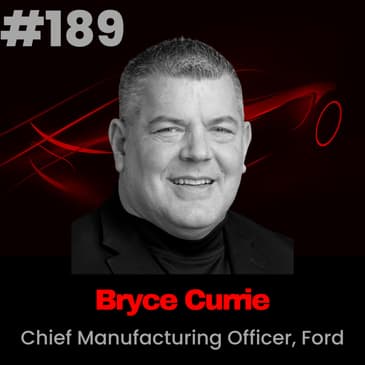
In this episode of the Automotive Leaders Podcast, Jan Griffiths interviews Bryce Currie, Ford's Chief Manufacturing Officer, who oversees more than 40 plants worldwide. Both Bryce and Jan began their careers in a command-and-control environment, where plant managers were feared, meetings featured thrown books, and no one felt comfortable offering alternative ideas because they weren’t being heard. However, Bryce opted for a different approach. He identifies as a servant leader and has dedicated 51 weeks of his life to traveling by bus to demonstrate his commitment.
These bus tours form the core of their discussion. Over the course of a week, Bryce visits four plants with 50 employees from every level and function, working from 5:30 in the morning until 10:30 at night, all focused on learning to operate Ford's production system in a unified way. This initiative is how Bryce turns culture into a tangible experience for the team. He emphasizes aspects that many leaders overlook: he turns off his phone so his team can learn to operate independently, encourages two ideas from every operator, and uses Thomas Edison's 2,332 inventions as a benchmark for what his team can achieve in a single year.
This conversation explores what it takes to accelerate a company with over a century of history. Trust and kindness are powerful business tools. He advocates for accountability without fear, highlighting that culture should not be viewed as a soft concept; rather, it is the backbone that drives results.
If you’re a leader in this industry, Bryce will illustrate what shifts when you stop trying to control your team and start believing in them.
Themes Discussed in this Episode
- Why culture is the real transformation story at Ford
- Breaking command and control at the manufacturing scale
- Servant leadership across 40-plus Ford plants
- The bus tour is a culture change engine
- Empowerment over micromanagement in a legacy organization
- Activating the minds of 100,000 people
- Driving innovation through frontline operator ideas
This episode is sponsored by Lockton, click here to learn more
🎥 Watch the full episode on YouTube:
https://www.youtube.com/@jangriffithsautomotiveleaders
Featured Guest: Bryce Currie, Chief Manufacturing Officer at Ford
Bryce is responsible for Ford's global manufacturing operations, producing some of the industry's most dynamic vehicles. He also oversees Ford Global Manufacturing Engineering, Material Planning & Logistics, Advanced Technology & Platforms, and Safety. Currie leads with a commitment to servant leadership, empowering teams to innovate and achieve their full potential. Since joining Ford in 2023, he has applied his Lean expertise to enhance operational performance and cultivate a people-centric culture. He does it through principles of efficiency, waste reduction, collaboration, recognition, and continuous improvement.
About Your Host – Jan Griffiths
Jan Griffiths is the champion for culture change and the host of the Automotive Leaders Podcast. A former automotive executive with a rebellious spirit, Jan is known for challenging outdated norms and inspiring leaders to ditch command and control. She brings honesty, energy, and courage to every conversation, proving that authentic, human-centered leadership is the future of the automotive industry.
Mentioned in this Episode:
- 21 Traits of Authentic Leadership
- Jim Voss and Tenneco's transformation (Episode 186 and Episode 187)
- Jim Collins, author of Good to Great
Episode Highlights
[03:25] Who Are You as a Leader? Bryce answers with servant leadership and credits his father, who rejected command-and-control back in the '70s and '80s.
[04:26] Unlearning Command and Control: Bryce traces his mindset back to the Toyota Production System and its real lesson: respect for people.
[05:37] Fear Culture That Died: Why the rock-star CEOs of the '90s faded while the people-first leaders lasted.
[08:51] From a Relay Race to a Basketball Court: Jan and Bryce break down the mindset shift from siloed handoffs to a whole team on the floor at once.
[09:19] Inside the Bus Tour: Bryce explains the immersion experience he built in 1991 and how it rewires culture plant by plant.
[14:50] Why He Shuts His Phone Off: Making time with the people the priority, and trusting his team to run without him.
[17:41] Empowerment or Micromanagement: How Bryce pushes real decision-making down through a company over 100 years old.
[19:41] The Pushback and the Right Talent: What happened when a proud, tenured team met a new way of leading.
[27:42] Thomas Edison and the 2,332 Challenge: How one number became a company-wide innovation target that operators blew past.
[32:48] Culture Is Not Soft: Bryce makes the business case with statistical proof and a message for the naysayers.
Top Quotes
[03:45] Bryce Currie: "I believe in people, and innovation comes from people if you treat them the right way."
[05:53] Bryce Currie: "The ones that have stuck around for many, many years are the ones who have believed in the fact that the people are what make the company, and they'll follow the process, but you build it off of that culture."
[34:44] Bryce Currie: "The companies that last, that do it year over year over year, they have that it factor, and that it factor is through the people, and it delivers the results."
If this episode resonated, share it with a fellow automotive leader and subscribe to The Automotive Leaders Podcast, where we’re shaping the future of authentic leadership in the automotive industry.
This podcast episode is also available on YouTube. Check out our YouTube channel at Jangriffithsautomotiveleaders
Send us your feedback or questions — email Jan at Jan@Gravitasdetroit.com.
[Transcript]
[00:00:00] Jan Griffiths: This is the Automotive Leaders Podcast. Straight talk from the CEOs and innovators who cut through the noise, create clarity, and drive transformation across this industry. The old command and control playbook is dead. Culture is the operating system. Authentic leadership is the edge. We're rewiring it, starting now. I'm your host, Jan Griffiths, that passionate, rebellious farmer's daughter from Wales and the champion for culture change. Let's dive in.
This episode is brought to you by Lockton. Rising benefit costs aren't inevitable for you or your employees when you break through the status quo. Independence matters, it means Lockton can bring you creative, tailored solutions that truly serve your business and your people. At Lockton, clients, associates, and communities come first, not margins and not mediocrity. Meet the moment with Lockton.
What does it take to transform a legacy auto company? All day long, we talk about technology. We talk about the vehicle. We talk about the tech in the vehicle. We talk about the manufacturing shop floor. We talk about smart factories. We talk about AI, and all of that is important. And yes, Ford is doing all of it, including completely transforming the very assembly line that Henry Ford developed in 1913.
But you know what? That is not the story. The story is not about the hardware and the tech. It is about the culture. And none of that matters if the people, the culture, our operating playbook is not completely rewired along with it. It's about how people think, how they act, how they make decisions. All of that has to happen much, much faster than we're used to in the legacy automotive industry, and nobody understands that better than my next guest.
He is responsible for over 40 Ford plants worldwide. I am thrilled to bring on the show today the chief manufacturing officer for Ford, Bryce Currie.
Bryce, welcome to the show.
[00:02:37] Bryce Currie: Thank you so much. It's a pleasure to be here. I'm excited to have a chat with you.
[00:02:41] Jan Griffiths: Finally, we get you on the show, and we just discovered that we go back a long ways.
[00:02:48] Bryce Currie: It just shows that we're experienced. That's what I would say.
[00:02:51] Jan Griffiths: That's one way to say it ...
[00:02:52] Bryce Currie: But it also shows how in the automotive world you're connected very closely in some way. And I had been away for 10 years in aerospace, and coming back, and it feels like I haven't missed a beat because the people are still around, and the legacy of many of the people are there.
[00:03:08] Jan Griffiths: Yeah. Now, Bryce, we started our careers in a very different environment, very strong command and control. And before we tear into that, I wanna ask you this very simple but yet very powerful question, and it's simply this.
Who are you, Bryce Currie, as a leader?
[00:03:27] Bryce Currie: I would sum it up as I'm a servant leader. I was fortunate enough to have many different mentors, particularly my dad who didn't do command and control back in the '70s and '80s, and he was very much about diversity of talent and that you focus on the people.
So who I am as a leader is I'm a servant leader. I'm trying to grow, and I believe in people, and innovation come from people if you treat them the right way.
[00:03:55] Jan Griffiths: But the way that we grew up in this industry, Bryce, I was taught and told that command and control was the way to be, and I saw example after example of success.
Yeah. The people who employed that command and control model were indeed successful. It didn't feel right to me. It didn't feel like it was in line with my values, and I struggled with it for many years.
What did you have to unlearn from that model, given the world we're in today?
[00:04:26] Bryce Currie: What I would say, I was fortunate enough again to, in a very early, in the late '80s, to get schooled in Toyota Production System, actually.
And a lot of people think of Toyota Production System as lean and the lean tools, but if you really get into it, it's about the culture and respect for people. And then you have to understand Every culture is different. The Japanese culture is different than the Chinese is different than the American culture.
So you have to flex your system and your styles based off of the cultures that you are in. So I was lucky enough to get trained in that and to believe in that, and I actually tried to make sure my career followed the companies that had... I have had bosses over, you know, I could go way back, that threw stuff in meetings. Things that you say to this generation of new talent coming in, and they look at you like you're crazy. But people threw books. They yelled. The amount of curse words were intense. Yeah. So it has changed. But I still believe that there were many other leaders at that time that were very good and led in the correct way, and Jim Collins showed that in his Good to Great book.
But you don't see them. They weren't the rock star. I mean, I remember back in the '90s, Al Dunlap was considered a great CEO from Sunbeam, Chainsaw Al, and people were writing books about it, and then his company completely died, right? He didn't have a culture. He had a fear culture.
The ones that have stuck around for many, many years are the ones who have believed in that the people are what makes the company, and they'll follow the process, but you build it off of that culture.
[00:06:04] Jan Griffiths: You know, many years ago, I remember going to a Ford assembly plant, and I was a supplier rep, and back in the day, the plant managers at Ford, not just Ford, I mean any OEM assembly plant, they were mean, nasty guys.
And I remember being terrified, literally shaking, as to whether or not he was gonna touch my part or find a problem with my part, and it was all about fear and control, and it was about hierarchy. And now, Bryce, you've got all these plant managers around the world. You've had to change that mentality. How?
This episode is powered by Seraph. When manufacturing leaders need to launch scale, relocate production, or navigate supply chain disruption, they call Seraph. Hands-on operators. Measurable results. Learn more @seraph.com.
[00:07:04] Bryce Currie: I think the first thing is, in any of the areas that I've started, I always start with my team on where are we today? Really, where are we today? And that is measured as both not just metrics, but your processes, your people talent, the infrastructure you have, how you do communication, and what's your daily cadence and your governance.
And then from that, it's instilling this servant leadership. When I came to Ford, the very first thing we focused on was servant leadership. We have a whole series. And there were a lot of eyes being rolled, and because it's soft. But the servant leadership was I was really serious about we are not gonna do command and control.
We are not gonna only go down to this level of the organization. And so what we focused on was about how are we gonna change this. Some people needed to change. Not that they were not the right people. I use the example sometimes, you know, I played sports for many years.
Shaquille O'Neal, one of the greatest basketball players ever But if you put a seven foot two center on a team that runs, it might not be the right fit. Doesn't mean he was the wrong player, he's just not on the right team. This team was, we needed to have people that were really going to create a safe zone, and create trust, and create a following of how we're gonna run the system, and how are we gonna activate the minds of our people.
[00:08:30] Jan Griffiths: That's a huge part of it. I think people miss the fact that it is about activating the minds of how many people? How many people are you at roughly?
[00:08:38] Bryce Currie: Well over 100,000.
[00:08:39] Jan Griffiths: Well over
[00:08:39] Bryce Currie: 100,000 plus.
[00:08:41] Jan Griffiths: Well over 100,000 people. So that switch from command and control to really activating all of those minds, and you used a sports analogy, and I think of it this way.
In traditional legacy automotive, it's very much a relay race.
[00:08:54] Bryce Currie: Yeah.
[00:08:55] Jan Griffiths: Through silos, right? Somebody does their bit, and then they hand it off to the next person. Now, it's more of a basketball court, if you will. Everybody's got their place, they've got their skill set, but they're all on the court at the same time, waiting to catch the ball, and pivot, and do what they need to do, and that's a huge mindset shift.
How do you change that?
[00:09:19] Bryce Currie: Well, there's a couple what I call immersion or experiential things that we do. You might have heard before about these bus tours that I've created.
[00:09:27] Jan Griffiths: I have.
[00:09:28] Bryce Currie: And my very first one was in 1991. And again, people roll their eyes, it's a bus tour. They think it's a roll the red carpets, walk around the plant.
It's really hard to explain what happens on a bus tour, but I'll try to give you a couple examples. And why I use that is it's not one bus tour. It's the multiple, multiple effect which then creates the culture change. So on a bus, we will go to four different plants, three to four different plants over the course of the week, okay?
Starts at 5:30 in the morning, goes till 10:30 at night. On the bus, we have 50 plus people from all different levels, all the way through UAW is on the bus, to lean, quality, HR, finance, so they're different people. You then are assigned a smaller team, a subteam within that, within the bus. There's seven people.
And again, it's set up so people have different viewpoints. So again, a lean person looks at the same question I might put in that an HR person reads, and they see it from a different lens, and they assume something different. And then a quality person reads the same question. So what happens is these small teams are there for the week, and we go plant to plant, and we go through our Ford production system, the 10 elements.
Each one of the plants, they do two of those questions. And what I found out- Was when I came to Ford, and Ford production system was well-known, where everybody talks about it, but when I asked people, "Tell me about the Ford production system," it really didn't resonate. There was 360-some questions in the Ford production system, and so it was more of a talk than a truly implement.
So we simplified it to 10 elements, five questions each, for helping to give... It's kind of like a plant manager's guide to how to run a plant. And we immerse people in the experience on the bus tours. And then on the bus tours, we're assessing, so we're learning at the same time. The plants are learning because they're- they're getting it.
We're creating an internal network of people from all around the world. So what happens is, again, it's additive over time, multiple bus tours, you create this network of talent. And again, it goes from all levels. So we make sure, like the Ford College Graduate Program, I have people on there every single bus, so they are getting that experience very early in their career and can interact with people all the way up to officer level.
[00:12:05] Jan Griffiths: This episode is sponsored by UHY.
Did you know suppliers now spend 157 hours on an average RFQ and still face the same roadblocks as 20 years ago? UHY and the Center for Automotive Research, break it all down in their new white paper.
Download your copy. There's a link in the show notes.
Tariffs, disruption, uncertainty. Your supply chain has answers. Tradeverifyd helps you ask why and what to do about it. Visit Tradeverifyd, that's verifyd with a yd.com.
So you're making it real. It's not a PowerPoint. Not at all. It's not a poster on a board. You're making it real, and what I hear, Bryce, is that you're making it relatable because everybody's gonna read that PowerPoint and have a different understanding, like you say, a different perspective. So what you're doing is making it a reality, and I love that.
How long have you been doing the bus tours?
[00:13:09] Bryce Currie: So I created it in 1991, but I didn't really start going heavy until, at TRW, in the mid-2000s. And since then, I actually just did my 51st week on a bus. So my next one will be the 52. One full year of my life has been in a bus with 50-plus people, and it's been in Malaysia, China, almost every country in Europe, Brazil, Mexico, Canada, every place.
So it's been all around the world. And it's kind of fun because it, every bus tour we make a pin different for that one, and you almost become like an alumni of that bus tour. And you can see people still to this day from 15 years ago tell me about the experience they had on the bus tour. So it's fun.
[00:13:57] Jan Griffiths: You remind me, very much of Jim Voss, the CEO of Tenneco I recently interviewed, and he is much like you. He is out at the plants, walking the talk, making it real, making it relatable But Bryce, something that I think leaders struggle with, I know I did in my supply chain, time in supply chain, is that you've gotta make a decision to make this a priority, to go to the plants, to spend time with the people.
And I think so often leaders think that they need to be into the detail of what's happening in the business, but you've gotta make a conscious decision, "No, no, no, leadership is about spending time with the people. This is the most important thing." Talk to us about that thought process that perhaps people listening to the show can understand that and come to grips with that.
[00:14:50] Bryce Currie: Yeah. No, I think it's a great point. So three weeks out of my year, I am on a bus, okay? And when I'm on the bus, I shut, I basically shut my phone off, because if I'm distracted when I'm there then, it sends the message that it's not priority. So it's really hard. And so over time, a lot of my bosses had to learn that when I am there, I am not answering the calls, okay?
I have a team that can answer, 'cause I believe that you have to have the right team, and the team should be able to run without you. It needs to, because you want this to be agnostic to leadership, okay? You want it to have a legacy going on that it continues to run when we're all gone.
So there's leader standard work, and I follow leader standard work. It's not necessarily I do this every single day. What it is is, like, if you went in my office, I have on my wall how many plants per month and where I'm going to make sure, 'cause I have a set target that forces me to make sure that I get to in the plant and truly gemba at the plant.
I also average one skip level a week. I make sure. Now, I might miss it. Like, I'm traveling next week, so I'll do two in the following week. But it's a way for me to touch people that are three to four to five levels lower in the organization, and I can learn from them. I learn from them a lot.
[00:16:11] Jan Griffiths: Yeah.
[00:16:12] Bryce Currie: So that's how I do it. I go back to when I was at GE. In 2015, I had reverse mentoring with my team, and it was when digital and AI were really just kind of starting, back 2014, '15, '16. And I was being mentored by a 26-year-old up-and-comer who was teaching me about how to do data lakes. And you have to humble yourself, because, as you get higher and higher, some people will think, "Oh, I've reached it to the summit."
You have to always be learning, and you have to be humble enough to say you can learn from every single place you go. And again, that's what we do on the bus tours. Every plant's at a different maturity level, but every single plant has something you can learn from. And you're not allowed off the bus.
The ticket to get off the bus is you have to give your three commitments, and then I follow up with you in a variable way at any, any time. I can call you at any time. We have a Wednesday plant managers meeting That we have a spinning wheel, and that spinning wheel has everybody's name on it. And that name comes up, and as soon as the name, whoever it is, I can ask you a question on safety, quality, commitments, on anything.
It's just, it's a fun way. It's not a gotcha, but it's just a way. But it is a way that people are like, "Ooh, they, I better be on my game."
[00:17:31] Jan Griffiths: It's a way to drive accountability a positive sense. And so often we think about accountability as blame in a negative sense. And it doesn't have to be.
And that brings me to the question about empowerment. You said that when you're on the bus, you shut your phone off, and your team should be able to handle anything that comes up.
[00:17:49] Bryce Currie: Correct.
[00:17:50] Jan Griffiths: Absolutely. Many leaders say that, but what they actually do in practice is more of a version of micromanagement.
It's just words. How do you drive ownership and accountability? I mean, Bryce, we talk about speed in this industry. We know we've got to be faster at everything we do. We know that silos are not the way to do it, right? We've got to cut across silos. We've got to make decisions faster. But that means pushing decision-making down.
Yes. And that means empowering people. You're dealing with a legacy organization that's over 100 years old. How, Bryce, do you do that?
[00:18:26] Bryce Currie: Again, I'll use some of the things I've learned actually from Toyota. And again, I have to be humble enough to say I can learn from my competition.
What we do, we have our Hoshin Kanri, and it's a three to five-year transformation plan. What then goes into what we're trying to accomplish this year. And it's with my team and other, and different levels of their team, and that we develop that as one with a 360-degree catch ball, giving that. So we'll take three days out this summer and just make sure that everything is moving forward strategy-wise where we want it to go, and that it's linked, that we're all... if the material planning and logistics organization in their strategic action plan has to be owned by my operational directors of manufacturing, has to be owned. If they don't believe in it, they're not going to execute it down our daily management. So we do that on there, and then that cascades down to their teams and cascades.
So we have a way that takes our key priorities and our key projects that we need to execute or create all the way down to our plants, and all the way actually down to the zone levels of our plants.
[00:19:37] Jan Griffiths: What kind of pushback have you had with this change in culture?
[00:19:41] Bryce Currie: You're gonna have some pushback.
So for instance, here was the interesting thing. When I got here Everybody on my team could have retired that day. Okay? It's a very proud company, and that's why I came here. My wife is fourth generation Ford Motor Company. I love Ford Motor Company because it gives back to the community.
[00:20:01] Jan Griffiths: Yes.
[00:20:01] Bryce Currie: And so I wanted to be with a company, and I want Ford to win. When we had World War II, we got in and we helped. When we had COVID, we were making ventilators. We are key, and so, that's one of the reasons I came here. Now, with respect to that, when I'm looking at people who have been here for 30 years, you have to respect their talent.
There is so much talent here, but it's also been somewhat of a blind spot because if you have been here for 30 years, you may not have gone out and seen what is happening in the aerospace industry. You might not have seen what's happening in China. Okay? So, what we've had to do is create a culture with our people that shows we respect all of this great knowledge you have, but you have to be open enough to continue to grow.
And then we've brought in a lot of other talent from the outside which wasn't traditional, but also make sure that the people we've brought in are the right chemistry that are gonna respect the talent, but share their points and make one and one equal three. So there are people that I can name people on my team that have completely engulfed and enveloped this culture and are my biggest zealots.
And, they're doing it. And they have the credibility. I've had other people that have had to retire, and nothing wrong, it's just it was time that they didn't want to go, 'cause it's hard work. Doing a change like this is hard work. My number one for me is get the right talent in the right place.
[00:21:32] Jan Griffiths: Yeah.
[00:21:33] Bryce Currie: And if I do that, it's like a sports team again. You get the right chemistry, get the right talent, then they get empowered and they go.
[00:21:40] Jan Griffiths: Yeah, and they go. How are you getting that talent pipeline filled? How are you encouraging young people to see that manufacturing and assembly is exciting, and you can have a career there?
'Cause so many people look at it and they go, "Oh, I don't wanna work in a assembly plant."
[00:21:56] Bryce Currie: Yeah, no, that's a great question. So a couple things. So one, there was no LinkedIn three years ago. I get probably four to five requests a week from people wanting to come into the organization, okay? So they feel the excitement, 'cause every day on LinkedIn it's about 15 to 20 posts now that are showing what's happening from around our different areas.
And th- they're not showing the super secret, it's just, hey, look at what they've done. That's one thing. Second is, the early career talent program, we've substantially increased and substantially put a lot of focus. I spend a lot of time with our four college graduate, and have expanded it to make sure that they are getting experiences in different areas of the organization so they are much wider in their perspective, rather than being very siloed in one section.
Yeah. And like I said, part of the requirement of theirs is they have to be on a bus tour, and they have to do a five-day Kaizen Gemba that serves the operator before they graduate. Because then we know that they've seen it, and it creates the energy. And then the other thing is when I got here, the thing I said to my team was, "Just understand, my MO is 30% external hiring, 70% internal, unless I don't have that skill set."
And a few areas that we didn't have that skill set as much was digital manufacturing. The true lean experiential. And we've done that. But what's been so rewarding is the number of people that we have found that have come up and have been promoted and are becoming big leaders in the company.
[00:23:31] Jan Griffiths: Yeah. That's great to hear.
Now, we hear a lot about the Skunk Works, and we hear a lot about, the California Silicon Valley type culture. It's a challenge. You want some of that entrepreneurial spirit, not afraid to take risks. Try anything and fail, which is not typically what we have in legacy auto culture.
And you brought in some of the Skunk Works, if you will, into Louisville with the EV, the Universal EV platform, and that's great. Love that. But what about all of those decisions and all those silos that have to support that? Because having the manufacturing layout is one thing, but everything else has to support it.
How do you do that?
[00:24:16] Bryce Currie: Early on, and so Allan Clark has been running Skunk Works out in California for a while, but very early on when I was here, we put our team out there, too, okay? And, we had to go over some bumps and bruises 'cause you got to make sure you have the right people that respect all the things that were going on the Skunk Works team, but also the Skunk Works team respecting the 100-plus years of experience in manufacturing.
And it wasn't just manufacturing. The engineering teams have done that. The material planning and logistics team, even to the point where I've had my operators go out and they went out to California so they could give input on how the line ran from their perspective and give their feedback.
So I think part of it was getting that integration and becoming it's we're all one team. You get a collective vision. We have to do this. It's essential for us to make this thing and win. And, we still have a little ways to go, and it should be exciting to see how it comes up.
[00:25:18] Jan Griffiths: We talk about the win for Louisville.
[00:25:20] Bryce Currie: Yeah.
[00:25:21] Jan Griffiths: From a cultural perspective, what's the number one thing that will make it a win?
[00:25:26] Bryce Currie: I think the number one thing, one I want the vehicle to be successful and that you've shown that a very successful plant. Louisville's been a super successful plant, very great. But it's been able to integrate a completely new way of doing manufacturing that hasn't been seen necessarily before.
And but also when you get into it, you're gonna see that the ergonomics are so substantially different supporting the operator in a way. I mean, you're not doing bends, you're not doing pop clamps. There's so many different things that we've tried to think of it from the perspective of the operator and get their feedback.
The vehicle is very key and to do it, to compete against the Chinese, that's the intent. But at the same time, it's how are we processing the vehicle and what's that do for the operator long-term and so on and so forth. So I think there's a lot of wins that will come out of it, but we'll wait and see how it goes.
[00:26:20] Jan Griffiths: You got to feel it, right? You got to see it and feel it. Yeah. Now, the Chinese competition. Yes. The Chinese started with a clean sheet of paper. We know that. We started a, with a legacy industry. Some of the Chinese EVs started out making phones. They were appliance industries. And now here we are, the legacy auto industry, trying to adopt a lot of that technology and make all of that work.
What is the biggest barrier that we face, not just at Ford, but in the legacy automotive industry as a whole to allow us to operate in this fast and agile way that we so desperately want to be?
[00:26:57] Bryce Currie: Again, to your point, in China, they had a clean sheet.
And they've done a lot of really smart things. At the same time, we're a different culture, okay? I believe, particularly in the US, we're a very innovative culture.
You go all the way back to Thomas Edison and how he took so many of the inventions and made them useful for the American people.
So I don't think we're gonna be the exact same culture. So what we need to be able to do is to learn from what is being done in Asia, similar to what we've done on the Japanese side, China side, Korea side. Take some of the best of those things, but apply it to what we're good at, and that's innovation.
And I'll give you an example. I'm on this quest that I want two ideas from every one of my operators, around the world. That'd be a quarter million ideas per year, okay? I gave a task, or let's just say a target in 2023. We have what's called Technical Excellence Awards, and we had 360 submissions in 2023, and I was only with the company for about a month.
I was asked to be the keynote And I put a target out. I used the number 2332. I just said it in the first year. But I put a target out there of 751, okay? I said, "That's where I want you to be in two years." And the first year we got, like, 560-ish submissions, which means if it's been submitted, it's actually been executed and it's been a successful idea.
[00:28:33] Jan Griffiths: Okay.
[00:28:33] Bryce Currie: Okay. The second year we were over 1,000, okay? But in the second year I came back and I asked who remembered the number 2332, and there were a couple people. And what it is, though it's a angel number and it's palindromic, it goes front and back, it's really, it's the number of inventions that Thomas Edison had worldwide in his life.
Okay? And that is one invention a week for 40 years. And his mantra was to have one invention every six months that changed the world. So I put it out there for the team to say, if Thomas Edison can do that in his lifetime, we should be able to do it in one year. And this year was our first year where we blew that number away in submissions for our technical excellence awards.
And that, to me, is what shows culture.
[00:29:25] Jan Griffiths: Yeah. That's a great example of really unleashing the power of the power of people and mindset.
[00:29:32] Bryce Currie: Right.
[00:29:33] Jan Griffiths: That's incredible.
[00:29:34] Bryce Currie: The other thing I'd say, Jan, is when we do our Kaizen Gembas, which again, you know ... I take a trip to Japan every year.
I take 15 people over every year to learn. Not just learn from the companies, but to learn when we go to a temple, and learn the five senses and just to understand the culture. When we're doing now the Kaizen Gembas, and this week I think we have three of them going on around the world.
Big ones. Five-day ones. We have six to seven projects, and there's teams of 12 serving the operator. They go to the line, they serve the operator all week long. On average, the number of ideas that come from that operator and his or her team is almost eight ideas during that week that get implemented again.
So again, and then what it unleashes is whereas before the command and control People stopped giving ideas
[00:30:21] Jan Griffiths: Ah, yes
[00:30:22] Bryce Currie: Because we didn't listen
[00:30:23] Jan Griffiths: We didn't listen, and they were afraid And they were afraid because if the idea wasn't any good or if they made a mistake, you'd get your head taken off.
[00:30:30] Bryce Currie: So we see this and why we keep investing, on the floor for the people, and it creates this safe zone and then more and more ideas. And then it's what I call big Ford acting like big Ford. If it's here, it can be cascaded quickly. I was just at Kansas City, and I'm going through my Gemba walk and seeing one of the new projects, and the team solved the problem by calling my plant in Turkey because they knew that they had an issue because we had, again, a diverse team that had ideas from what happened over there and put it in.
I'm like, " We're getting there. We're getting there."
[00:31:08] Jan Griffiths: Yeah. That's exciting. You've looked at the 21 traits of authentic leadership, and I know that's a lot.
[00:31:14] Bryce Currie: It is a lot.
[00:31:15] Jan Griffiths: It's a lot that I couldn't get it down 'cause you marketing people tell you, "Oh, that's way too many." But it's really based on my experience and things that I've learned from interviewing leaders along the way.
And I couldn't get it down. But you've graciously taken a look at all 21. What really resonates with you, Bryce, as the really important leadership characteristics?
[00:31:36] Bryce Currie: I couldn't get it down to one either.
[00:31:37] Jan Griffiths: Yeah.
[00:31:37] Bryce Currie: So what's interesting, 'cause I also I love your 21, I love John Maxwell's, and I love servant leadership's 10.
Okay? And they all are very synergistic.
So if I... On the 21 that I believe in, first of all, trust and kindness are right there. Okay? And again, that's soft. And trust and kindness because it creates a belief, and people will go through a wall for your team because they believe in you, and you are frank to them.
So trust and kindness are two. Then energy, I think is a key because you want people to enjoy, have fun, and execute at, as you said, speed. If you were to ask me every time the one thing I would change in my career, it's always I'm not fast enough. Even though people think I'm fast, I think it's not fast enough.
So I think the energy, and then the, being able to have the vision of where you have to take to the next level to aspire to get the company to, and then bring the team with that. I couldn't get the 21 down. But those to me are four that are absolutely key.
[00:32:48] Jan Griffiths: Bryce, culture is often viewed as soft. You've even mentioned it yourself a few times in this conversation. And I've even started to change some of the way that I talk about it. I talk about it as your operating system, how people make decisions, your playbook, rewiring your playbook to try to get people off of this idea that it's some soft thing, that culture is, putting some sort of, game in a break room and soft chairs.
It's not. It is everything. But there are still people out there that believe it's some soft thing, and maybe they give it to their head of HR. At the end of the day, you're running a business, and you have to have results. You have to do both. You have to take care of the people, and you have to have results.
So what do you say to the naysayers, and how do you make sure that you get those results?
[00:33:38] Bryce Currie: Particularly as a Western company, you get measured on a quarter-to-quarter basis. But as a good leader, you have to have a transformation plan that changes the company three, five, 10 years from now. So you have to do both, okay?
And a lot of people are so outcome metric focused. No, there is statistical data, and I could show statistical data at multiple companies I've been to from an R squared standpoint to show it's statistically significant. What is being done leads to the outcome metrics in safety, in quality, in cost savings, and actually then, which then goes to the profit of the company.
We're seeing that here. We're seeing it in previous companies. But naysayers will say that because they haven't experienced it. So the companies that last, that do it year over year over year, they have that it factor, and that it factor is through the people, and it delivers the results. And again, it was seen in multiple books showing that too.
[00:34:39] Jan Griffiths: As an OEM, you have tremendous impact all through the supply base, through the tier ones, tier twos, and the tiers look to what's happening at the OEMs, what you're doing.
So Bryce, what message would you have to leaders in the supply base who are perhaps skeptical about this change from command and control to servant leadership, perhaps skeptical about the impact that culture can actually have on the bottom line?
What would you say to them?
[00:35:10] Bryce Currie: I was a tier one, so I understand, some of the skepticism. But, for us to win, we need our partners as one team. Just like I'm doing, with respect to our engineering working together along with our quality, and we're all one team under Kumar's organization, same thing through Liz Door and the whole supply chain, working as one.
And it's no different than, Toyota used to use the keiretsu, and they were one team and taught and worked together. So we are reaching out, and we've gone and done gembas at our suppliers and are trying to help them. We're trying to improve the stability of our forecast, so through, some of the improvements and getting their feedback.
So I would say to them is, we have a ways to go working as one team. We've seen it in the working index going, improving this year. Liz Door is really trying to help change that. And I've given a open invitation that we'll work as my plants with you because we're only as good as what our weakest link is.
So we need to be completely one team, continuous across the place.
[00:36:15] Jan Griffiths: One team, continuous. That's a beautiful way to close today. Bryce Currie, it's been an absolute pleasure. Thank you so much for joining us today.
[00:36:23] Bryce Currie: Thank you so much for having me. I really appreciate it.
[00:36:26] Jan Griffiths: Thank you for listening. You can watch the full conversation on our YouTube channel. Search for Jan Griffiths Automotive Leaders, and download the 21 Traits of Authentic Leadership. It's a free PDF and the link is in the show notes. And remember, stay true to yourself, be you, and lead with Gravitas, the hallmark of authentic leadership