This conversation goes straight at the tension every legacy leader feels but rarely names.
How do you build something new inside a company designed for stability?
How do you move fast inside a system built to control risk?
How do you create urgency without burning out your team?
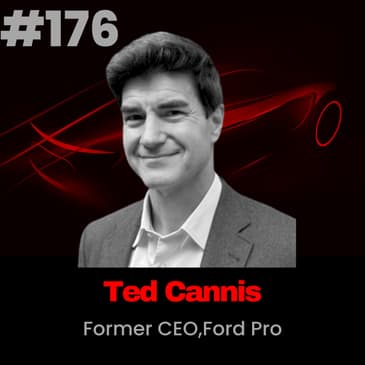
In this episode of the Automotive Leaders Podcast, Jan Griffiths sits down with Ted Cannis, former CEO of Ford Pro and longtime executive at Ford Motor Company.
Ted didn’t just grow revenue. He helped build an integrated ecosystem of vehicles, software, charging, service, and financing. But this conversation isn’t about the numbers. It’s about the leadership and culture required to produce them.
Ted shares what it really takes to drive change inside a legacy organization. Why data is your most powerful ally. Why shared metrics matter more than motivation. Why speed is a discipline. And why every bold initiative faces what he calls “status quo snapback.”
He also makes a surprising admission. He’s a self-confessed micromanager. And that opens up one of the most honest leadership moments we’ve had on the show.
This episode is about disciplined change.
Not hype. Not slogans. Not transformation theater.
Real leadership inside real constraints.
Themes Discussed in this Episode
Why building inside constraints sharpens leadership
The power of going to the gemba instead of managing from the conference room
Using data to win enterprise-level change
How shared metrics break down silos
Why speed requires preparation, not chaos
The danger of “sketchy scoping” in big strategic bets
What “status quo snapback” looks like inside legacy organizations
Can micromanagement and authentic leadership coexist?
Watch the full episode on YouTube - click here
This episode is sponsored by Lockton, click here to learn more
Featured Guest - Ted Cannis
Ted Cannis is the former CEO of Ford Pro, where he scaled the business to $67B in revenue and $9B EBIT by integrating commercial vehicles, SaaS, charging, service, and financing into one global ecosystem.
Across a 30+ year career at Ford Motor Company, Ted led global electrification strategy, investor relations, and international operations. He is known for combining operational discipline with enterprise-level vision and has been featured in CNBC, The Wall Street Journal, and Forbes.
Today, he serves as a strategic advisor and board-level collaborator across mobility, energy, and technology ventures.
About Your Host – Jan Griffiths
Jan Griffiths is the champion for culture change and the host of the Automotive Leaders Podcast. A former automotive executive with a rebellious spirit, Jan is known for challenging outdated norms and inspiring leaders to ditch command and control. She brings honesty, energy, and courage to every conversation, proving that authentic, human-centered leadership is the future of the automotive industry.
Episode Highlights
[02:47] “Build within constraints” — Ted’s leadership mindset
[06:17] Why going to the gemba is a strategic investment, not a luxury
[12:16] Using hard data to sell change across the enterprise
[15:43] Speed, impatience, and seizing decision windows
[19:04] The Culture Change Hub — leaders, teams, rituals, rules, metrics, stories
[22:18] Why C-suite sponsorship is non-negotiable
[26:23] Pivoting fast when the plan breaks
[28:24] “Status quo snapback” and how initiatives quietly die
[30:39] Vision and ownership as the core of authentic leadership
[32:46] The micromanagement confession
Top Quotes
[02:48] Ted: “I build within constraints. Set a vision of where you want to go and be pragmatic about how you get there.”
[07:25] Ted: “You can’t be blind. You have to go and see.”
[14:14] Jan: “Speed is everything. The way we make decisions, how we make decisions, and the speed of those decisions.”
[22:49] Ted: “If you really want change in a large company or a small one, it needs to come from the top.”
[28:44] Ted: “The most exciting days for the project are the day it's announced. That is the high. It never gets any better.”
[31:59] Ted: “You have to own the pivot. No matter what.”
If this episode resonated, share it with a fellow automotive leader and subscribe to The Automotive Leaders Podcast, where we’re shaping the future of authentic leadership in the automotive industry.
This podcast episode is also available on YouTube. Check out our YouTube channel at Jangriffithsautomotiveleaders
Send us your feedback or questions — email Jan at Jan@Gravitasdetroit.com.
[Transcript]
[00:00:00] Jan Griffiths: Welcome to the Automotive Leaders Podcast, where we help you prepare for the future by sharing stories, insights, and skills from leading voices in the automotive world with a mission to transform this industry together. I'm your host, Jan Griffiths. That passionate, rebellious farmer's daughter from Wales with over 35 years of experience in our beloved auto industry and a commitment to empowering fellow leaders to be their best authentic selves.
Stay true to yourself, be you, and lead with gravitas, the hallmark of authentic leadership. Let's dive in.
This episode is brought to you by Lockton. Rising benefit costs aren't inevitable for you or your employees when you break through the status quo. Independence matters, it means Lockton can bring you creative, tailored solutions that truly serve your business and your people. At Lockton, clients, associates, and communities come first, not margins and not mediocrity. Meet the moment with Lockton.
Today, we are gonna get inside the mind of a leader who, with the help of his team, built one of the most successful commercial businesses in the automotive industry, reaching $67 billion, a growth of 230% over three years. Those numbers are impressive, but we're not gonna talk about the numbers. We are gonna talk about the leader and the culture behind it. Today, I am thrilled to welcome to the show, Ted Cannis, former CEO of Ford Pro. Ted, welcome to the show,
[00:02:11] Ted Cannis: Jan, glad to be here. Can't wait.
[00:02:13] Jan Griffiths: It is great to have you here. I've been dying to get you on the mic for a long time.
[00:02:17] Ted Cannis: What will you find?
[00:02:19] Jan Griffiths: Those numbers are impressive. We know this podcast is all about leadership and culture, and I really wanna get into how do you do that? I mean, how you do that is one thing, that's impressive. But how you do that when the mothership is a legacy auto company is something else, and we're gonna tear into that. But first of all, Ted Cannis, who are you as a leader?
[00:02:47] Ted Cannis: As a leader, I guess I build within constraints. Set a vision of where you want to go and I am cognizant of you gotta be a bit of pragmatist to get to where you need to go.
[00:02:59] Jan Griffiths: Yes. How do you think your team would describe you?
[00:03:04] Ted Cannis: The one word is always energetic. That is always number one.
[00:03:08] Jan Griffiths: Yeah.
[00:03:08] Ted Cannis: Focused on getting to the big picture, the goals. Very customer focused, very business focused, very enterprise focused. But on the other hand, I am probably pushing very, very hard and not always a great listener. Not always doing the right thing inside in terms of really paying attention and listening to what people have to say. Driven, sometimes, I would say. Mixed feelings.
[00:03:38] Jan Griffiths: One of the things that I noticed about you is you are out there on social media and I felt your energy coming through on LinkedIn before I ever met you. You were always taking a photo. You were with a team, either you are with a customer or you are with your team, and you are all over the world. I don't see many executives in the automotive industry doing that. How did you give yourself permission to do that? You broke a mold, Ted, how did you do that?
[00:04:09] Ted Cannis: I think as I was reflecting on it, I think I've been doing it longer than I had thought. I think early days you heard management by walking around. And I was always amazed at what you could just learn by stopping someone in the hallway and see how they're doing. I like to ask, what's been surprising lately? Amazing things come out, but it's the things that you don't even know that are going on to improve the business conflicts, problems, and that connection to people on the ground.
Later, I heard the Japanese term for the gemba: go and see, lean. To me, it was the same thing, whether it's work, going, visiting the working group on the line in Venezuela, good practice for my Spanish. Car races with customers and dealers and the people in Argentina. I think you are always trying to absorb what is going on, where it really hits the road. Where that seeing people driving cars.
I think a lot. I was thinking back today and I think I like that even as a kid. I remember reading Henry the V, and he goes and talks to the troops the day before the battle, how are they feeling and getting insights from them. Or, I remember, and then I didn't remember until many years later when I moved to Russia: Peter the Great going to Netherlands to see, to learn shipbuilding and these practices of tooling and learning. This somehow there's being close to where it is happening gives you new and additional insight.
[00:05:34] Jan Griffiths: I would agree, but I also know that is a leadership choice that you make. I think many leaders struggle with making the decision to spend time to do that, because a leader in the auto industry, as you well know, has got a million or one different things that they need to work on, and you have to make that choice. You have to make it a priority to go out and meet with your people or meet with the customer, and that takes a toll on you personally. You're traveling. But it's a decision that you have to make. How do you make that decision between balancing all the stuff that you have to do in the office, if you will, and then spending time with the people and the customers?
[00:06:17] Ted Cannis: I think definitely it's an investment.
[00:06:19] Jan Griffiths: Yeah.
[00:06:19] Ted Cannis: That what's too little, too less? I'm not sure I could exactly articulate that very well, but there is a need. And many, many times, I like to, which also costs more money. It's money as well, because a lot of us have travel restrictions. But I also like to bring members of other teams.
I would go to the manufacturing plant in Kansas City and I'd bring members of the marketing team. Hey, so you can see firsthand the complexity that you're bringing to the product and how it affects the guy on the line, which I learned. Another one, when I did one day on the line when I was working, when I was running Ford Argentina, I spent a day on the line working on rangers, and you get an a real appreciation for what complexity on the line is if you go and see it and hear some of the problems it's causing.
So I like to bring team members from different functions along. I bring the finance guy, and we go out and be a fleet customer. So it's part of the training education process, as well as the inside gathering about what's working for the customer, or the dealer, or the stakeholder, whoever it is, to see what's broken that you're just not gonna get in the office. You can't be blind.
[00:07:26] Jan Griffiths: Yeah. Yeah. I think it is something that people struggle with, and I love it when I see people who are out there where the rubber meets the road, but also then snapping that photo, putting it on LinkedIn, having that social media presence. How did you do that? I mean, when I started to work with social media, I was afraid to put anything on LinkedIn. I was afraid to post. I was afraid to comment. And now, if you're connected with me for more than a day on LinkedIn, you're probably sick to death to see my face and I'm posting. But there was a fear there in the beginning, but how did you start to do that? When did you think, yeah, this is a good idea to do this?
[00:08:06] Ted Cannis: Well, I think I took a lot of pictures all along the way on these different activities like this working on day on the line of the Ranger, I have pictures of that, or visiting the.. So I keep a lot of these people because the people are part of what makes the job interesting as well. And I have rules in my mind of what I put on LinkedIn. First, it needs to be business. Nobody needs, I'm going to the dentist. I don't share my family.
[00:08:30] Jan Griffiths: Right.
[00:08:30] Ted Cannis: 'Cause they would be uncomfortable. And I just wanted to celebrate what we were doing and trying to reach more people, could be in my team, could be the customers, the dealers. It's a great place to recognize great work, winning an award. So the opportunity to share with more people beyond the people I see every day, to me, is to show what are values are about, what we're trying to be as a business strategically, what we're trying to be as people. And I like to share a little bit with myself, even when I'm sharing a little bit like computer games or something. I want to link that to the business side as well, where it's possible.
[00:09:07] Jan Griffiths: This episode is powered by Seraph. When manufacturing leaders need to launch scale, relocate production, or navigate supply chain disruption, they call Seraph. Hands-on operators. Measurable results. Learn more @seraph.com.
Yeah. Now, you said you wanna share values, and that's one way of doing it. What values are important in a culture? What values are important to you that you wanted to make sure the culture of your team upheld?
[00:09:41] Ted Cannis: For me, whatever the job I was in, whichever country that was in, there were some things that were just must-dos. You must know and learn the customer. That's a must.
[00:09:53] Jan Griffiths: Yeah.
[00:09:53] Ted Cannis: You must understand the business structure, regulatory tax, structure of the place that you're working in. You must understand the financial implications. All businesses, all countries are managed by the same financial structures.
You must have an enterprise out here. You're trying to do it for the best of the enterprise, and if you're respecting all those stakeholders, then the material and the work flows from that, for me. And that's what it was, you must maintain the integrity of the business and how you operate.
In many of the countries I had, that was critical. Working in Brazil, in Argentina, and Venezuela, Turkey, and Russia. If you are not representing the best of what is acceptable in business, then bad things are going to happen.
[00:10:38] Jan Griffiths: So I heard respect, I heard integrity, and being mindful of your surroundings and where you're at. Like you say, different countries, different cultural norms. Be mindful and respectful of those things. Now, you ran a business inside of a legacy business. There are, I'm sure, many advantages to the mothership, but also maybe some constraints. Tell us a little bit about that, how you were able to craft a personality for Ford Pro within that legacy environment.
[00:11:11] Ted Cannis: So I think, all businesses have constraints in the bigger. And change is very difficult for a mature company, any mature company, anybody.
[00:11:22] Jan Griffiths: Yeah.
[00:11:22] Ted Cannis: Change is difficult, and not all people have the same inclination for change. In my own testing, along the way, I'm sort of a pragmatist. There are super change agents and there are very conservative, but in my sphere, many people were on the less changed side. So you're trying to build something new within constraints, so you gotta get a rally around a vision of why it's going to be better customers, et cetera.
For me, data insights were always critical. Survey data, physical data, primary source data, either verbatims, physical interviews, let's say feedback verbatims on service surveys. Real data that says, here's a way to see this business opportunity in a different way. Here's a path for change that the numbers can prove. And that is part of the evidence that you say the capabilities and the competence to say there's a new direction to be had. And then, it's trying to assemble the people around a vision and excitement to do it. The communication required, the something bigger is here, a bigger purpose that can be exciting for them even if I'm making them miserable. That can both happen at the same time.
[00:12:35] Jan Griffiths: Ah. Yeah, I think you're right. And as I look back on my career, I've worked for companies where the culture around me was not 100% on board with a authentic leadership style, but I was able to rally my team, exactly like you say, around a vision, around a purpose, around a mission. And this is how we will behave. So it can be done even when others around you might not be 100% on board or think a little differently. And I think more leaders in the auto industry need to have the conviction to just lead in line with their values and the way that they think they should lead, not to fit a mold.
[00:13:20] Ted Cannis: I think I was trying to lead around the values, but I was constantly in trying to prove it to the team and to the other leaders why it was a good thing. And that would've been, again, this rinse, repeat of customer feedback, stakeholder, data surveys and analytics financials to say, hey, there is something here. There's more profits, there's a better customer satisfaction, and the evidence is starting to prove those results, but I wasn't just trying to sell my team, I was trying to sell everybody around on this concept.
[00:13:54] Jan Griffiths: Yes.
[00:13:54] Ted Cannis: Against people of all kinds. People who are totally opposed, it always happens. People who are fighting against you that you know and don't know, those who are neutral, and those that can be swung over. And yeah, I see evidence of direction here that I'm comfortable with, but they never happen smoothly. There's always major setbacks and conflicts.
[00:14:18] Jan Griffiths: Ted, we're known in the auto industry for working in silos and we're very good at it. But it seems like, from what you just said, that you've been able to create a team that can work across silos, and speed is everything. We know in the auto industry right now, speed is so important. We know that Chinese OEMs can design a vehicle in half the time that it takes a legacy OEM to design a vehicle. How we make decisions and the speed of decision making is gonna be critical for us as an industry moving forward. And it seems like you were able to create some of that environment. How so?
[00:14:56] Ted Cannis: Yeah. I think working across the organization to get them all on the same page to what you're trying to accomplish. You can't get everybody on the same page, but to show that you're in, say, when we said team medicine, we would say we're all team medicine, to try to get them to understand the change. But I think, separately, on the speed question, I'm not even sure they're the same. Could organizations stop flow naturally, which is of course an inhibitor to break the speed?
I think as I reflect on my life later, I didn't really come across this until recently when I'm talking with my wife, actually. I'm an incredibly impatient person. It has nothing to do with work. I was impatient in lines, I'm impatient in everything else. This it needs to be done now and urgently, and in business there's even more time. There's windows of opportunity. The budget is about to get set or something, and if you miss those important windows, the deal's about to get done. A decision's about to get made. If you are not prepared with the context and information at the time. So for me, getting the information needed at the point of decision so you don't lose that window.
[00:16:02] Jan Griffiths: Yes.
[00:16:03] Ted Cannis: That means knowing all the stakeholders, where they are, where they're going to be against. Have you got the information together? I wasn't really kind of going passing the hat to do one-on-ones and trying to convince people behind the scenes. Many people are good at that, not me.
I was going to prove it through force of information and contact. Data, science, surveys, experts. That this can be done and here's the benefit that it could be done. It's a logical approach. But to me, those were key to get on these gateways, to get the decisions on the path to where you are. And before they, and if they are obstacles that are coming out, new ones, then to swarm that thing as fast as possible to get rid of the objection, the obstacle within immediately, within hours.
[00:16:52] Jan Griffiths: Yes, you're right, 'cause I think often there'll be an issue and it'll fester in a silo. It's often a little silo and it's festering, and then it'll take a while before maybe you, the leader of the function of the business will find that out. And you've lost so much time. Whereas if you could grab a hold of that issue, like you say, and swarm it and just kill it, then now you're talking about speed, but you're talking about a sense of urgency and speed combined.
[00:17:19] Ted Cannis: Yep. And I think there's also a certain, for sure, I think there's a certain aspect too of, let's call it reading the room or having enough of this groundswell of what is breaking down. If you can't see the objections forming or the concerns, which can be completely legitimate. Sometimes, I can see the concern. I don't believe it, but you're going to treat it as if it's true. I may have a completely different point of view, but we are going to pursue that until we completely understand whether it's true or not true because that is the respect that concern deserves.
[00:17:56] Jan Griffiths: Yeah. No, I love that. Ted, when we had talked to get ready for this discussion, you'd sent me a few slides. And one of the slides I absolutely love because it is blatantly obvious to me, and you may deny this, but it's obvious to me that this is something that you created and it comes right from the heart. It's not something that came from a leadership book or a consultancy company. It seems very real. Is that right?
[00:18:22] Ted Cannis: It is.
[00:18:22] Jan Griffiths: Yeah, I can tell.
[00:18:24] Ted Cannis: Reflection on multiple experiences,
[00:18:26] Jan Griffiths: No, I can tell.
[00:18:27] Ted Cannis: In a certain contained subject
[00:18:28] Jan Griffiths: I can tell, and I absolutely loved it. And I wanna make sure we talk about it. Now, in the sense that you have a circle and it's called the Culture Change Hub, and you say leaders, teams, rituals, rules, metrics, and stories. Spill, what's that all about?
[00:18:45] Ted Cannis: So, in all of the leadership of a team, you are building a structure of change. It's not just the personality. It is where we edit the vision and mission, and really in the real sense, we wanna have amazing EVs or whatever it happens to be. Usually, following the strategic leadership of the company, 'cause strategy comes from the top and if the strategy's not endorsed from the top, not going to usually happen. You need metrics and that how are we going to measure success at the end from being in the end in mind and all the way back? What is the metrics? Customer satisfaction, deliverables, timing? How are we gonna govern that process? What is the meetings and org structures within the team and with other teams to proliferate that vision and make sure we're on track to get the execution right? To follow all those deliverables and decision points and discussions all the way through. How are we gonna gather the net of information?
What are the sources, the primary sources, the data, the structures of known or missing information that are gonna help us find those blots? And it has to be a complete structure. And then, we're going to track all that on a regular base to push it through. And the team, preferably, always a cross-functional team who have the different viewpoints.
When it was team medicine, it was a manufacturing person, a purchasing person, a finance guy, et cetera. Hey, what are we gonna do? Let's think about this problem collectively, and then we're gonna give it over to the members who are good at something. If that guy's good at designing cars, well, he designs cars. I know nothing about designing cars. And you have to give it with, he's a great engineer, I am not. That guy's going to do the engineering. Now we can problem solve. We can have the debate about the analysis, but we, those pieces, a composition of tapestry all has to come together under a rhythm to get that objective. And then, there's gonna be all the things that go wrong.
[00:20:36] Jan Griffiths: Yeah. Yeah. And so a rhythm, I like that. A rhythm. And then tell me about the stories part of it.
This episode is sponsored by UHY.
Did you know suppliers now spend 157 hours on an average RFQ and still face the same roadblocks as 20 years ago? UHY and the Center for Automotive Research, break it all down in their new white paper. Get the insights and see what's really changed in 2025.
Download your copy. There's a link in the show notes.
[00:21:22] Ted Cannis: I think there's always stories to anything. There are the stories of success or the stories of what's working, not working. We went to China, and we saw this, you remember when we were driving around the B and C cars, and they all have color, the screens were all colors, and ours were not? Or the story of the Mach E, how the guy came up. We cut off the bottom of a Dixie‑cup‑type thing, and what if we had a dial on the screen to show the customers? These stories of how innovation can happen and it brings the animus of the team to life.
[00:21:53] Jan Griffiths: Yeah.
[00:21:54] Ted Cannis: And everybody remembers the stories. It shows other people how innovation can happen. Oh, this is how it happens. It doesn't happen in a structured way. It happens in a creative, accidental way.
[00:22:05] Jan Griffiths: Yeah. And you're right. And it doesn't happen in a conference room on a PowerPoint presentation.
[00:22:09] Ted Cannis: It can.
[00:22:10] Jan Griffiths: It can, but it probably not. Probably not.
[00:22:12] Ted Cannis: Nobody wants it that way, but it happens that way.
[00:22:14] Jan Griffiths: That's true. Now you say that there are certain traits, if you will, that accelerate change. And there are certain detractors that stall change. So tell us more about what accelerates change. What helps change?
[00:22:28] Ted Cannis: You're gonna see I don't have my own traits memorized.
[00:22:32] Jan Griffiths: That's good. All C-suite champions, cross-functional teams, common goals.
[00:22:37] Ted Cannis: I'll go on my one, if you will. C-suite champions.
[00:22:40] Jan Griffiths: Yeah.
[00:22:41] Ted Cannis: It is hard to change a big initiative on the company from the bottom. As I like to say, if you're working on the assembly line, putting on the bumper, you didn't get to pick which car to build, you didn't design it, you didn't do the customer analysis. If it's the wrong car, your work is the same. You could be doing a great job on a vehicle that was not destined to sell, didn't have the right features, competitive capabilities, anything, or it was poorly designed. Your bumper is fine. If you really want change in a large company or a small one, it needs to come from the top. Strategic design. It attracts the funding, the resources, the intent. And you can try a lot within your own zone. You might be able to change in your team.
[00:23:24] Jan Griffiths: Yeah.
[00:23:24] Ted Cannis: But if you're looking at enterprise numbing, where you're moving scarce resources and budgets and timing, if it doesn't come from the top. I don't think it's gonna happen. Rarely.
[00:23:34] Jan Griffiths: Yeah. Yeah. I agree. Yeah. And that's your number one. Cross-functional teams. We've talked about.
[00:23:40] Ted Cannis: We did
[00:23:40] Jan Griffiths: Common goals.
[00:23:42] Ted Cannis: Well, this is that really important. If you're at Ford Pro, the vehicle guy was gonna sell vehicles. He doesn't wanna add software. It gets in the way of the vehicle side. The software guy doesn't want to sell service. The service guy...
[00:23:55] Jan Griffiths: Yeah.
[00:23:55] Ted Cannis: They all have their mission usually about their goals.
[00:23:59] Jan Griffiths: Yeah, they're siloed.
[00:24:00] Ted Cannis: Their silo. Maybe it's not even the silos, just this is my goals, I'm supposed to sell X amount of software. Well, then I'm gonna spend all my time with software. It's self-evident, I think. I think it's as the Toyota guy says, what you manage is what you measure.
[00:24:13] Jan Griffiths: That's right.
[00:24:14] Ted Cannis: So, if you want them to manage something in team, then okay, guys, we're all gonna have the same profit goal and it's going to be the biggest goal on your paper. And if we miss it, we all miss it, including your individual objectives. If customer satisfaction is the goal or quality, this importance of shared goals, particularly in a new organization is you can't just do your bit. My marketing was awesome, but you built it all wrong. It's not gonna work. And so, for me, this ability to structure goals in a way that much of them are common despite the angst that, but I am doing my individual awesomeness.
[00:24:51] Jan Griffiths: Yeah.
[00:24:51] Ted Cannis: So finding that right balance was always difficult, but very important for change.
[00:24:55] Jan Griffiths: Yeah, I agree. I saw that in my career, particularly spending a lot of my time in purchasing, and purchase price variance was always the metric. And I would tell people, oh, I can give you purchase price variance, but I'll bring every plant to its knees with poor quality and logistics, and I'll bury them in inventory.
[00:25:12] Ted Cannis: You want low cost? I can find it.
[00:25:13] Jan Griffiths: Exactly. Is that what you really want as a business? No, probably not. And so, I agree. I think there's a lot more we can do in this industry to bring people together across silos to look at common goals.
[00:25:24] Ted Cannis: I think the goals, common goals metrics is essential.
[00:25:28] Jan Griffiths: Yeah. I'm gonna pick another one: Cadence and checkpoints.
[00:25:33] Ted Cannis: This goes back to the governance thing again. In anything, but particularly in change, are we moving at the pace, and do we know where we're at? Is it going off track? Because like anything, you set the goal, the problems are tomorrow. Tomorrow I'm going to weigh 155 pounds.
[00:25:49] Jan Griffiths: Yeah.
[00:25:50] Ted Cannis: Okay. The tomorrow somebody's gonna have a birthday party invite you for cake. Tomorrow, it's almost like it always happens the next day. The goals just the world happens. Governments change, oil prices went up. Depending on where I lived, that was always important.
[00:26:04] Jan Griffiths: Yeah.
[00:26:05] Ted Cannis: Or now. So, okay, where we're going to have to flex this along the way or we're gonna discover things that we never knew into this because, by definition, it's a change initiative. So you're going into areas that you haven't done before, so you're gonna discover things that you didn't know before and you gotta react quickly. I think that's also, another thing, and it definitely was difficult for some of my teams is because I'm a pragmatist, the willingness to adjust. I thought this was the plan. Well, that was kind of the plan, but then we learned this, this, this, this. It can't be the plan anymore. The plan has to pivot. Pivot!
[00:26:42] Jan Griffiths: Yeah.
[00:26:42] Ted Cannis: So we got to come in with something else 'cause that wasn't working.
[00:26:45] Jan Griffiths: Yeah.
[00:26:45] Ted Cannis: Yeah, but... we say, okay. That's fine. But we gotta move different direction now.
[00:26:49] Jan Griffiths: Yeah. No, I love that. And it takes a strong leader to be able to admit something's happened, something's changed, we're changing.
[00:26:57] Ted Cannis: Uh, yes.
[00:26:58] Jan Griffiths: It does. It does. Okay, so what hurts culture? Well, we talked about siloed stakeholders, but here's an interesting one that I really liked: sketchy scoping.
[00:27:10] Ted Cannis: Ah, yes.
[00:27:11] Jan Griffiths: I feel like that's a Ted'ism
[00:27:12] Ted Cannis: Sketchy scoping. All through the company, everybody has strategies and you see 'em all the time. We, company X, we wanna be this.
[00:27:23] Jan Griffiths: Yeah, the global best sold class manufacturer of a widget and create massive shareholder value. Great.
[00:27:30] Ted Cannis: That well there's those, too. There's the nothing aspirational stuff, but there's also things that you wanna do a new business. We're gonna go be the leading charging company in the world. You don't know anything yet. You haven't even started one resources, technical people, the right, the talent that knows the experience, the background, the obstacles, and so it's a very ambitious dreams.
We're gonna add this new value added piece to the business that's gonna generate these amazing returns, but you're in. Nothing has even started yet. It's an interesting vision. It could come to life. It might be true, but none of that, you often know in the beginning because it's so visionary and not scoped. Or the people are there but just don't know enough about it to know what they're at. They're saying is the goal. I want to be the largest mobile phone. Do you know how much money is in mobile phone business? Yeah, but there's this Apple guy, but it sounds aspirational. Look, if I just got 1% of the mobile phone, it would be huge.
[00:28:33] Jan Griffiths: Yeah.
[00:28:35] Ted Cannis: Yeah, but there's a lot to that.
[00:28:38] Jan Griffiths: Status quo snapback. What is that?
[00:28:43] Ted Cannis: So it's kind of like the diet thing again. As soon as you start on ambitious new project, the more ambitious the more snapback. It's the reverse of the Innovator's Dilemma, I think. Is the organization wants it, doesn't really want to change. And a lot of those times is, and it's not very long, so the most exciting days for the project is the day it's announced. That is the high. It never gets any better. Now we're gonna do this new thing, we're gonna conquer the world. That is the peak moment of possibility and everything is a battle after that. So certain projects I'd be on that. We'd scramble to create and get funding for the whole thing, get the plan, and then within months, oh, we wanna divert this, we're gonna take that, we'd like to cut this, we want to take your person, we wanna do this. And you are in immediate retraction.
[00:29:38] Jan Griffiths: Yeah.
[00:29:38] Ted Cannis: And the organization retracts because the project could be one leader's at the tops inspiration and the next leader doesn't share. But more often than that, it's just, the excitement fades after the first moments. It's now not a thing anymore. Everybody's moved on the next thing. And then, not only the others attack, it's just the system starts to contract away.
[00:30:01] Jan Griffiths: Yeah. And that's such a great way to describe it. Status quo snapback, 'cause it is like a snapback.
[00:30:06] Ted Cannis: It's snapback.
[00:30:06] Jan Griffiths: If you go back to, oh, same old. Same old.
[00:30:09] Ted Cannis: Yeah. We do the same old. Why did we need a special team? Why did we put the money there? Can't we do it for a quarter of the amount? I think that's too ambitious for the customer. Do you really need that feature? So, and suddenly the organization snapped back for many reason, because at first, some were never believers.
[00:30:25] Jan Griffiths: Yeah.
[00:30:25] Ted Cannis: Some have their own projects and resources they would like to fund, of course. Some the business has changed, and don't we need to re-look at this? Big problem.
[00:30:33] Jan Griffiths: Yeah, I love that. Now, Ted, you've taken a look at the 21 traits of authentic Leadership. What really resonated with you the most?
[00:30:41] Ted Cannis: Well, I was looking through there because when I see the 21, I see lots of Ted Cannis' personal failures on many of the 21 traits, so it's always cathartic. But I think the ones that resonate to me the most when I was looking at it, especially the two that resonate the most were ownership and the vision.
[00:30:58] Jan Griffiths: Yeah.
[00:30:59] Ted Cannis: Getting people excited align around a vision that's bigger than themselves that will make them feel change in a career and a part of something. That, to me, and making that feel big and keeping in front of people about higher goals for the customer, for the planet, for people. Those kind of things.
So, on the current project I'm working on, this GridAstra startup on the grid. We're not just doing this so this company can make money. They can make a lot of money helping grid solutions, but if they solve it right, rate payers aren't stuck with bills for new data centers. That's a great altruistic reason. Why not? Why should we all pay as consumers when there's a better technical solution? There's a way to explain these things that are in benefits for people, and if there isn't, then why are you working on it?
[00:31:43] Jan Griffiths: Yeah.
[00:31:44] Ted Cannis: And then, I think the other one is related to me is the ownership or extreme ownership of, well, it all happens. Obstacles are gonna happen. Objections real, not real are gonna happen. You have to own it no matter what. That's it. And the ownership is after every single piece of accountability happens, are you doing the actions, which means the plans might change, the metrics might change, the people might change. The goals usually aren't gonna change, at least if they're in the growth and success direction. But okay, but you're gonna have to pivot all over the place and own the pivot no matter what. No matter what.
[00:32:24] Jan Griffiths: Yeah, you're exactly right. And I like those two because it's almost like two ends of the spectrum. You've got the vision, you've got the leader, a peer setting, the vision, and then you've got every single person in your organization, whether it's a five person business, a 5,000 or 50,000 person business. Every single person has to feel that ownership and they have to be empowered to take that ownership.
[00:32:46] Ted Cannis: Yes, the ownership part I was really good at. The measure part is, I would say, if you worked for me, which I wouldn't have wanted to is that if you were excellent at what you were doing, you were fully empowered by me. But I am a heavy micromanager, I need to make it work. Yes, I am.
[00:33:05] Jan Griffiths: I do not. I cannot believe that.
[00:33:07] Ted Cannis: It's hard to believe that, and it depends on the person. If I'm not in a technical expertise, but I know you have it, I'm not gonna micromanage. But if it's something I know very well, and it's particularly if it's around this messaging, vision, and implementation of the communication, I'm going to be extremely involved. More than I should be or want to be, but I will.
[00:33:28] Jan Griffiths: Okay. Now, I'm shocked, right? I'm shocked.
[00:33:31] Ted Cannis: Yeah.
[00:33:31] Jan Griffiths: But you're a self-confessed micromanager.
[00:33:34] Ted Cannis: I am.
[00:33:34] Jan Griffiths: So here's a question, can micromanagement and authentic leadership coexist?
[00:33:42] Ted Cannis: I don't know.
[00:33:43] Jan Griffiths: Ooh.
[00:33:44] Ted Cannis: I think authentic is being real. That is the real me.
[00:33:48] Jan Griffiths: Yes.
[00:33:49] Ted Cannis: I am infamous for my emails. Here's 47 things in an email list, and here's how you do it, and here's how I want it. Now, what I'm trying to communicate is why, that's a long part of why is this important, why is the timing, et cetera. I'm trying to share with that. Here's a bunch of things that are on my mind. If I put them in a long list on the email, they're coming out of my mind. One, I have a record for me to go follow up later. And two, they're out so I can free my mind up for other things. Two, you know, my expectations. For the receiver, and many have told me, it is a very fricking long email with a huge amounts of things of just stuff that you can't always sort through the prioritization to follow up later. Overwhelming.
[00:34:34] Jan Griffiths: Yeah. Did not expect that out of you, but there you go.
[00:34:37] Ted Cannis: But I think that the important thing is, I think leaders need to know they're not good at everything. In fact, many of us, I'll speak for myself, are really not good at lots of things. You make the best of what you're good at and try to move the people in a way that appeals to what they want to do for work and energy. At the same time, mitigating your weaknesses or at least understanding your weaknesses so you can reduce them as much as possible, which is a full-time effort.
[00:35:07] Jan Griffiths: Yeah, and one of the things that I really enjoyed talking to you, again, as we prepared for this conversation is that you saw this as a real opportunity for self-reflection for yourself.
[00:35:20] Ted Cannis: It is. I think, all the time, wanted or not want, you're going why am I not better husband, son, worker, employing new projects or expanding your base of interests and experiences and testing yourself? How am I gonna prepare for Jan's interview? Am I gonna be okay? Do I have the thoughts in my mind encapsulated? You're trying to stretch yourself to be better even when you are not.
[00:35:47] Jan Griffiths: Yeah. I love that, and I think that's a beautiful way to close today. Thanks.
[00:35:50] Ted Cannis: Thanks for having me, Jan.
[00:35:52] Jan Griffiths: Thank you so much for spending time with us today.
[00:35:54] Ted Cannis: Much appreciated.
[00:35:56] Jan Griffiths: Thank you for listening to the Automotive Leaders Podcast. Click the listen link in the show notes to subscribe for free on your platform of choice, and don't forget to download the 21 Traits of Authentic Leadership PDF by clicking on the link below and remember. Stay true to yourself, be you, and lead with gravitas, the hallmark of authentic leadership.