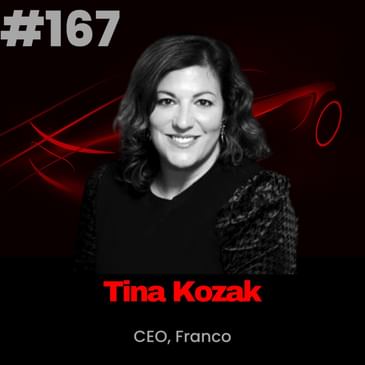
Why do so many companies spend millions shaping their external image while missing the most important audience: their own people? That’s the question Jan Griffiths brings to Tina Kozak, CEO of Franco, in this episode of the Automotive Leaders Podcast. Together, they explain why internal communication is often overlooked, and what leaders can do to fix it.
Tina talks about her “head and heart” style of leadership, which balances business strategy with empathy and emotional intelligence. She shares how mentors and coaches shaped that approach and how it helped her lead Franco through a recent acquisition. While the finance team handled the numbers, she put her energy into people, making sure employees and clients felt supported through the change.
In legacy industries like automotive, employees are still too often seen as replaceable. Tina challenges that thinking, arguing that leaders earn loyalty when they consistently support their people, not just when business is booming.
Technology and AI are also discussed. Tina shares examples of how Franco uses tools like generative AI to make communication easier and more accessible for employees.
Jan connects it to her passion for internal podcasts, especially when paired with AI translation, to give shop-floor workers a direct line to leadership in their own language.
Both agree that leaders often underestimate how much their words and actions ripple through employees’ lives, far beyond the workplace.
Jan admits she used to see communications as nothing more than “corporate messaging.” She even remembers being afraid to post on LinkedIn without approval; a fear that silenced genuine voices and wasted a chance to connect.
Tina builds on this, explaining how employees can be a company’s greatest ambassadors if supported with the right tools and freedom. Authentic advocacy, she says, is far more powerful than polished ads.
Tina closes with practical advice: start with empathy. Instead of only pushing out the messages leadership wants to deliver, consider what employees want and need to know.
Ask questions, listen carefully, and act on the patterns you hear. That, she argues, is how internal communication shifts from a one-way broadcast to a true partnership.
Watch the Full Video on YouTube - click here
This episode is sponsored by Lockton, click here to learn more
Themes discussed in this episode:
- The “head and heart” leadership style that balances strategy with empathy and emotional intelligence
- Lessons from mentors and coaches that shaped Tina Kozak’s leadership approach in the automotive industry
- How focusing on people, not just numbers, made Franco’s acquisition successful
- Why legacy industries like automotive struggle with internal communication and employee connection
- How consistent communication builds trust, loyalty, and long-term employee engagement
- The role of technology and AI in simplifying and improving employee communication
- The missed opportunity when leaders dismiss communications as “corporate messaging”
- How employee advocacy strengthens culture and why authentic voices beat polished campaigns
Featured guest: Tina Kozak
What she does: As CEO and majority shareholder of Detroit-based Franco, Tina Kozak leads one of the region’s top integrated communications agencies. She combines strategic insight with a human-centric approach she calls “Head and Heart” leadership, guiding her team and clients with equal focus on results and empathy.
Under her leadership, Franco has grown rapidly, expanding from a traditional PR firm into a full-service agency delivering communications strategy, change management, and internal communications support across industries.
On Leadership: I am a head and heart leader. I got here because I've studied, I'm smart and intellectual, I know business strategy, I'm curious, and I'm a good listener. But the heart piece is equally, and sometimes, more important. I mean, the emotional intelligence and sort of that human-centric view of business. So, I take a very integrated look at my leadership and my responsibilities as a leader and think about it as the head and the heart.
Mentioned in this Episode:
Episode Highlights:
[02:25] Head and Heart: Tina describes herself as a “head and heart” leader—grounded in strategy and intellect but driven just as much by empathy, curiosity, and the human side of business.
[05:00] Shaped by Mentors: From a tough-but-nurturing journalist to a coach who pushed her to define her values, Tina’s leadership journey was built on guidance that made her own style possible.
[08:04] Heart First, Vision Clear: When asked which of the 21 traits stand out, Tina points to two: leading with heart and always casting a vision. For her, it’s not enough to have purpose—you have to communicate it in a way that connects everyone who matters.
[08:49] People Over Paper: Tina explains why Franco’s acquisition worked by focusing less on spreadsheets and more on people, trust, and relationships through a slow, purposeful integration.
[11:02] Not Just Cogs: Too many companies still see employees as replaceable parts, but lasting success comes when leaders treat the relationship as a partnership built on trust and loyalty.
[15:02] ROI of Communication: Stronger internal communication creates more than messages; it builds alignment across teams, boosts loyalty, and drives performance.
[17:04] Tech That Connects: From podcasts that reach the shop floor to AI tools that simplify everyday questions, technology can close the communication gap and make work feel clearer, easier, and even happier.
[21:48] Ripple Effect of Leadership: The way leaders treat people doesn’t stop at work; it follows employees home, shaping families, relationships, and everyday life in ways leaders often overlook.
[25:41] Your Best Ambassadors: Employees already carry trust within their own networks. When given freedom and support to share authentically, they become the strongest voice for your culture and brand.
[27:54] Start With Empathy: Closing the communication gap begins with asking what employees actually want to know, listening closely, and acting on the patterns that surface.
[30:15] The Personal Side: Tina reflects on what fuels her life and leadership, sharing the motivations, habits, and passions that shape who she is beyond the CEO title.
Top Quotes:
[04:20] Tina: “There’s so much research and so many case studies on businesses that do prioritize emotional intelligence and people and empathy, and the proof is in the results. They outperform their competitors. Because they don't just know their people. They really know their people. They don't just have a spreadsheet of their competitors. They really know.”
[09:03] Tina: “We’re a people business. We don't make a product. Our services are delivered by people. They're all unique. I always say we don't win work, we don't keep work, because we write the best press release or the right script. We do write great press releases and excellent content, but we win work because of the people and who they are and how they connect to clients and how they understand.”
[11:47] Tina: “I like to think about an employer-employee relationship as a partnership. I think that people have a choice of what they do when they get up in the morning. And one thing that I loathe is when, you know, the economy maybe isn't as good. And so, companies go like, well, we don't have to treat our people as well, like the job market's terrible. What are they going to do? What? We need to treat.”
[22:13] Tina: “If you have the power to impact somebody's life and what happens at their dinner table that evening, or what happens on the weekend when they finally get some downtime, don't you wanna have a positive impact? I think you're exactly right. I think many of us underestimate the impact we have on people.”
[Transcript]
[00:00:00] Jan Griffiths: Welcome to the Automotive Leaders Podcast, where we help you prepare for the future by sharing stories, insights, and skills from leading voices in the automotive world with a mission to transform this industry together. I'm your host, Jan Griffiths, that passionate, rebellious farmer's daughter from Wales with over 35 years of experience in our beloved auto industry and a commitment to empowering fellow leaders to be their best authentic selves.
[00:00:41] Jan Griffiths: Stay true to yourself, be you, and lead with gravitas, the hallmark of authentic leadership. Let's dive in.
[00:00:57] Jan Griffiths: This episode is brought to you by Lockton. Rising benefit costs aren't inevitable for you or your employees when you break through the status quo. Independence matters, it means Lockton can bring you creative, tailored solutions that truly serve your business and your people. At Lockton, clients, associates, and communities come first, not margins and not mediocrity. Meet the moment with Lockton.
[00:01:26] Jan Griffiths: Many companies spend millions of dollars on PR public relations yet they miss out on the most important part of their audience, and that is their people. Why is it that companies spend so much money thinking about and communicating to the outside, and there's a huge gap on the inside? I want to understand why that is and who better to answer that question and go deep into this subject and much more than Tina Kozak. She is the CEO of Franco, a company well known for their expertise in the PR business, both internal and external. Tina, welcome to the show.
[00:02:16] Tina Kozak: Hi. So good to be with you.
[00:02:18] Jan Griffiths: Great to have you on the mic, finally. I feel like it's way overdue.
[00:02:21] Tina Kozak: Yes, yes. Perfect timing.
[00:02:25] Jan Griffiths: You know, Tina, I always open with the same question, and it's a question that people don't often ask themselves, and I feel like every leader needs to have a really good grasp of the answer to this question. And it's simply this. Who are you as a leader?
[00:02:43] Tina Kozak: Yeah, I have spent a lot of time asking myself this. So I am a head and heart leader. I got here because I've studied and I'm smart and intellectual and know business strategy and curious and a good listener. But the heart piece is equally, and sometimes, more important. I mean, the emotional intelligence and sort of that human-centric view of business. So, I take a very integrated look at my leadership and my responsibilities as a leader and think about it as the head and the heart.
[00:03:24] Jan Griffiths: When you say that, and I agree with you wholeheartedly, and from what I know of you, you are indeed that person, head and heart, and it's the perfect way to lead for the future, no question. Well, even for the past as well. But as you well know, we've grew up in an industry that did not respect that. And if you had said years ago that you were a heart-led, heart-first leader, they would've said, "Oh, you are too soft. You're never gonna hack it in this tough automotive industry." What say you?
[00:03:54] Tina Kozak: When someone says soft skill, I bristle. I believe that those skills that people refer to often as soft skills are, in fact, very hard skills. They're challenging skills. They require us to go inside versus get it from a book, and people are afraid of that.
[00:04:12] Tina Kozak: So I think there's a lot of reasons why that was the case in the past, and I think that the proof is in the pudding right now. There's so much research and so many case studies on businesses that do prioritize emotional intelligence and people and empathy, and the proof is in the results. They outperform their competitors. Because they don't just know their people. They really know their people. They don't just have a spreadsheet of their competitors. They really know. So, yeah, I say, now's the time.
[00:04:46] Jan Griffiths: Now's the time. Leadership in one word for you? What is it?
[00:04:52] Tina Kozak: Human-centric. Can we put a hyphen in there and call that one word?
[00:04:56] Jan Griffiths: Yes.
[00:04:56] Tina Kozak: Human-centric.
[00:04:57] Jan Griffiths: Yes, we'll let you go with that. We'll let you go with that.
[00:04:59] Tina Kozak: Yes.
[00:05:00] Jan Griffiths: You've had an interesting career. You started in the tier one supply space. You've worked for an agency and now you are running your own agency. Along the way, Tina, who shaped you?
[00:05:14] Tina Kozak: So many people. I've had so many great leaders and mentors over the years in automotive. I was so lucky to work with just some big personalities. And one of my mentors and one of my favorite people that I ever worked with was Marge Sorge, and she was just a legendary communicator. Automotive journalist, really knew her stuff.
[00:05:37] Tina Kozak: She'd come up in a time where you had to be that tough, you know, that bulldog. But she, inside, was a nurturer and she nurtured her team and she nurtured people and she listened. People liked to work with her and they respected her. So she was amazing.
[00:05:54] Tina Kozak: And more recently, in my time as a leader, I have a business coach, his name is John Quinlan, who has helped really shape my leadership style, not by telling me what to be or what works, but by really helping me figure out who I am and going really deep on my own personal values and my own why and my own SWOT. And from there, I think has helped shape what I can be the most passionate about and how I lead and why I do this.
[00:06:27] Jan Griffiths: A lot of people think that leadership is a thing, it's a defined thing. That there's a mold for the perfect leader, and that's what you should strive to be. So many people think that. And that's absolutely not true.
[00:06:41] Jan Griffiths: And what you are saying, I believe, is 100% correct. Your life story and who you are as a human is your leadership story. It is who you are as a leader. And understanding those personal values and bringing those to the forefront will bind people to you, to get that high performance team that we so desperately crave. Yet people don't like to understand that. They don't wanna go there. They go, wait a minute, you know that's personal?
[00:07:09] Tina Kozak: What does that matter? Right?
[00:07:10] Jan Griffiths: It's personal.
[00:07:11] Tina Kozak: Right.
[00:07:12] Jan Griffiths: And then of course, you know, the classic say in business: "It's not personal, it's just business." Of course, it's personal. When there are people involved, it is 100% personal.
[00:07:23] Tina Kozak: Right. Right.
[00:07:23] Jan Griffiths: So, it's time to go deep to understand who you are. And when you start to share that with people, it is not a sign of weakness. It is a sign of strength.
[00:07:33] Tina Kozak: It's a sign of strength. It's authentic. I always say like I only have one way to be, and it's just because it's who I am and it's not for everyone, and that's okay. But you attract, whether it's employees or clients or business partners, people who want to subscribe to who you are, how you are because of who you are. And it better be aligned, right? With how you operate, and that's what builds trust, I think. And we'll talk about trust.
[00:08:02] Jan Griffiths: No, you're absolutely right. And you've taken a look at the 21 traits of authentic leadership, are there one or two that really resonate with you? What has come out to you the most?
[00:08:13] Tina Kozak: Well, it probably won't surprise you that kind of heart first.
[00:08:16] Jan Griffiths: Yeah.
[00:08:16] Tina Kozak: It definitely resonates with me. I also think the vision mission, the casting that vision, having a purpose all of the time and being able to convey that purpose in a way that understands what a client's thinking about, what an employee's thinking about. Who are my stakeholders? How does this purpose resonate with them? Should it? And being able to convey that in a way that's meaningful. So, I really think that heart-first and the vision.
[00:08:48] Jan Griffiths: And Franco as a business, you've just gone through a pretty significant acquisition, and there are a few things in there, we talked about it, but you really learned from that process. Talk a little bit about that.
[00:09:03] Tina Kozak: Yeah. We're a people business. We don't make a product. Our services are delivered by people. They're all unique. I always say we don't win work, we don't keep work, because we write the best press release or the right script. We do write great press releases and excellent content, but we win work because of the people and who they are and how they connect to clients and how they understand.
[00:09:27] Tina Kozak: So when we're doing an acquisition, it makes sense to me that I would spend all of the time on the people or the majority of the time on the people. So, the financial aspect of an acquisition, it's on paper. I don't wanna say it's easy, 'cause I'm not in finance, but I have a team that can look at that piece and say, "Okay, this makes sense. Here are the opportunities. Here's the things to look for."
[00:09:51] Tina Kozak: I spent all of my time on people, and in talking to people inside my own company and the new business, really understanding, you know, what they wanted, what they loved, what they didn't love, how they would fit, where they would fit down the line. And then that integration process being slow and purposeful. So it really was about the employees and the clients. And, I think, that's what's made it feel like, we did an acquisition this year and it was significant for us because we haven't done an acquisition in a long time, and we're just on the heels of new ownership transition. So, within a year or less than a year, I did this acquisition, but it's just knowing people and, you know, how to work with people.
[00:10:35] Jan Griffiths: I think you're absolutely right to approach it that way. A lot of acquisitions fail, then the integration process. You mentioned that's one reason why they fail, but they fail because it's viewed as transactional. It's viewed solely by the numbers and not by the soul. Not by the heart and soul. And it sounds like you went right after that heart and soul piece to make sure that it was a good alignment.
[00:10:57] Tina Kozak: Yes.
[00:10:58] Jan Griffiths: Yeah.
[00:10:58] Tina Kozak: Yes.
[00:10:59] Jan Griffiths: Yeah. I love that.
[00:10:59] Tina Kozak: I always do.
[00:11:02] Jan Griffiths: Clearly, you care a lot about people and connecting people. You're all about connecting people, and you are, did I read a reputation warrior? Right? But why is it Tina, that these large companies that we know and love in our beloved auto industry often miss the most important audience, their people and internal communications? There's a gap there, isn't there?
[00:11:26] Tina Kozak: I think so. I think some industries, especially legacy industries like the auto business been around for so long. I think they're stuck in this old way of thinking that my employees come here to do a job. They're kind of a cog in a wheel. They're here to serve the company and they don't think of it as a two-way street.
[00:11:47] Tina Kozak: I like to think about an employer-employee relationship as a partnership. I think that people have a choice of what they do when they get up in the morning. And one thing that I loathe is when, you know, the economy maybe isn't as good. And so companies go like, well, we don't have to treat our people as well, like the job market's terrible. What are they going to do? What? We need to treat people well all the time, or treat people the way we treat people all the time.
[00:12:17] Tina Kozak: Certainly, there's more you can do when you're more profitable, but I feel that when an employer looks at it as a partnership and sees a person as a potential to perform better for the company to perform better and they have their back when the employee needs it, then the employee has the back of the employer when they need it. And it's sort of this like yin and yang.
[00:12:43] Tina Kozak: So, we step in and really counsel our clients, like step in for people when they need it, and you build trust and loyalty that will absolutely come back exponentially to you. But I just think for so long the feeling was like, they're employees, they're replaceable, they're here to serve the company. Not that this is sort of a two-way street.
[00:13:05] Jan Griffiths: Yeah. And I've been in the room where those conversations have happened where it's, okay, we need to cut. Where are we gonna cut? And certainly, anything that is considered discretionary spend is cut. And I know, as a business, I'm not naive, I get it, I know that we need to cut expenses when times are rough. I do it myself in my own business. But when it comes to the people, even with my small business, with my team, we're not cutting anything that's considered a benefit or a support to them.
[00:13:36] Jan Griffiths: And one of the things that companies often cut is travel. I would argue that that is a time when, if anything, you need to amp up your travel as a leader in a company with a global organization. That is the time when I needed to be out there more so than ever, supporting people and letting them know that it's all gonna be okay. This is a tough time the business is going through, but we're in this together. It's so shortsighted to cut these things, you know, cut somewhere else.
[00:14:08] Tina Kozak: Those moments happen in the room, like connecting, inspiring people. It's so much more effective when you're in a room with someone, you've met face-to-face with someone versus doing it over zoom. I mean, there are a lot of things that we can do effectively, virtually, and today it's such a different time than even when I was working in automotive, where we went everywhere for everything.
[00:14:30] Tina Kozak: And now, you know, virtual meetings are great, but when you're in times of uncertainty, being in the room is where that like, that the moments happen of, oh, I trust you. I hear what you're saying. I'm gonna work hard. I get the vision, I see where we're going. We've made some tough decisions. Maybe I'm not getting a raise this time around, but I understand the vision and I trust you.
[00:14:55] Jan Griffiths: Yes.
[00:14:55] Tina Kozak: And it's really hard to convey that when those things are reduced.
[00:15:00] Jan Griffiths: Yes, yes. So you believe that there are tremendous benefits when you bolster your internal communications?
[00:15:08] Tina Kozak: Absolutely.
[00:15:09] Jan Griffiths: Talk to us a little bit about that ROI, what are some of those benefits?
[00:15:13] Tina Kozak: I think you have a more engaged, more aligned workforce. I think loyalty and performance. Especially, and I will admit that this is generational so this is shifting, and the workforce of 30 years ago maybe wanted to come in and do the job and do the least and not feel connected to where they spent their eight hours or 10 hours a day. They wanted to feel disconnected maybe from it and sort of leave it there. But I think younger people, so generationally, people want to spend time doing a job that makes them feel fulfilled, that they understand how maybe their small role plays in the bigger picture. And so I think that you just get more engagement, more loyalty, better performance. Everyone pulling in the same direction is gonna get you there faster and it's going to get you there intact versus the leadership is pulling and everybody's kind of just doing their thing. So, I think assembling that like motion in the same direction, alignment, you've got to communicate with your employees.
[00:16:23] Jan Griffiths: And the Gallup poll data would support that.
[00:16:25] Tina Kozak: Yes.
[00:16:25] Jan Griffiths: The Gallup Engagement Survey. Only one in three roughly is fully engaged in their work. And if that was a piece of equipment, we'd be modified in the auto industry. But yet with people we kind of go, uh, okay, whatever, right?
[00:16:38] Tina Kozak: Yes, yes. Well, they'll show up, 'cause we'll keep paying them.
[00:16:41] Jan Griffiths: Yeah.
[00:16:41] Tina Kozak: But not anymore. Not anymore. I think people have choices and there are a lot of companies that have shifted toward a just a bit more of that partnership. I'm gonna be transparent with you. I'm gonna communicate. You know they want authenticity and transparency. They want vulnerability in leadership. You can find it now and people have choices.
[00:17:04] Jan Griffiths: What do you see companies doing with AI or with technology to try and close that internal communications gap?
[00:17:12] Jan Griffiths: This episode is sponsored by UHY.
[00:17:16] Jan Griffiths: Did you know suppliers now spend 157 hours on an average RFQ and still face the same roadblocks as 20 years ago? UHY and the Center for Automotive Research, break it all down in their new white paper. Get the insights and see what's really changed in 2025.
[00:17:37] Jan Griffiths: Download your copy. There's a link in the show notes.
[00:17:45] Tina Kozak: I don't see anyone doing enough, and I think that. I just think about how challenging it used to be to communicate with employees on the shop floor, especially where you had a corkboard in the lunchroom or you could send something home in the paycheck, and then we got TVs on the shop floor and we're like, oh my gosh, we can program these TVs and started putting up vehicles above the floor where this little piece was going into. And now, there's so much you can do with technology and AI, and I know you're experimenting in some areas.
[00:18:18] Tina Kozak: Even podcasting, like reaching employees with a voice. It's just there's so much more you can do and just apps and like check-ins. And there's so much more you can do to prepare your leaders, whether it's your floor managers to effectively communicate that no one's doing enough. So, get out there and show them how to do it.
[00:18:41] Jan Griffiths: Yeah, right. Well, I'm on it. I'm on it. But shameless plug, as you know, my background is not in communications. I care deeply and passionately about culture, and about making sure that employees are engaged and they wanna work for leaders who have a mission and a vision, and they just want it. Whatever you need me to do, I'm on it, right?
[00:19:01] Jan Griffiths: I want people to feel good about themselves and the work they do and the automotive industry. So that's huge. It's a huge ask. And I've had the podcast for over five years now, and so when I thought about my love of podcasting and the technology of podcasting and I thought about my mission around culture. Well, it's a perfect fit.
[00:19:20] Jan Griffiths: Let's use an internal podcast to reach people on the shop floor. Let's not rely on some poor, overworked supervisor on the shop floor to communicate corporate messages that are written in corporate speak. And then why not have it the other way? Why don't we interview people on the shop floor? And we've been doing a lot of that with clients recently, so there's so many different things you can do. Let's use AI to translate it. So I really believe that AI and technology is there to help us. And this is one way that we can use it to close that gap.
[00:19:52] Tina Kozak: Right. We've built like a closed loop system internally. And so just one small thing that even from an employee communication standpoint, you know your employee handbook, right? It's so thick, there's so many sections, it's very legal. So we put our employee handbook into this kind of closed loop. The generative AI system, and if an employee is like, what's the policy for jury duty, right? They just like, literally go in and ask it a question like you would, the large language model, and it just pops it right out and tells you.
[00:20:21] Tina Kozak: So, just little things, but the possibilities are endless. I would say maybe, maybe endless, in terms of just the employee experience, and then, you're reducing the time, right? And the frustration that maybe comes with figuring these things out or not knowing. And then you have people who are just more focused on their work or maybe a little more relaxed, maybe less stressed. And so, just overall happier.
[00:20:51] Tina Kozak: I could talk for a whole week on happiness. And wouldn't it be great if you could be an employer that gave people a paycheck but also just helped improve their wellness? Like their overall wellness.
[00:21:07] Jan Griffiths: Their overall life? Yes.
[00:21:08] Tina Kozak: 'Cause you treat them well. And it's not that hard.
[00:21:11] Jan Griffiths: Leaders, I believe often don't think about the impact that they have on people's lives.
[00:21:18] Tina Kozak: Yes.
[00:21:19] Jan Griffiths: I remember was for most of my working life, being a single mom, I knew how far I could push my boss on something, but I also knew that the end of the day, he controlled my paycheck. And I needed that because I needed to pay the mortgage and I was a single mom and there was nobody else to depend on, and I knew how far I could push him.
[00:21:40] Jan Griffiths: Imagine working in a world where you didn't have to worry about that. That's just one aspect of it. But the other side of it is, if you are that kind of leader who's truly aggressively command and control, and you're berating people all day long because you think that's the model of leadership you're supposed to follow, they go home feeling awful every single day. They carry that with them, it impacts their family, and that has a ripple effect. And it goes on and on and on. And I think leaders often don't realize the power that they have to impact somebody's life.
[00:22:12] Tina Kozak: Yes, yes. And if you have the power to impact somebody's life and what happens at their dinner table that evening, or what happens on the weekend when they finally get some downtime? Don't you wanna have a positive impact? I think you're exactly right. I think many of us underestimate the impact we have on people.
[00:22:33] Jan Griffiths: And it is the little things. You reminded me, I worked for a guy called Jim Borzi, and this is going back several years now. And he wanted a meeting, I think it's a strategy meeting or something. Something that was out of the normal cadence of meetings. And I remember he called me up and he says, "Hey, I'm running through Starbucks. What do you want?"
[00:22:52] Jan Griffiths: And I was so blown away by that. I can't imagine the last time somebody bought me a coffee. And I said, "Well, I'd love a latte," and he got me a latte. And I remember going home and telling my daughter. And now, you know what? She refers to him as the boss that bought you coffee from Starbucks. One tiny. But see how it impacted my daughter? And that's how she remembers my boss. Isn't that crazy?
[00:23:17] Tina Kozak: Yes, you're shaping. Just yesterday, and this isn't like, it's a little bit of a pat me on the back, I guess. But I had a client lunch scheduled and it got canceled, nine o'clock in the morning she called me and said, "I've got trouble getting into the office today." And I said, "No problem."
[00:23:33] Tina Kozak: So, normally, I'd be like, whoa, I'm gonna cancel that reservation. And I just bought myself an hour, an hour and a half back in the day. And I thought, oh, you know what? I'm here in the office with everybody. The reservation is right down here in the office and this is a great opportunity for me to just connect with one of the employees who I haven't connected with in a long time.
[00:23:52] Tina Kozak: And so, I kind of thought about it and there's this guy that I used to work very closely with when we were earlier in our careers and now he reports to someone else and it's just been a while since we've caught up. And I sent him a text and said like, "Hey, had a lunch cancel. Let's not let a good reservation go to waste. You wanna grab lunch?" "Oh sure."
[00:24:09] Tina Kozak: So we went to lunch and I told him right away, soon as we got in the elevator, I said, "I have no agenda, 'cause I don't want you to be nervous that like, there's some reason I'm taking you to lunch. I have no agenda. I just kinda wanna catch up." Like, yeah, what are your kids doing? Like they started school. Like, what's going on at home? And we just spent an hour and a half kind of catching up. And I felt great knowing that I got to know someone better. Like, I love going deep when I have the time. But yeah, I really think those moments matter.
[00:24:36] Jan Griffiths: Yeah. Yeah, they do. And it's about connecting people and no two people are the same. And that's why the power of internal communication, and I still chuckle at myself, Tina, when I'm talking about communication because it's not my field, but I'm in it now. And I love it. And I see the power of it. Yeah.
[00:24:54] Jan Griffiths: And going back to my corporate career, I used to look at the communications people and go, "Well, what are you..."
[00:24:59] J: What do you people doing, right? You just plan parties, I know you.
[00:25:01] Jan Griffiths: You write messages, you write corporate messages, and then sometimes you come into the executive staff meeting and you say, "Well, here's the messaging." Which I promptly would get the key points, tear up, and throw in the trash and then say it my way instead of reading corporate speak. So I honestly did not have the respect for the function that it deserves.
[00:25:20] Jan Griffiths: And I would like to apologize right now to all the communications press professionals out there.
[00:25:25] Tina Kozak: On behalf of the communicators, we forgive you.
[00:25:27] Jan Griffiths: I do. I seriously misjudged you. And now, I understand it and I understand the power of it. I am so 100% on board with it. So now, I understand the world of communications a little better. And again, going back to my corporate career, I remember that I was afraid. Yes, I did say that fear. I was afraid to put a comment on LinkedIn about something, about the company because I was afraid that the communications team wouldn't like it or it wasn't approved. So many fears. But it's such an untapped opportunity, isn't it? Talk us a little bit about that.
[00:26:04] Tina Kozak: Yeah. Well, you have these people, leaders, managers, people who work in the organization with their own networks and trust that they have among others. And so they're your greatest ambassadors if you harness that. And we practice employee advocacy, It's a big piece of what we do with clients. So helping clients harness those employee brand ambassadors, but it's gotta be nuanced. Because not just the fear, but also the sort of discomfort, oh, well, corporate communications gave me this to share on my LinkedIn, but it's not exactly how I would say it. And so it's gotta be very nuanced.
[00:26:44] Tina Kozak: So we work in, and a lot of times, we'll help brands provide some thought starters for people. Make it easy, but let it be authentic. But then, yes, you have a person who is not only saying, here's something about our industry that you should know, or something about my company. But they're giving their stamp of approval of your culture, of you, as an employer, as a business, with the firsthand look into your company.
[00:27:10] Jan Griffiths: Yeah. Yeah. And I see companies that have really great, strong thriving cultures.
[00:27:14] Tina Kozak: Yes.
[00:27:14] Jan Griffiths: You tend to see their people.
[00:27:16] Tina Kozak: Absolutely.
[00:27:16] Jan Griffiths: Not everybody, 'cause it's not for everybody.
[00:27:18] Tina Kozak: It's not for everybody.
[00:27:18] Jan Griffiths: But just like you said, they're ambassadors. There are brand ambassadors out there. They're in your company right now. Do you know who they are? Would be my question.
[00:27:26] Tina Kozak: Right.
[00:27:26] Jan Griffiths: And are you giving them some guidance, some coaching, some training to really amp up their personal brand? And also amping up your employer brand at the same time.
[00:27:37] Tina Kozak: Yeah. We trust who we know. More than in the past, just, oh, there was an ad in this publication, or I heard this on the radio. We trust when someone who we know shared it on LinkedIn or just see people having a great experience. It's more subtle and more authentic.
[00:27:53] Tina Kozak: Yeah. That's so true.
[00:27:54] Jan Griffiths: Tina, if you had to provide a piece of advice, what's one thing the company should start doing right now to close that internal communications gap? What would it be?
[00:28:05] Tina Kozak: I think it is empathy in the sense of thinking not just about what the messages are that you as the company wants to get out, but what do your people who are complex individuals want to know, and what's on their mind? What are they worried about? Instead of thinking about people, I guess if we're lucky today, maybe a good internal comms team is thinking about maybe stakeholder categories and there's people who were working on the manufacturing side. Maybe there's research and development, maybe there are engineers, and your marketing team and your admins.
[00:28:46] Tina Kozak: But people are so complex and so, more than just here's what we wanna say, what do they wanna know? And get that out, really prioritize that. So, I think it requires empathy to stand in the shoes of the employees and say, "What is it that they wanna know?" Asking questions and listening and being prepared to implement change where you hear patterns is an important way and another way to practice that empathetic, what do my employees need to know?
[00:29:20] Jan Griffiths: Yes. And it goes back to where we started this conversation and that is you seeing the employee as a partner.
[00:29:28] Tina Kozak: Yes.
[00:29:29] Jan Griffiths: And having that mindset. Instead of this more transactional relationship where it's top down and you're communicating from above down to the people.
[00:29:39] Tina Kozak: Right.
[00:29:39] Jan Griffiths: No, no, no. Communication by definition is a two-way...
[00:29:43] Tina Kozak: Right. Right.
[00:29:44] Jan Griffiths: It's a two-way thing.
[00:29:45] Tina Kozak: It's a relationship.
[00:29:46] Jan Griffiths: Yes.
[00:29:46] Tina Kozak: It's a partnership between the company and an employee. All thousands of them. And I know you've got people listening that have maybe 50 employees, a hundred, or 50,000.
[00:29:57] Jan Griffiths: Yes.
[00:29:58] Tina Kozak: But it is possible.
[00:29:59] Jan Griffiths: Yes, it is.
[00:30:00] Tina Kozak: And especially with technology enabling us and supporting us, it's possible to take that partnership approach with your employees.
[00:30:09] Jan Griffiths: Yes, absolutely. And take it to the next level.
[00:30:11] Tina Kozak: Yes. Yes. And you'll see the return.
[00:30:13] Jan Griffiths: Yeah. Couldn't agree with you more. Now let's take a turn into the personal realm, shall we?
[00:30:17] Tina Kozak: Yes.
[00:30:19] Jan Griffiths: What gets you up in the morning? What gets you all fired up?
[00:30:21] Tina Kozak: Untapped potential. Maybe, opportunity? But I think about untapped potential, my own, what haven't I done yet? What haven't I learned or tried? And that of others, I think about, what is someone on my team really wanna do? Like, what is my daughter trying to accomplish? What is my sister trying to accomplish? I like to think about people and where they haven't gone yet. Like, how can I help? So I think untapped potential gets me fired up.
[00:30:49] Jan Griffiths: That is a great answer. But it's that excitement, right? There's something you're like, okay, I'm gonna take on the day. So you're outta bed, right? You're getting ready for the day. What's the first thing you do? What's your habit? Oh, very first thing you do.
[00:31:04] Tina Kozak: Jan, I wish I had a habit.
[00:31:06] Jan Griffiths: It's okay. Is it coffee?
[00:31:07] Tina Kozak: Yeah, it is coffee. It's reading, it's like checking in on things like has anything catastrophic happened overnight across the world? Economy? Which, you never know, today. So I catch up, I drink my coffee, and usually, we'll start a little bit of work before like fully getting going for the day.
[00:31:28] Jan Griffiths: And what do you do when you come bounding in through that office door in the morning? What's the first thing you do?
[00:31:33] Tina Kozak: Usually, it's connecting with people. On the days that we're here in the office together, I try not to have much on my calendar by way of meetings and commitments because there are days that I wanna bring people in and like hold a little bit of space for people. So if I have calls to make, I try to do those things on the go and save the time for when I'm in the office to meet with people and like listen.
[00:31:58] Jan Griffiths: Yeah. Spoken like a true, authentic leader.
[00:32:01] Tina Kozak: Thanks.
[00:32:02] Jan Griffiths: What do you do for fun?
[00:32:04] Tina Kozak: I love to travel. I love to even just explore new things. In the last couple years, I would love to travel, like all of the time. I'd love to just be a full-time explorer. I wanna just explore like new things all the time. But when I'm grounded here, I will just explore like different parts of the community where I haven't gone before or different sort of little pockets or downtowns in Michigan.
[00:32:29] Tina Kozak: Like, I'll spend a day in Milford or a day in South Lion or something. Just what's out there. But I really love to travel when I have time away from work. I love to take the family and have some different experiences.
[00:32:42] Jan Griffiths: What's one podcast or book that every leader should read or listen to?
[00:32:49] Tina Kozak: That's a good one. Well, I mean, I should say yours.
[00:32:51] Jan Griffiths: Well, obviously
[00:32:52] Tina Kozak: In addition to yours, I really like the book The Journey of Leadership. It came out maybe a year ago, a little over a year ago. It's Hans-Werner Kaas and like the folks at McKinsey. And it's a lot of what we talked about today in terms of that more emotionally intelligent driven leadership. A little bit more heart. When Mark Fields left Ford, he went and did some work with McKinsey and I think that Bauer Institute where a few lucky CEOs get to go and learn and practice leadership. And so, he had some sections in the book and they came around a year ago and did this tour and talked about it and it's a good one.
[00:33:34] Jan Griffiths: Great. Well, that's a great way to close. Tina Kozak, thank you so much for joining us today.
[00:33:38] Tina Kozak: Yes, it was fun. Thank you for having me.
[00:33:41] Jan Griffiths: Thank you for listening to the Automotive Leaders Podcast. Click the listen link in the show notes to subscribe for free on your platform of choice, and don't forget to download the 21 Traits of Authentic Leadership PDF by clicking on the link below. And remember, stay true to yourself, be you, and lead with Gravitas, the hallmark of authentic leadership.